Last updated November 18, 2026


Free written scope consultation - allowances, timeline, and change-order rules on paper before a single trade is scheduled
Driveway & Pavers Warning Signs Every Homeowner Should Know
A single rocking paver that shifts underfoot is easy to dismiss. It is also the earliest warning sign of edge restraint failure, and if that failure is ignored for one wet season, it can let lateral spread run across 30 to 40 square feet of driveway before anything looks badly wrong. That’s the dirty secret of paver maintenance: the expensive damage almost never appears without warning. It gives you six to eighteen months of signals first. Most homeowners get told what to look for but never what it means or how fast to act. This guide ranks every warning sign by urgency and cost trajectory, with Berkeley conditions in mind, so you can make a prioritized repair decision instead of a panicked one.
Quick Answer
Driveway paver warning signs fall into three urgency tiers: monitor closely (minor efflorescence, one or two rocking pavers), fix within 30 days (systematic sinking, visible base exposure at the edges, water pooling against the garage), and stop driving on it (structural voids under the surface, a visible grade change, open joints wider than a half inch). The tier matters more than the sign itself, because the same crack costs $150 to seal in month two and $4,000 to rebuild a year later. When in doubt, photograph the area against a fixed reference point and watch the rate of change rather than the damage on any single day.
Styles & brands we work with
- Kitchen remodeling
- Bathroom remodeling
- Home additions & ADU
- Roofing
- Windows & doors
- Driveway & pavers
- Fence
Table of Contents
- The Severity-Ranked Warning Sign Index
- Cosmetic Cracks vs. Structural Cracks: A 10x Cost Difference
- What Water Pooling Reveals About the Base Beneath
- Tree Roots, Frost Heave, or Settling: Telling Them Apart in the Berkeley Hills
- How to Photograph and Document Warning Signs Over Time
- When the Problem Is Underneath: Base and Edge Restraint Failures
- Efflorescence, Joint Sand Loss, and the Signs Homeowners Misread
- Repair or Replace? How to Read the Cost Trajectory
The Severity-Ranked Warning Sign Index
Ranking your driveway’s problems by urgency is the single most useful thing you can do before calling anyone. The three tiers below separate “keep an eye on it” from “this is a real project now,” and they hold up whether your driveway is five years old or twenty. In our experience across Berkeley, the mistakes that turn cheap fixes into five-figure rebuilds come from treating a Tier 2 sign as Tier 1 for a season too long.
Tier 1: Monitor It
- Minor efflorescence – a white chalky bloom on the surface. Usually a salt deposit from moisture moving through the pavers. Ugly, not dangerous, and often seasonal.
- One or two isolated rocking pavers – note them and re-check monthly. Isolated movement is normal wear. Movement that spreads is not.
- Faded color or light surface scuffing – cosmetic, no structural meaning.
- Small joint-sand loss in a few spots – top up the sand and watch whether it stays put.
Tier 2: Fix Within 30 Days
- Systematic sinking across a defined area – three or more adjacent pavers settling together points to base compaction loss under that zone.
- Visible base exposure at the edges – you can see the gravel or sand layer where the driveway meets soil, lawn, or the garage slab. The edge restraint has moved.
- Water pooling that stays more than 24 hours after rain – a drainage failure, not a surface flaw.
- Open joints wider than a quarter inch running in a line – often the earliest visible sign of lateral spread.
Tier 3: Stop Driving On It
- Structural voids – a hollow sound underfoot when you tap, or a paver that flexes under weight. The base has failed fully; the paver is now spanning air.
- Significant grade change – a lip or step between two sections. This is a trip hazard and a sign the whole panel has shifted.
- Pavers visibly separating from the garage or foundation slab – a gap opening between driveway and structure.
- Edge restraint fully displaced – if the border has walked out several inches, the whole field is free to spread.
The key point: a Tier 1 sign that suddenly becomes Tier 2 needs a call now, not next spring. Rate of change is the signal.
Cosmetic Cracks vs. Structural Cracks: A 10x Cost Difference
Here is the distinction that saves Berkeley homeowners the most money: a crack in a paver is either cosmetic or structural, and the repair cost difference between the two is roughly 10x. A cosmetic hairline can be filled or the single paver swapped for a couple hundred dollars. A structural crack that’s signaling base movement underneath means lifting, re-grading, and re-compacting a whole section. Learn to tell them apart before the crack widens.
How to identify a cosmetic crack
- Look at the edges. A cosmetic crack has clean edges and doesn’t wiggle when you press on either side. Both halves are firmly seated.
- Trace it to the joint. If the crack runs parallel to and within a couple inches of a joint, it’s likely stress from being walked or driven on at an angle.
- Check the width over time. Cosmetic cracks stay the same width season to season. Structural ones widen.
- Stand on the paver. If it doesn’t rock, the base beneath it is probably intact.
How to identify a structural crack
- Follow the crack across multiple pavers. A crack that hops from one paver to the next in a line is almost always base movement transmitted upward.
- Press on either side. If one side drops while the other stays, the base under that panel has lost support.
- Watch for a matching crack on the opposite side of the driveway. This is the signature of a failed joint in the sub-base.
- Listen for a hollow sound. Tap with a screwdriver handle. A hollow thud means the paver is spanning a void.
A cosmetic crack is a cosmetic project. A structural crack is a base repair. That’s the whole game, and it’s why we photograph pavers before we quote anything. In Berkeley’s older flatlands neighborhoods, driveways over 25 years old often have structural cracks from original base layers that were never compacted to the depth a modern driveway calls for. If the pattern looks structural, we always walk the whole slab, not just the cracked area.
What Water Pooling Reveals About the Base Beneath
Water is the most honest diagnostic tool you have. A paver driveway that sheds water evenly is a healthy driveway. One that pools in the same spot after every storm is telling you the base beneath has lost its shape, and where that pooling lands tells you how serious it is. Pay closer attention to where the water goes than to the pavers themselves, and you’ll catch most drainage failures before they become base failures.
The pooling patterns that matter
- Pooling along the centerline – typically a crowned base that’s flattened over time. Fixable with a section re-grade, but on a slope it can mean subsurface water is channeling under the pavers.
- Pooling at the edges, near the street or lawn – often an edge restraint failure. Water runs off the crown, hits the failed restraint, and sits.
- Pooling against the garage or house foundation – the one to take seriously. Pooling within 2 feet of the garage slab or the foundation wall is a foundation risk, not just a driveway problem. On Berkeley’s sloped lots, we see water that pools against a foundation creep into the rim joist or crawl space over a couple of seasons. That’s a much bigger bill than a driveway repair.
- Pooling in a low spot on flat ground – usually a settled base pocket that can become a pothole-style void if left for one wet winter.
What the pooling reveals
Berkeley’s rainy season, roughly November through March, is when the base takes on most of its water. A paver driveway built with a proper base should drain through the joints into a graded gravel layer within that season. Pooling that lingers 48 hours after the rain stops means water is no longer moving through the base. That’s a compaction or grade failure, and it will get worse before it gets better. The most useful thing you can do is photograph the same puddle from the same spot after each storm, with a tape measure showing its width. Rate of water accumulation tells you the rate of base failure. If the puddles are reaching toward the garage, get an estimate before the next wet season, not after.
If your driveway drains into a fence line, that fence takes the same beating. Our Fence Installation in Berkeley team routinely finds fence posts loosened by water the driveway was supposed to handle.
Tree Roots, Frost Heave, or Settling: Telling Them Apart in the Berkeley Hills
Berkeley has three distinct driveway failure modes living side by side: tree root intrusion, frost heave, and simple settling. The Berkeley hills see plenty of all three, and they each require a different intervention, so the first job is figuring out which one you have. Get the diagnosis wrong and you’ll spend money fixing the symptom while the cause keeps working.
Tree root intrusion
If your driveway runs near a mature oak, a redwood, or a Monterey pine, roots are a real suspect. The signature: pavers lifted or tilted in a line radiating outward from the tree’s base, usually with the lift increasing the closer you get to the trunk. The pattern tends to be one-directional; the pavers on the far side of the driveway from the tree often look fine. Roots don’t lift the whole panel evenly, they lift single pavers in a fan shape. Berkeley’s heritage tree ordinances mean you cannot simply cut the responsible roots on a protected tree, so root intrusion usually means re-routing the driveway edge or using a root barrier and a realigning of the affected run.
Frost heave
Berkeley’s frost season is mild, but the hills still get enough freezing nights in January and February to lift pavers built with shallow base depth. The signature: springtime lift across a wide, relatively even area that drops back near flush by May. If the driveway “rises” in late winter and “sets” in summer, you’re seeing frost heave. It’s a sign the base layer is too shallow for your microclimate, and it will recur every year unless the base depth is rebuilt.
Simple settling
The signature: a low spot or a bowl shape in one area, with no directional pattern toward a tree and no seasonal rebound, often over a utility trench, a former tree stump, or an un-compacted backfill from a previous addition. Settling is the most common cause of paver sinking in the Berkeley flatlands. It’s usually the cheapest to fix: a section of pavers is lifted, the base re-graded and re-compacted, then the original pavers relaid.
If you’re planning an addition and your driveway abuts it, note that structural drainage has to be planned together. Our Home Additions & ADU in Berkeley team plans the driveway grade alongside the footing grade so water doesn’t move in one direction and damage two structures.
How to Photograph and Document Warning Signs Over Time
You can document your driveway in about 10 minutes, and it does two jobs: it establishes the rate of deterioration so you know when a fix has to happen, and it gives you a clean record if you need to file a warranty or insurance claim. Most homeowners who “can’t prove” a paver failure is new are people who never took a baseline photo. Do this once, then repeat it every spring.
- Set a reference point. Pick something fixed: the garage threshold, a fence post, a utility box. That’s your anchor.
- Take wide shots from all four sides. Include the anchor point in every wide shot so you can compare across time.
- Take a close-up of every suspicious paver or crack. Lay a tape measure in the shot so the width is visible.
- Show the edges. Photograph the boundary between pavers and soil, lawn, or garage in three places. Edge photo on the north end, the south end, and the low end are the three you’ll want.
- Score the surface. A one-to-five severity rating from your own notes (“two rocking pavers this year, one last year”) is what makes the record useful.
- File it by date. One folder per spring. Label each photo by location and note.
- Film a short pool shot after a big storm. A 15-second phone video of where water sits, taken from the same spot, becomes the clearest record you’ll have.
Insurance claims for driveway damage typically hinge on proving a sudden event versus long-term neglect, and warranty claims hinge on proving the failure isn’t driver error or tree root. Documentation is how you win either. It’s also how your contractor quotes accurately instead of guessing, so bring the photos to your estimate. No-hassle upfront pricing works best when everyone starts from the same evidence.
When the Problem Is Underneath: Base and Edge Restraint Failures
The pavers are the parts you can see; the base and the edge restraint are the parts doing the actual work. That first rocking paver in our opening example was an edge restraint failure because edge restraints hold the field in compression. Once water loosens the restraint, entire pavers have nothing stopping them from pushing outward. The visible sign is a rocking paver or two; the consequence is lateral spread across 30 to 40 square feet once the field moves.
How to check the edge restraint
- Look at the border along the driveway’s outer edge. The pavers should sit tight against the restraint. A visible gap is a red flag.
- Press the border pavers. If they rock outward more than inward, the restraint has moved.
- Check for a “smile” along the edge. If the driveway edge has gently bowed outward compared to the original line, you have active lateral spread.
- Test the joint width between the field and the border. A widening joint at the edge is the earliest visible signal.
How to check the base
The base fails in one of two ways: it loses compaction, or it loses grade. Lost compaction is what creates the hollow thud underfoot. Lost grade is what creates the shallow pooling. Both are visible from above. Our notes from Berkeley jobs in the 94705 and 94707 zip codes show the same story often: a driveway built on clay-heavy flatland that was never over-excavated to adequate depth, so the base has no drainage path and one rainy season silently undoes years of compaction.
Repairing a restraint in year one costs a few hundred dollars: remove the border, reset the restraint, compact, replace. Repairing a full lateral spread in year three costs a section rebuild. Same warning sign, radically different scope. That’s the reason to get an estimate at the first sign, not the last.
Efflorescence, Joint Sand Loss, and the Signs Homeowners Misread
Some signs get overreacted to. Others get ignored. Here’s the realistic read on the two most misread signals: efflorescence and joint sand loss, plus one that people genuinely do miss.
Efflorescence
The white chalky bloom is a salt deposit carried to the surface by water evaporating through the paver. It’s cosmetic. It’s also a hint: if efflorescence keeps returning, moisture is moving through the pavers from underneath, which points to a drainage or base issue rather than a surface flaw. Watch whether it clears after a dry season. If it comes back in the same spots every year, that’s your signal to look at the base.
Joint sand loss
The sand between pavers is what locks the field in place and keeps the joints from becoming drainage channels. Sand loss in a few joints is normal and can be topped up. Sand loss that’s happening everywhere after every rain is a bigger story. It usually means water is flowing through the joints faster than the base can shed it, which will erode the sand and eventually the bedding layer. Systematic sand loss often needs a re-sanding and a check of the base beneath, not just another bag of sand.
The sign that gets missed: color change at the edges
Pavers darkening at the edges or along a known low spot that doesn’t clear by mid-morning after a rain is usually the base staying wet. Damper pavers lose color subtly; comparing the dry pavers near the garage to the damp ones near the lawn is often the first visual sign of a base that’s holding water. It’s a strong reason to photograph the same area after every storm so you can spot the trend.
None of these are emergencies by themselves. All of them are worth a call if they recur every wet season. The paver professionals who do this all day will tell you the same.
Repair or Replace? How to Read the Cost Trajectory
The question isn’t whether the driveway is bad today, it’s whether the repair cost is climbing faster than the replace cost. A quick framework:
| Condition | Typical Repair | Rough Cost Range | Verdict |
|---|---|---|---|
| 1-2 rocking pavers, otherwise sound | Reset and re-sand | Low hundreds | Repair now |
| Edge restraint failure, no spread yet | Reset restraint | Low hundreds | Repair now |
| Sectional sinking over one area | Remove, re-grade, recompact, relay | Four figures | Repair, get an estimate |
| Lateral spread across 30+ sq ft | Edge and section rebuild | Mid four figures | Get estimates, plan for full re-lay within 1-2 years |
| Structural voids across 30%+ of surface | Full base rebuild | Approaching a new install | Replace |
| Foundation damage from pooling | Driveway rebuild plus drainage fix | Highest | Replace and fix drainage together |
These ranges are broad on purpose because the real number depends on driveway size, base depth, and whether drainage gets rebuilt. What’s consistent is the shape: the cost of repair climbs steeply between the “fix within 30 days” and “stop driving on it” tiers. The cheapest thing is always fixing the warning sign at the tier below. For a realistic number for your driveway, get a free estimate and a written line-item quote. Groundwork Construction Co. of Berkeley prices paver and driveway work with no-hassle upfront pricing so you know exactly what’s being done before anything starts. See the Driveway & Pavers in Berkeley page for the full scope and materials we work with, including Belgard pavers with a 730-Day Done Right Promise backing the installation.
Common Mistakes to Avoid
- Resetting a single rocking paver without checking the edge restraint. The rocking paver is usually a symptom, not the cause, and you’ll be calling someone back in three months.
- Ignoring a seasonal “spring lift” as a one-off. If your driveway rises through winter and drops by summer, that’s frost heave and it recurs every year until the base depth is rebuilt.
- Topping up joint sand without knowing why it’s gone. Sand that leaves after every rain is telling you water is moving through the base too fast. Adding sand hides the signal for one season and delays the fix.
- Treating pooling near the garage as a driveway cosmetic issue. Water sitting against the garage or foundation within a few feet is a foundation risk. On Berkeley’s sloped lots this is the most expensive mistake on the list.
- Assuming tree roots aren’t the problem because “the tree’s not that close.” Oak and redwood roots in the Berkeley hills run well past the canopy line. The fanned lift pattern is the tell.
- Skipping the baseline photos. Without a dated record, you can’t prove rate of deterioration to an insurer, a warranty provider, or yourself. Take photos once a year, same spots.
- Choosing a repair with no written scope. A verbal “we’ll fix the sunken part” leaves you with no idea whether the base was re-compacted or just leveled with a bucket of sand. Insist on a written line-item scope and a workmanship guarantee.
See the difference
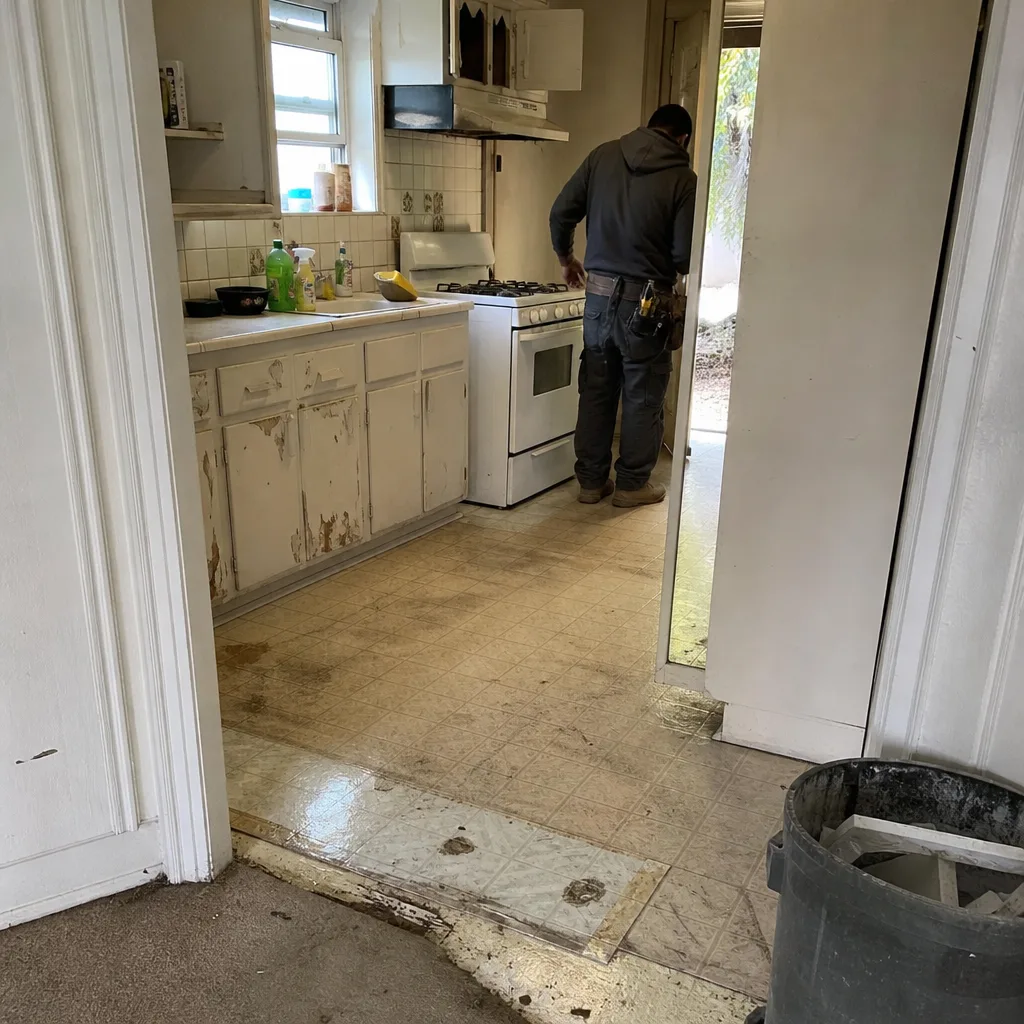 Before
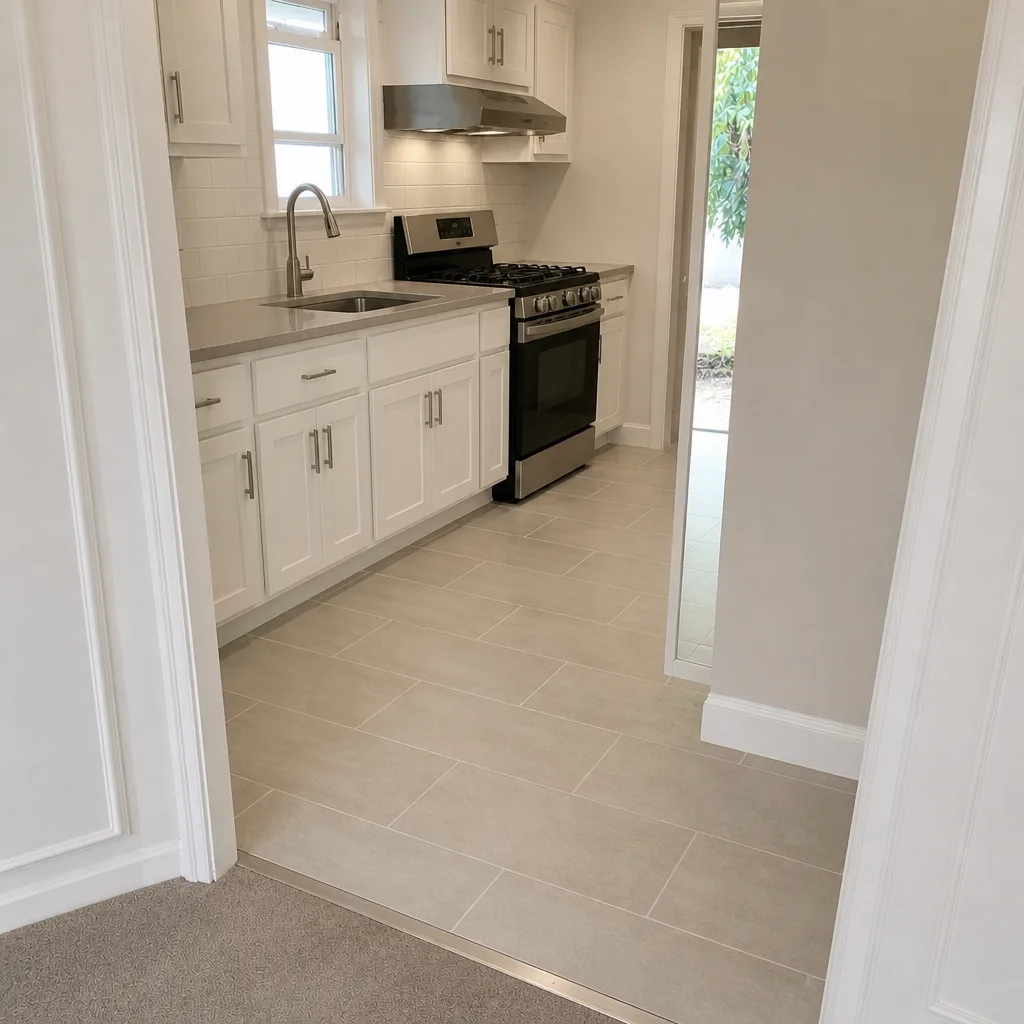 After
 Before
 After
 Before
 After
When to Call a Professional
Call a professional the moment you see any Tier 3 sign: a visible grade change, a paver that flexes underfoot, or a hollow sound when you tap. Don’t drive on a driveway that’s spanning a void, because a heavy vehicle repacking the void can turn a small repair into a full panel rebuild in minutes. Call within the week for any Tier 2 sign: systematic sinking, water pooling against the garage, visible base exposure at the edges. And call at the first sign of the edge restraint walking out, because lateral spread doesn’t stall. Spring is the right time to book a paver and driveway assessment in Berkeley, after the wet season has done its work and before the next winter. Groundwork Construction Co. of Berkeley offers free estimates in Berkeley. Call (855) 471-4163 and a live person answers 24/7, with a background-checked, uniformed technician scheduled to assess your driveway and put the repair scope in writing.
Frequently Asked Questions

Paver repair in Berkeley runs from a few hundred dollars for resetting a small number of pavers or replacing an edge restraint up to four figures for a sectional re-grade where the base has to be removed and re-compacted. A full base rebuild on a badly failed driveway gets closer to the cost of a new install. The exact number depends on driveway size, base depth, and whether drainage gets rebuilt. Call (855) 471-4163 for a free estimate and a written line-item quote, so you know the scope before anything starts.
One rocking paver is worth watching, not panicking over, and the reason to watch it is that it’s often the first visible sign of edge restraint failure. If the rocking paver stays put for a year, you’re probably fine. If it spreads to adjacent pavers within a season, that’s active movement, and you should call for an assessment. Re-check it monthly and photograph it once a season so you know which pattern you’re in.
Water pooling against the garage usually means the driveway has lost grade to the base beneath, or the edge restraint has failed and water can’t shed off the driveway. On Berkeley’s sloped lots, water pooling within 2 feet of the foundation is a foundation risk, not just a driveway problem, because it can reach the rim joist or crawl space over a couple of seasons. The cause is usually a base drainage failure. The fix is a re-grade with a known drainage path, which is best confirmed with an on-site estimate.
Yes. Tree root intrusion is one of the three common failure modes for driveways near Berkeley’s heritage oaks and redwoods. The signature is pavers lifted in a fan pattern radiating outward from the tree, with the lift increasing toward the trunk. Because Berkeley has heritage tree ordinances, the right fix is usually a root barrier and a realigned edge, not cutting the roots. Get an arborist’s view if the root source is in question.
It shouldn’t. Your estimate should be written as a line-item scope with the base depth, drainage plan, and materials specified. Our no-hassle upfront pricing means the number you see is the number you pay. The only honest reasons a price changes are when the driveway reveals something outside the agreed scope, such as a hidden void or a root the original photos couldn’t show. A contractor who tells you clearly what would change the price and why is the one worth hiring.
The only warning sign that resolves on its own is cosmetic efflorescence, which can fade after a dry season, and a minor rock in a single paver that never spreads. Every structural sign – sinking, edge restraint movement, structural cracks, water pooling – gets worse with each wet season, because water is the active ingredient. Don’t wait for a void to open before calling. Call (855) 471-4163 for a free estimate and a photo review, and you’ll know which tier you’re in by the end of the call.
The Bottom Line
Almost every paver failure in Berkeley gives you a year of warning first, and the reason those warnings get missed is homeowners aren’t told how to rank them. Watch for three tiers: one rocking paver is Tier 1 and you monitor it; systematic sinking or pooling against the garage is Tier 2 and you fix it within 30 days; structural voids and grade changes are Tier 3 and you stop driving on it. Learn to tell a cosmetic crack from a structural one, watch for the fan-pattern lift of tree roots versus the seasonal rise of frost heave, and photograph the whole driveway once a season against a fixed reference. The cheapest repair is always the one you schedule at the tier below the failure. If your driveway shows anything in Tier 2 or Tier 3, get a written estimate before the next wet season and buy yourself a decade of trouble-free driveway. If you’re also planning Groundwork Construction Co. of Berkeley home upgrades or a full exterior refresh in Berkeley, our team pairs paving and drainage so the plan works as one system.
Schedule Your Free Estimate

Every warning sign on this list has a fix, and the cost of any of them is easier to plan when you know exactly what you’re dealing with. Call Groundwork Construction Co. of Berkeley at (855) 471-4163 for a free project estimate and design consult. A live person answers 24/7, a background-checked uniformed technician will walk your driveway with you, and you’ll get a written, line-item scope at no-hassle upfront pricing with no surprises. All work comes with our 730-Day Done Right Promise – if it’s not done right, we make it right.
Written by the team at Groundwork Construction Co. of Berkeley.