Free written scope consultation - allowances, timeline, and change-order rules on paper before a single trade is scheduled
Styles & brands we work with
- Kitchen remodeling
- Bathroom remodeling
- Home additions & ADU
- Roofing
- Windows & doors
- Driveway & pavers
- Fence
See the difference
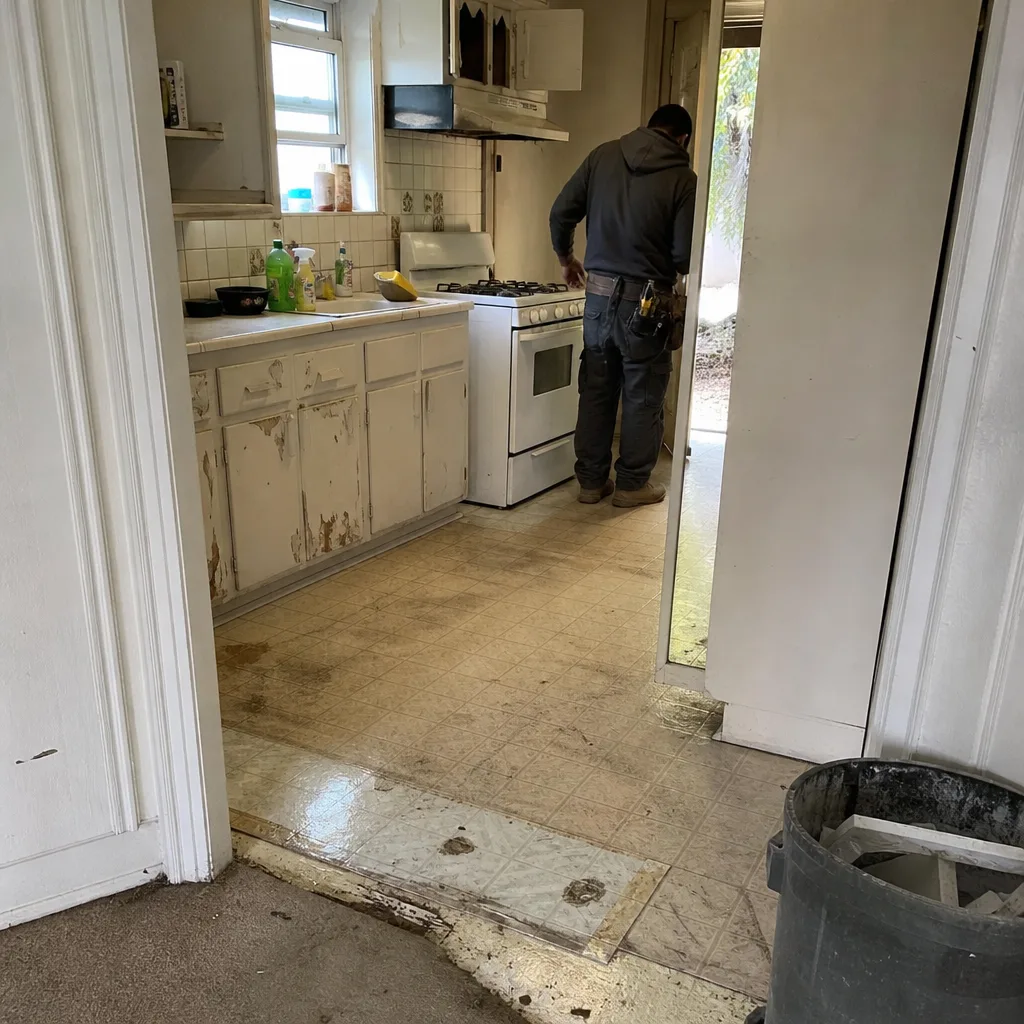 Before
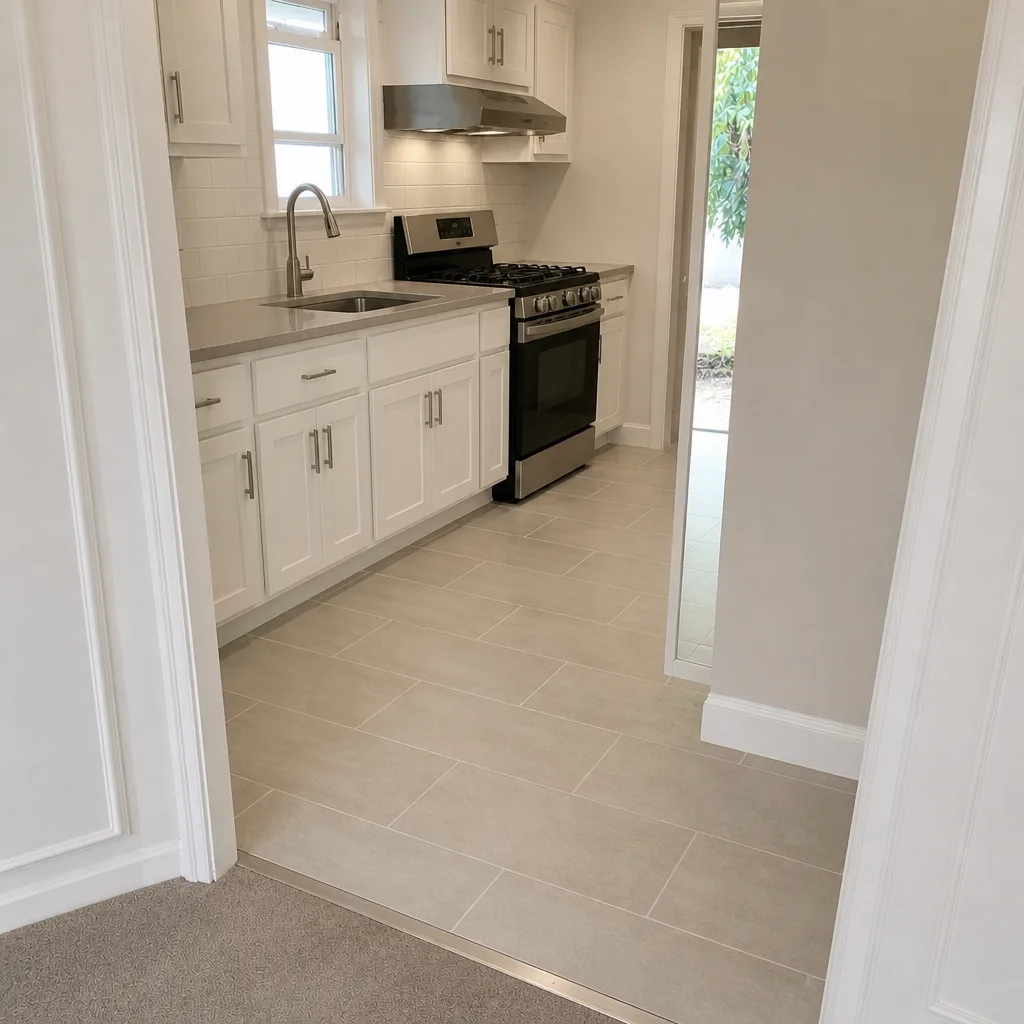 After
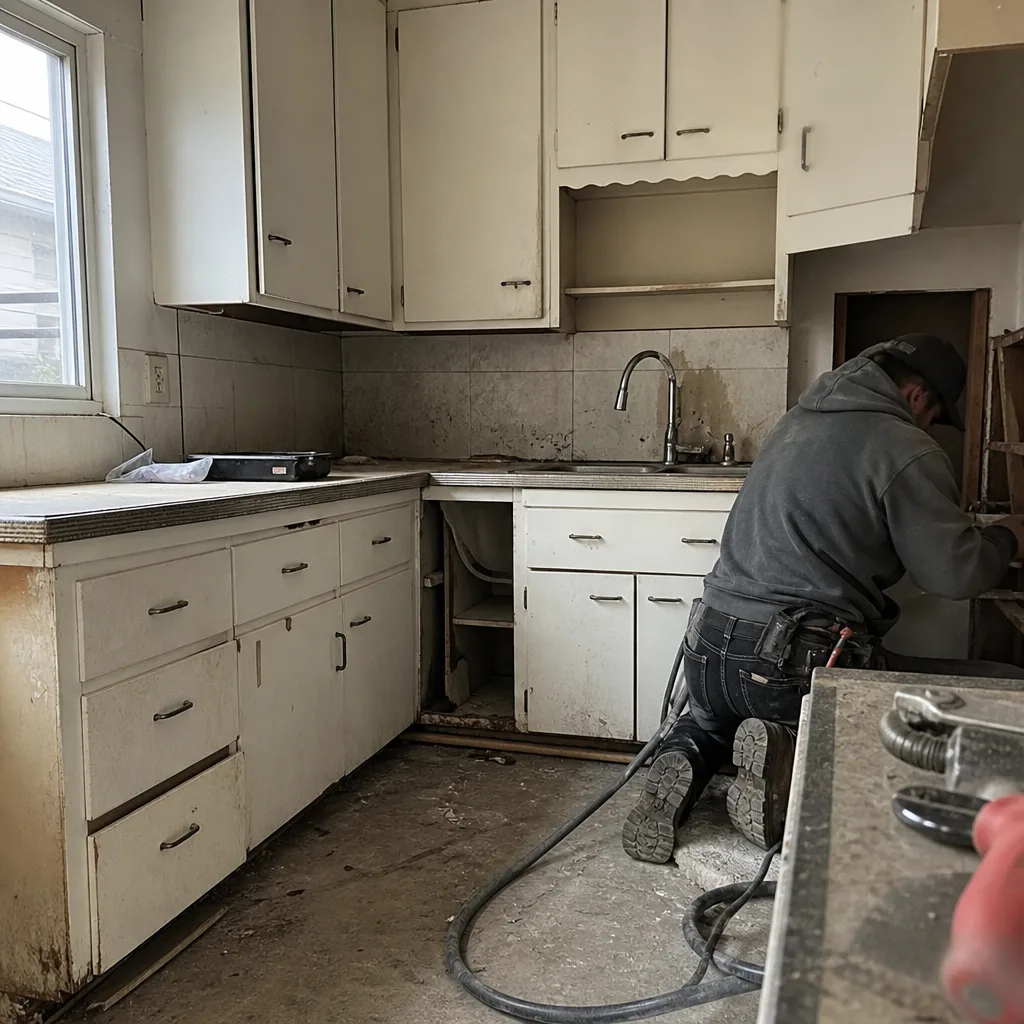 Before
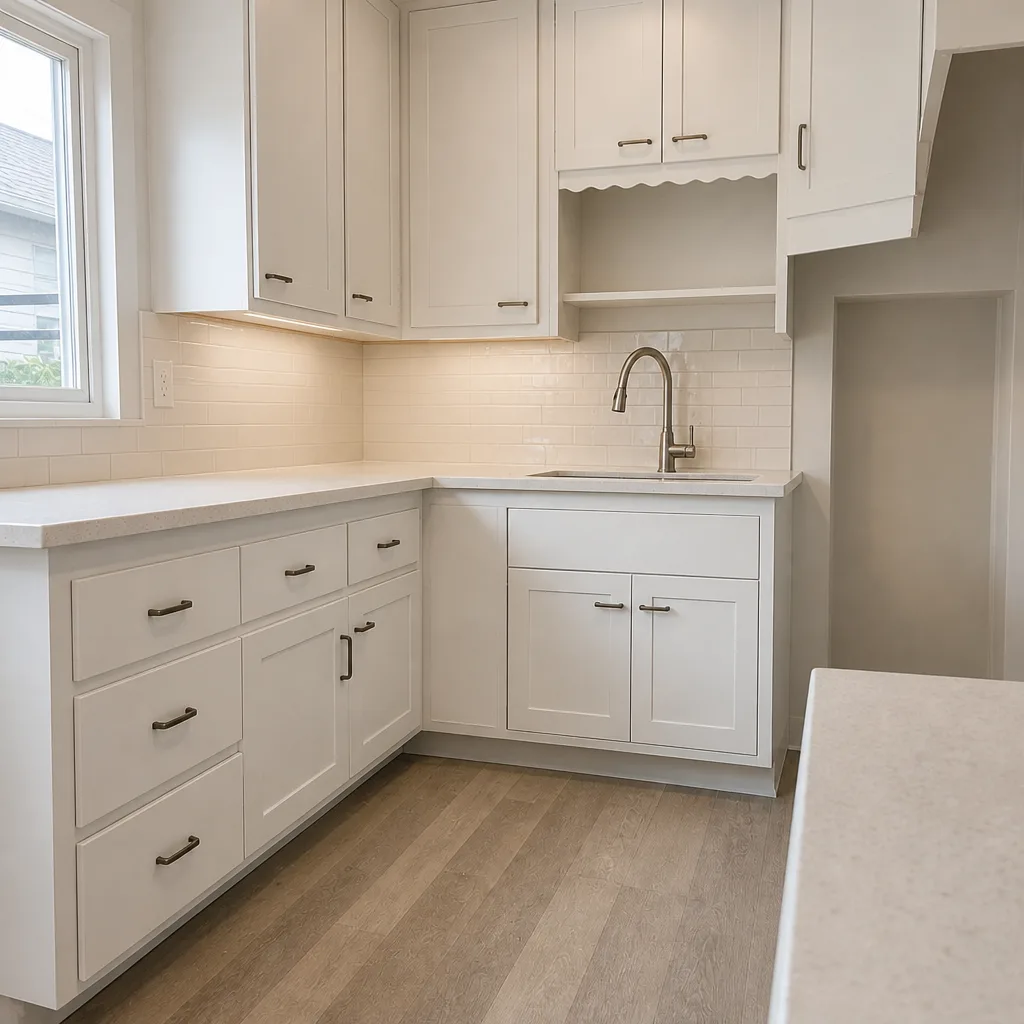 After
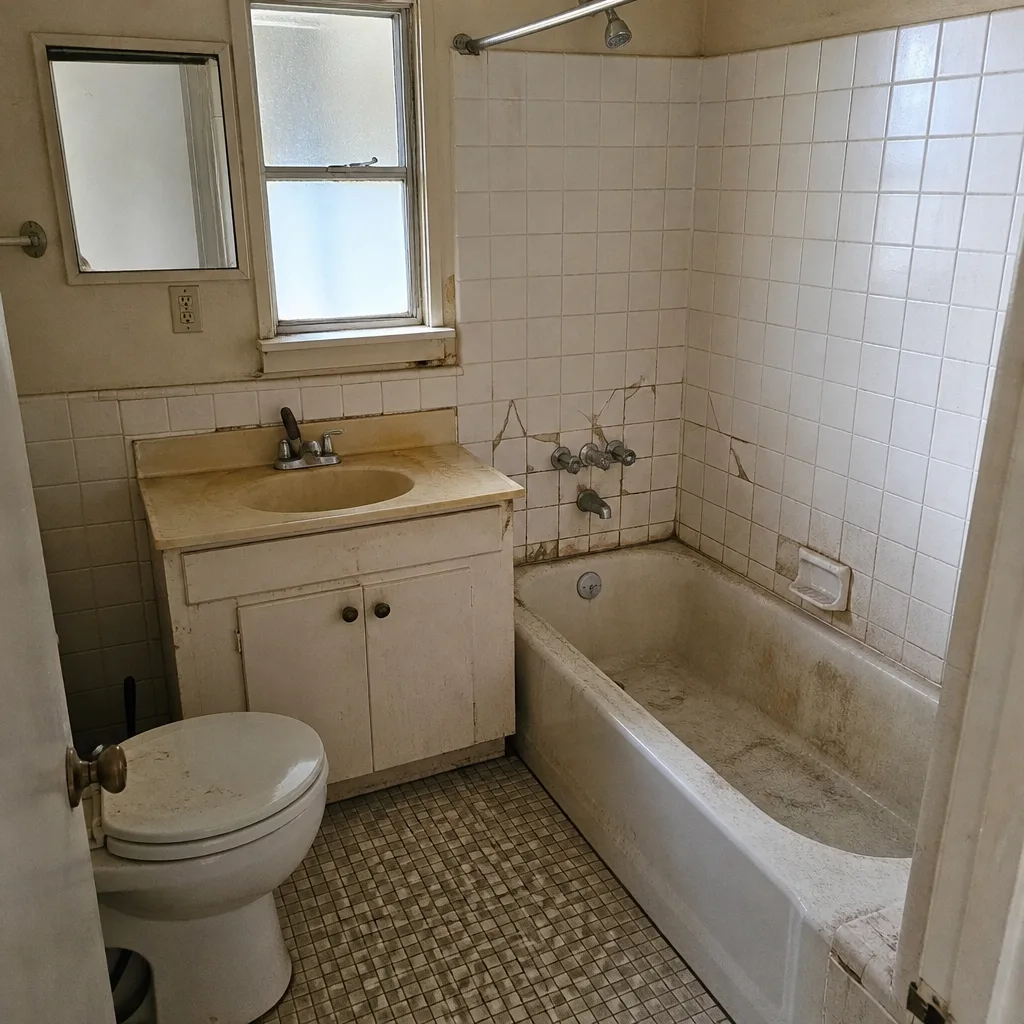 Before
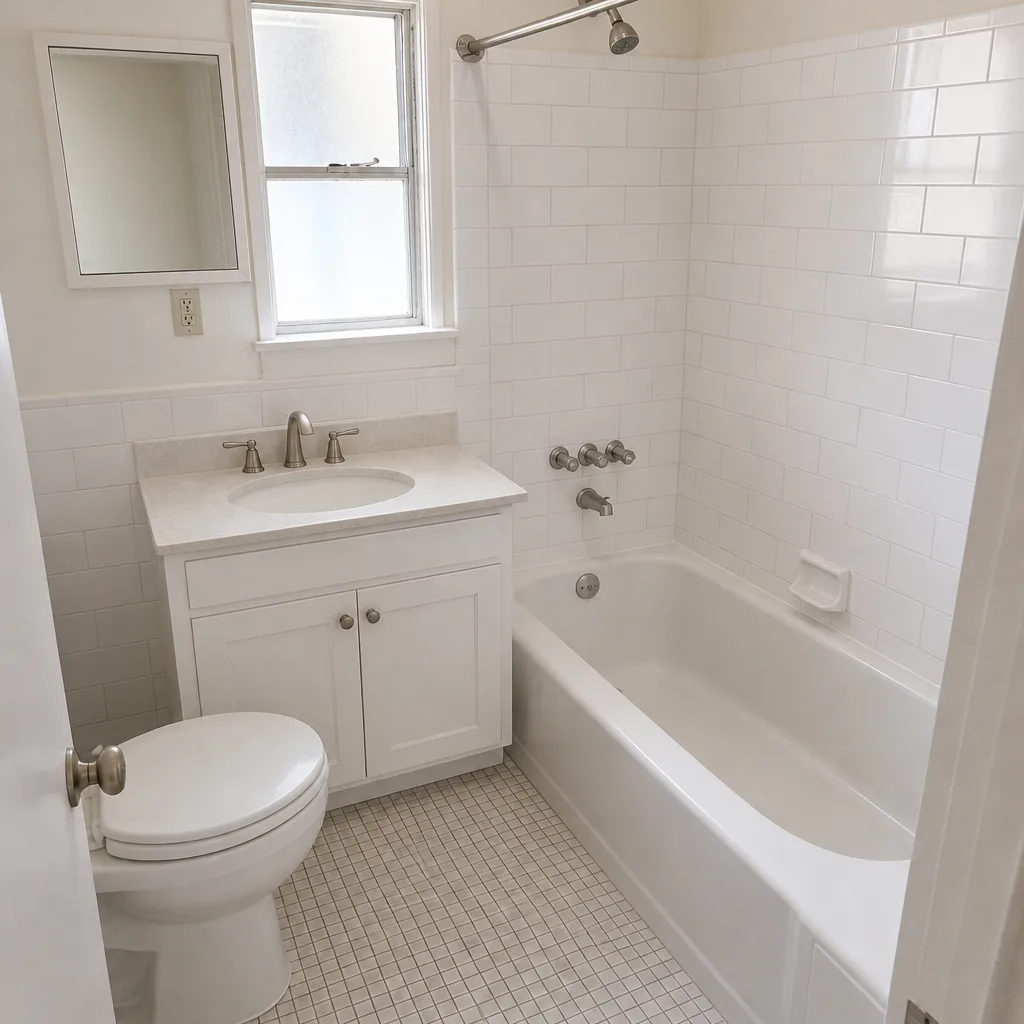 After
Tile vs. Vinyl Plank Kitchen Flooring in Berkeley, CA: Choose Tile Unless Your Subfloor Fails the Deflection Test
If your Berkeley kitchen sits on a stiffened subfloor, choose porcelain tile. If it doesn’t, choose vinyl plank. That’s the honest short answer, and it’s the opposite of what most flooring guides tell you. Those guides compare tile and vinyl plank on looks, price, and stain resistance, then leave the decision to taste. In a pre-1940 Berkeley bungalow, taste is the easy part. The floor structure underneath is what actually decides whether a tile job holds or cracks. Call Groundwork Construction Co. of Berkeley at (855) 471-4163 and we’ll assess your subfloor before you buy a single box of either.
Key Takeaways
- Porcelain tile needs a rigid subfloor with deflection no greater than 1/360 of the span. Many pre-1940 Berkeley bungalows on 16-inch joists fail that test without reinforcement.
- Vinyl plank floats over the existing fir subfloor, tolerates seasonal movement, and flexes through small tremors without cracking.
- Adding cement backer board under tile raises the kitchen floor 1/2 inch and can create an awkward step at the dining room threshold.
- Berkeley flatlands buyers in the $1.5M-$2.5M range read porcelain as standard and vinyl plank as a downgrade.
Berkeley’s housing stock is the tighter constraint here. The city holds an enormous number of early-1900s Craftsman bungalows, brown-shingle “Berkeley boxes,” and Victorians, many on unreinforced brick foundations with framing that has quietly settled for a century. Pull a kitchen permit in the Elmwood or North Berkeley flatlands, and it’s routine to uncover original redwood framing that’s still solid but has to be brought up to current shear-wall and anchor-bolt standards. That matters for flooring because any structural work under the kitchen changes the bounce in your subfloor, and your tile or plank decision has to account for what the floor will look like after the retrofit, not before. Berkeley’s green-building and seismic rules are among the strictest in the country, and they tend to reach into projects that started as a simple floor swap.
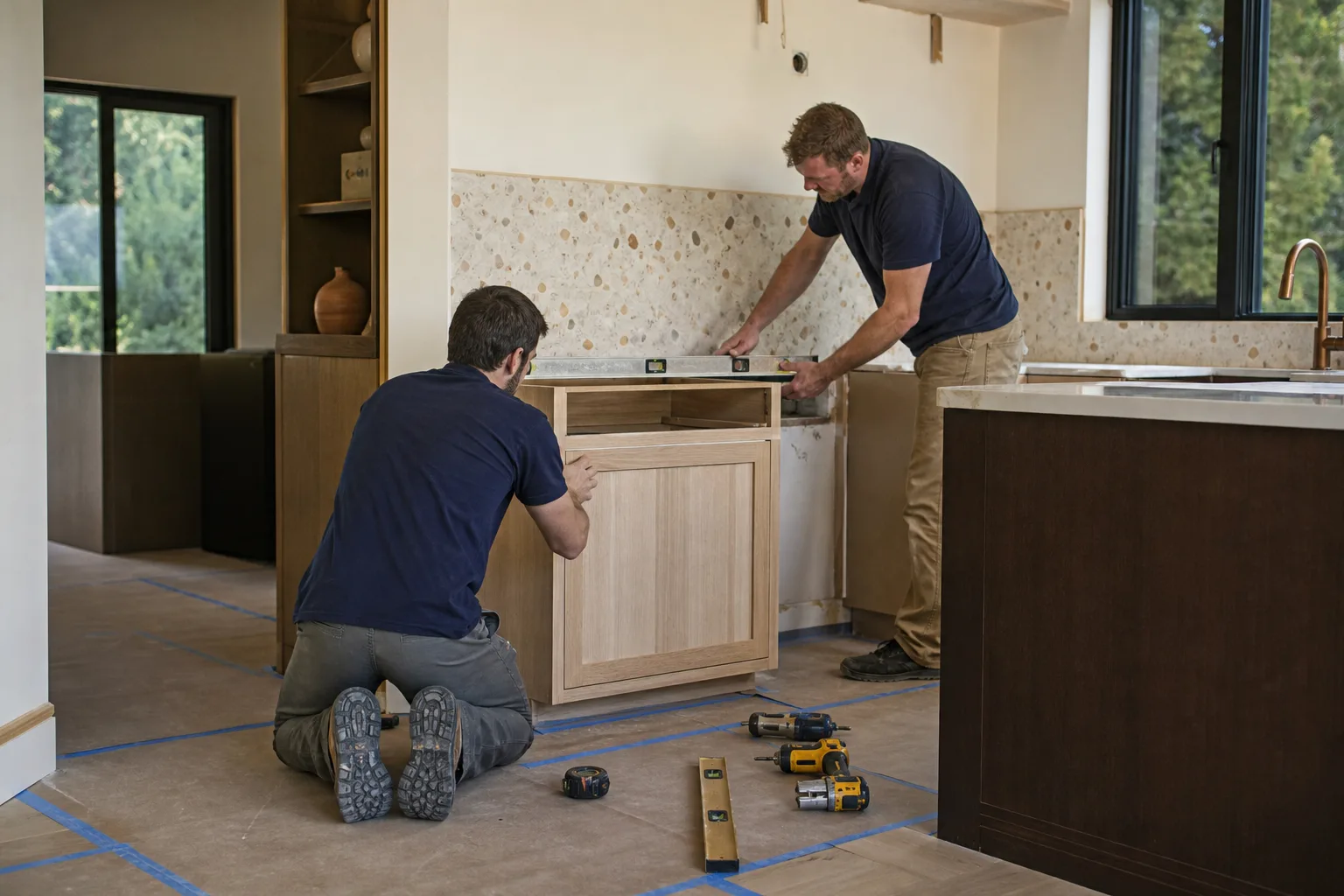
How Much Deflection Does Your Berkeley Kitchen Floor Have?
Walk across the middle of your kitchen and watch a glass of water on the counter. If the surface ripples, that floor is moving, and the amount of movement is your deflection number. Porcelain tile wants a floor that deflects no more than 1/360 of the span under a standard load. On a typical Berkeley bungalow with 3/4-inch tongue-and-groove fir boards over 16-inch-on-center joists, that number often fails without reinforcement. Install porcelain over a floor that’s too springy and the thinset bonds fine, the grout looks clean on day one, and then the grout lines start cracking within a couple of small seismic events or the first dry-season-to-wet-season swing.
The Hayward Fault runs through Berkeley, and routine tremors in the 3.0 to 4.0 range are a normal part of living here. A floor that cracks grout every time the ground twitches isn’t a warranty problem, it’s a structural mismatch. Vinyl plank, by contrast, floats over the existing subfloor on a thin underlayment. It moves with the old wood, absorbs minor seismic flex, and doesn’t have grout to crack in the first place.
What Does the Height Transition Look Like Between Your Kitchen and Dining Room?
Here’s the detail most flooring comparisons skip: to make tile work over a springy subfloor, you typically add cement backer board, and that raises the kitchen floor about 1/2 inch. If your dining room or hallway has original hardwood at the old height, that half-inch becomes a step at the doorway. It reads as a renovation mistake in a home where continuous original flooring is a resale asset, and it’s a trip hazard worth thinking about if anyone in the house has mobility concerns.
Vinyl plank has its own transition math, but a far smaller one. Most quality LVP plus underlayment sits under a quarter inch above the adjacent floor. A simple T-molding covers it cleanly. If you’re matching an original fir threshold that’s already flush, LVP usually preserves that line.
Tile vs. Vinyl Plank: A Side-by-Side for Berkeley Kitchens
| Factor | Porcelain Tile | Luxury Vinyl Plank |
|---|---|---|
| Subfloor requirement | Rigid, deflection no greater than 1/360; usually needs backer board | Floats over existing fir subfloor with thin underlayment |
| Floor height added | About 1/2 inch with backer board | Under 1/4 inch typical |
| Seismic behavior | Rigid; grout cracks if the floor flexes | Flexes with the structure; no grout to crack |
| Resale read in Berkeley flatlands | Standard for a remodeled kitchen, $1.5M-$2.5M homes | Reads as a budget choice to that buyer pool |
| Lifespan with proper install | 30+ years | 15-20 years typical |
| Best fit | Reinforced subfloor, long-horizon home | Original springy subfloor, tighter budget |
Neither product is “better” in the abstract. Tile wins on durability and resale optics. Vinyl plank wins on installation simplicity and subfloor tolerance in these old homes. The job is matching the product to the floor you actually have.
What Should You Look for in a Berkeley Kitchen Flooring Contractor?
A subfloor deflection assessment first. Any contractor who quotes you a tile job before measuring how much your floor moves is guessing, and grout crack complaints follow. Groundwork Construction Co. of Berkeley sends a background-checked project lead who either confirms your existing subfloor can support tile or writes out a line-item cost for the reinforcement it needs. That’s how our home renovation work always starts, with the structure understood before the finish is chosen.
Then look for upfront pricing, a real workmanship guarantee, and a schedule in writing. We back every kitchen floor we install with our 730-Day Done Right Promise, and the materials we spec run to tested brands like Quikrete and Sakrete for setting beds and patching, and dependable underlayment partners for the LVP path. Our technicians have up to 12 years of experience, and every installer arrives in uniform on a confirmed schedule. Calls reach a live person, 24/7, so a question mid-install doesn’t wait until Monday.
What Does a Berkeley Kitchen Floor Project Cost?
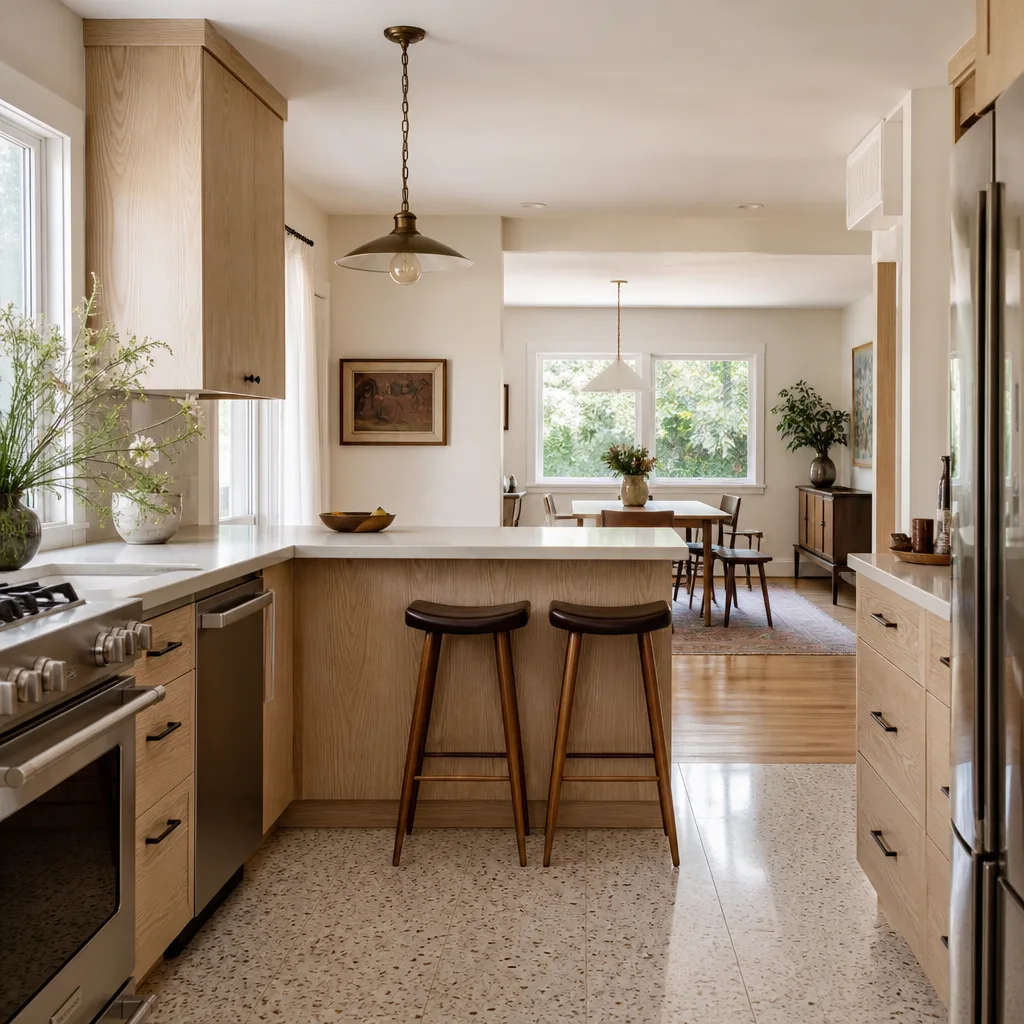
Flooring is one line in a larger kitchen budget. In Berkeley, a full kitchen remodel runs $14,000 to $45,000, and a small kitchen remodel lands between $9,000 and $20,000. If the floor is part of a broader refresh, cabinet installation runs $4,000 to $13,000, countertop installation $2,000 to $6,500, and a backsplash $800 to $2,500. Adding a kitchen island sits at $3,000 to $10,000. Pulling the whole project under one plan, from foundation to finish line, keeps the sill and floor heights coordinated instead of negotiated between separate trades.
Financing helps. We offer 0% financing for 18 months and $1,000 off projects over $10,000, so a large-scale kitchen remodel stays within reach without hidden surprises. Upfront pricing means the number you see is the number you pay. For the full scope of what a Berkeley kitchen project involves, see our Kitchen Remodeling work.
FAQs
Vinyl plank is usually cheaper to install because it floats over the existing subfloor with no backer board or reinforcement. Tile costs more once you factor in the deflection fix and the height transition work, but porcelain lasts 30+ years while LVP typically runs 15 to 20. For an exact quote on either path, call (855) 471-4163. Estimates are free.
Grout lines crack when a tile floor flexes, and Berkeley’s old fir subfloors often flex more than tile wants. A proper install on a reinforced, deflection-compliant subfloor handles routine tremors far better. If the existing subfloor can’t be brought up to standard within budget, vinyl plank is the safer call for seismic behavior. Call (855) 471-4163 and we’ll assess your floor before you commit.
In the Elmwood and North Berkeley flatlands, buyers in the $1.5M-$2.5M range generally expect porcelain or stone in a remodeled kitchen, and LVP can read as a budget choice that suppresses the appraisal relative to the remodel spend. If resale is the priority and the subfloor cooperates, porcelain supports the investment better. Call (855) 471-4163 to talk through what your home’s buyer pool will read.
Yes. A deflection assessment comes before any flooring recommendation, and you get a written line-item cost for any reinforcement tile requires. That way you’re not weighing tile styles before you know whether tile is even a viable starting point. Call (855) 471-4163. Estimates are free and there’s no pressure either way.
Get a Straight Answer on Your Berkeley Kitchen Floor
If you’d rather have it looked at than guess, Groundwork Construction Co. of Berkeley offers a no-pressure assessment in Berkeley. We’ll measure the deflection, check the threshold heights, and tell you plainly whether tile or vinyl plank fits your floor. Call (855) 471-4163 for a free estimate. Live person, 24/7.
Written by the team at Groundwork Construction Co. of Berkeley, serving Berkeley, CA.