
Fence Installation: Repair or Replace? How Berkeley Homeowners Decide
A fence that looks 70% fine can be 100% failing. In Berkeley’s wet winters and seismically active soil, post rot at the base is almost always further along than the visible boards suggest, and that’s the part a surface repair will never fix. Here’s the short answer: if the posts are sound and only boards or rails have failed, repair makes sense. If the posts are soft, leaning, or set shallow in Berkeley’s clay, you’re looking at replacement. If you’d rather have someone who does this for a living check the footings and give you a straight verdict, call (855) 471-4163.
Why “Just Patch It” Often Costs Berkeley Homeowners Twice
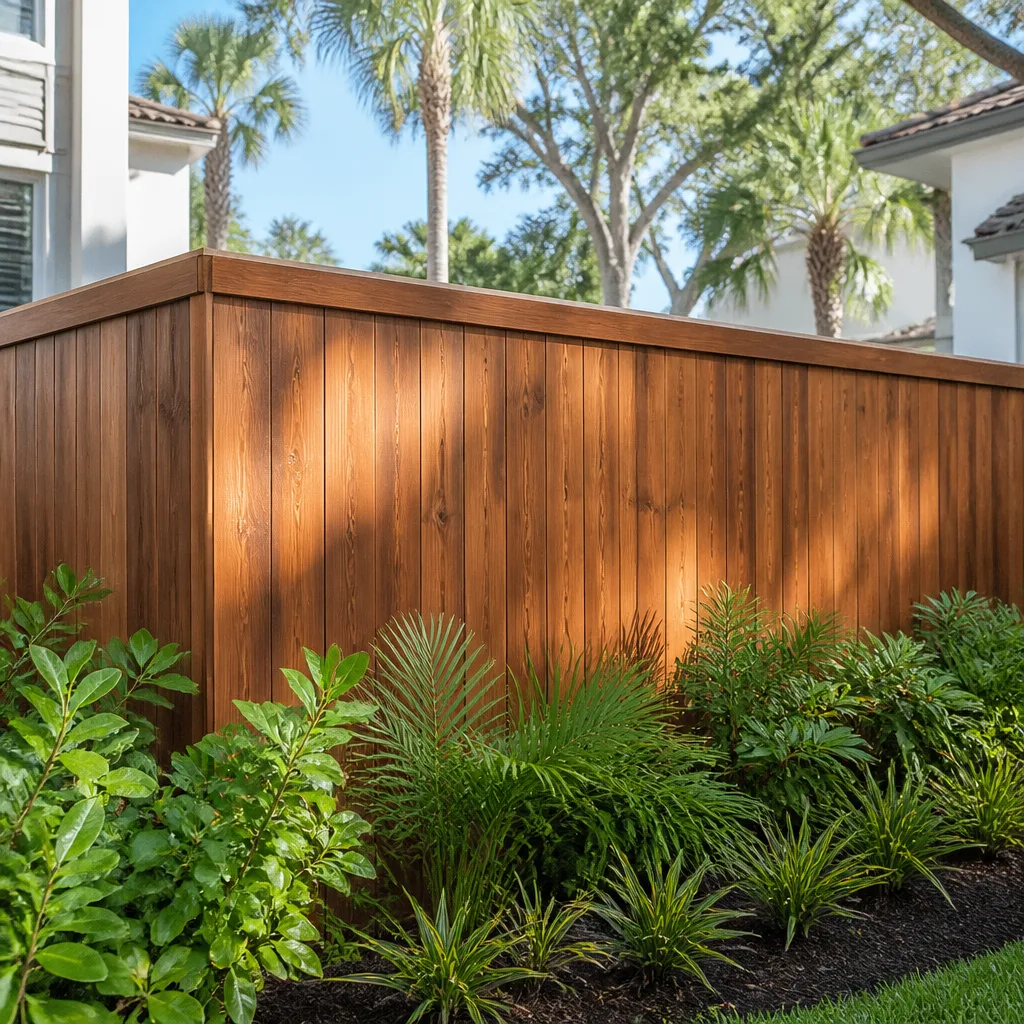
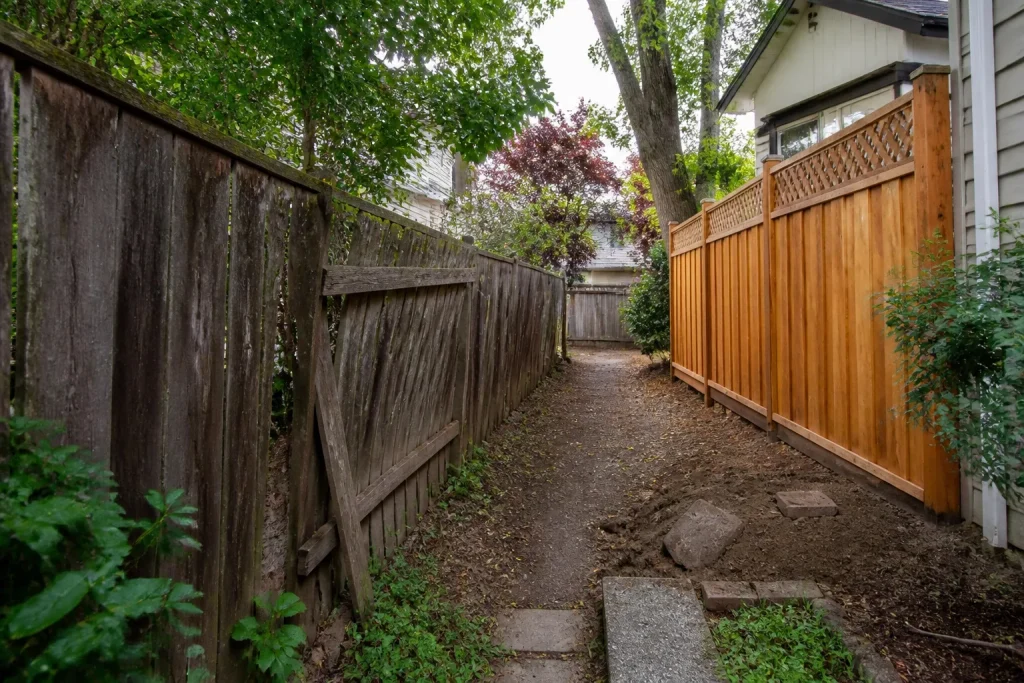
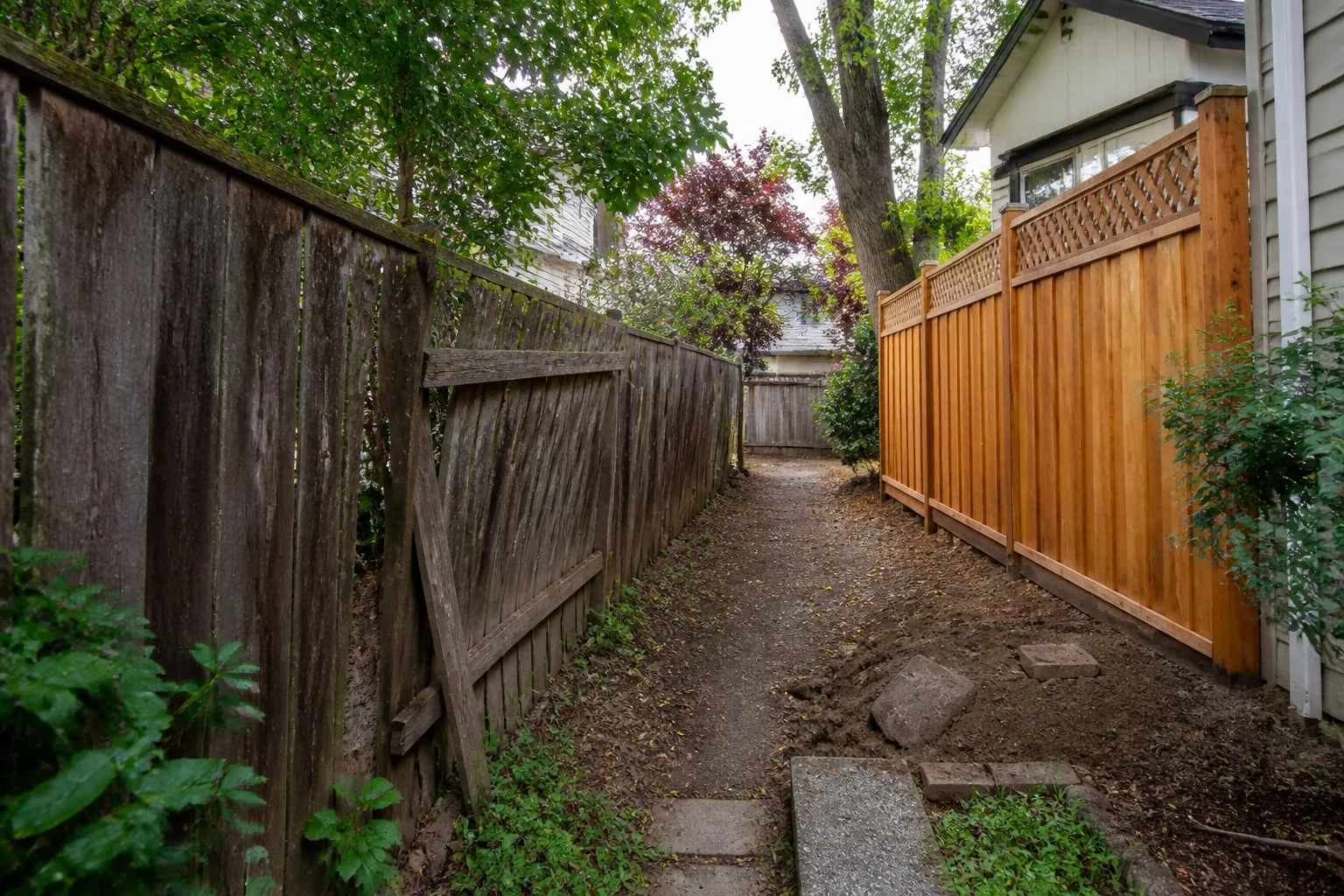
Most fence decisions get made from the sidewalk. The pickets look weathered, one section leans, so a crew swaps boards and tightens a few brackets. Six months later, the whole run is racked again. In our experience, the boards were never the problem. The post feet were.
Berkeley sits on a mix of clay-heavy soils and fill, and it gets real rain from November through March. Water moves down the post and sits in the hole. If the concrete collar is shallow or the post base wasn’t set above grade, that hole becomes a cup that stays wet for weeks. Fir and cedar absorb that moisture at the base, which is exactly where the highest load sits.
The boards you can see are the last thing to go. By the time a picket faces show rot, the post base underneath has usually been compromised for a year or more. That’s why a $900 repair on a fence with soft posts turns into a $1,900 repair the following spring, and then a full replacement at year three. You paid twice for the same fence.
The Post-Footing Test: Check Before You Call Anyone
You can figure out more in ten minutes than most fence quotes will tell you. Do this in work clothes after a stretch of dry days, not right after a rain.
- The push test. Plant a foot and push hard against each post at knee height. A sound post barely moves. A soft post moves more than half an inch, and the ground around it may crack or bulge.
- The probe test. Push a screwdriver into the post near the soil line. If it slides in with light pressure, the wood is already rotted. On a sound post, you’ll hit solid wood after a few millimeters.
- The dig-down. With a small trowel, excavate next to one post on the line. You’re checking concrete depth and width, not just how much is visible. A properly set post has a concrete collar roughly a foot deep and about three times the post’s width across, with the post base sitting above the soil line so water drains off. If you hit bare soil or the concrete is a shallow plug you can loosen with your fingers, you’ve found the real issue.
- The plumb check. A four-foot level against each post tells you whether several posts have leaned the same direction, which usually points to soil movement rather than a single bad post.
If two or more posts fail the probe or move in the push test, plan on replacement. Posts carry everything above them. Shoring them up with braces or poured footings around a rotted post rarely lasts, and a fence that fails during a windy stretch is a problem for your car, your neighbor’s car, and your liability.
Berkeley Permits: Why a “Repair” Can Trigger One
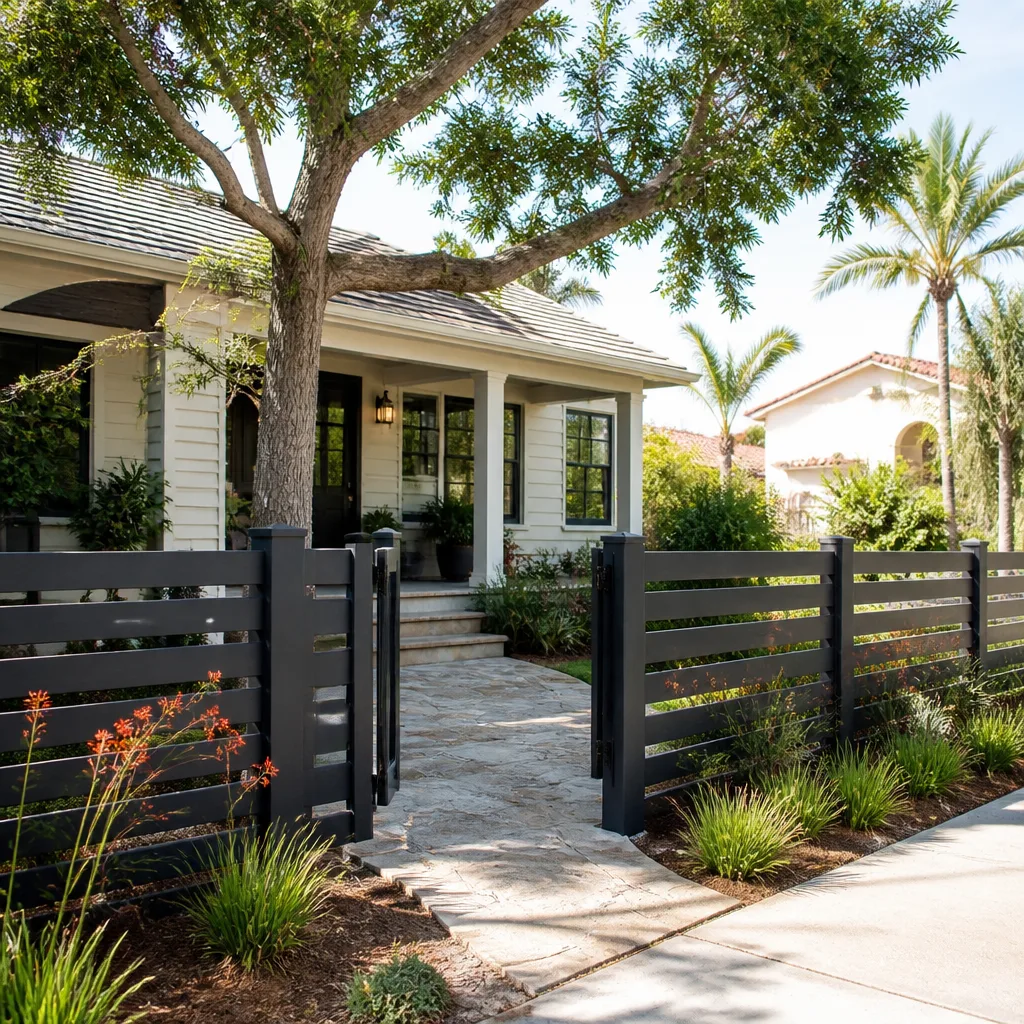
This is the part that surprises people. A like-for-like repair, meaning you replace boards and rails with the same material at the same height and in the same spot, is generally treated as maintenance and doesn’t need a permit. Change the material, change the height, or shift the line, and you’ve created a new fence in the eyes of the permitting authority.
Berkeley fence rules come down to the front yard and the side yard. Front yard fences are limited to roughly 3 feet, side and rear yard fences to about 6 feet, with height measured from the natural grade to the top of the fence, and taller fences usually need a use permit. Fences near a street corner have separate sight-distance rules. A fence sitting right on the property line needs to be exactly where the surveyed line is, and any fence that could count as a retaining wall above a certain height brings in engineering review. None of this is a reason to avoid a good fence. It’s a reason to know your limits before anyone swings a hammer.
Our advice: pull the plat map and your lot’s zoning designation before you decide, not after. If the plan crosses into permit territory, expect a short approval cycle and a clear inspection record. We handle that side of the work, including getting the permits and passing the inspections, on every fence project in Berkeley.
The Real Math: Cost Per Year, Not Cost Per Job
Repair quotes in Berkeley typically land between a few hundred and roughly a thousand dollars, depending on how many sections and what hardware. Replacement runs more, but the comparison only makes sense when you break it into cost per year of service.
| Approach | Typical upfront range | Realistic lifespan in Berkeley | Cost per year |
|---|---|---|---|
| Patch boards, keep failing posts | $400 – $1,000 | 2 – 3 years before the same failure returns | $150 – $450 |
| Re-set a few posts, reuse boards | $700 – $1,500 | 4 – 6 years | $120 – $375 |
| Full replacement, properly footed wood | $2,500 – $6,500 | 15 – 20 years | $125 – $430 |
| Full replacement, composite or metal | $4,500 – $10,000+ | 25+ years | $150 – $400 |
The mistake is comparing the numbers in the first column only. A repair looked cheap at year one and the full run got replaced at year three anyway. Add up repair plus replacement and divide by the total years of service, and the “expensive” replacement often wins. Upfront pricing, no surprises, makes the comparison honest. You see the number before you sign, and the number doesn’t move because of a change order halfway through.
Neighbor Cost-Sharing in California: What You’re Entitled To
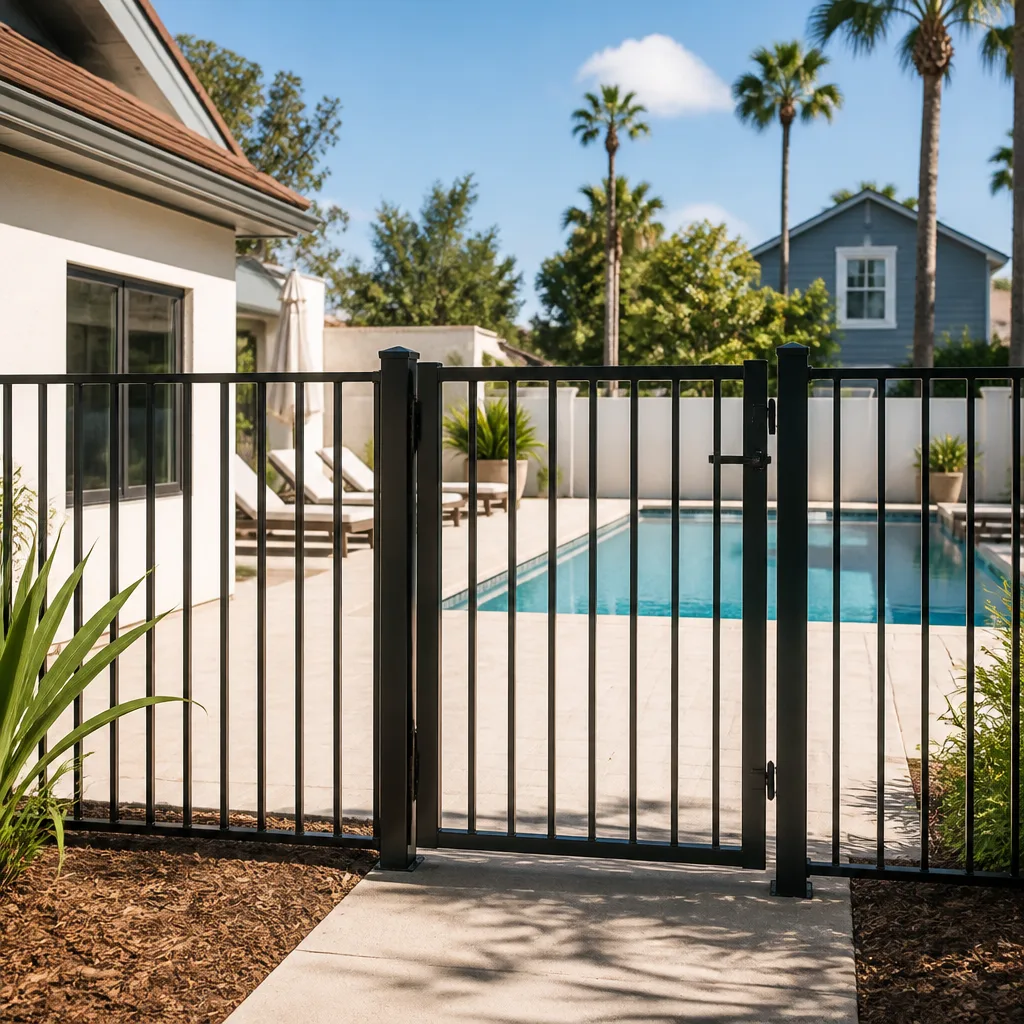
Millions of fence lines in Berkeley are shared property lines, and most homeowners don’t know the law covers this. Under California Civil Code, adjoining landowners are presumed to share responsibility for a boundary fence that benefits both properties. That presumption is written into statute, but it isn’t automatic. You have to work it out.
- Start with a conversation, not a letter. Talk about the failing posts, not the fence’s looks. A shared concern about safety registers better than a complaint about curb appeal.
- Get a written, line-item estimate and share it. Each party sees the same scope and the same number. That’s the fastest way to avoid a dispute over whose turn it is.
- Put the agreement in writing. One page, signed, with the share each party pays and a date the work starts. It protects both of you if a sale comes up later.
- Know the limits. Local rules and CC&Rs can affect boundary fences, and a neighbor who doesn’t respond can stall the project. When that happens, a mediation step is cheaper than a lawsuit.
Above all, don’t replace or extend a fence on a shared line without checking the boundary. A survey confirms the line, and the last owner’s line is not always the recorded one. We’ve seen fences run a foot into the wrong side of a lot, and that’s a mess nobody wants to fix twice.
Which Materials Actually Hold Up in Berkeley
Berkeley’s moisture cycles are the variable that matters most. Cool, wet winters followed by dry summers work wood harder than a steady climate ever would. Here’s what we’ve watched perform.
Wood (cedar, redwood, or pressure-treated pine). The most common fence here, and the easiest to repair because boards can be swapped and posts re-set individually. Cedar and redwood hold up better than pine on the wet side. Expect 12 – 18 years if the posts are properly set above grade, shorter if they’re buried. On a new wood build, we set post bases on Quikrete or Sakrete concrete with a drainage slope so the base stays dry. A well-built wood fence can still age gracefully and match the rest of the yard.
Composite. The best long-term answer against Berkeley’s wet winters. It doesn’t absorb water, doesn’t rot, and doesn’t feed termites. Warranties usually run 20 – 25 years, but know what they cover. Most cover material, not installation, so a badly footed composite fence still fails at the posts. The concrete under it has to be right.
Metal (steel or aluminum). Strong against rot and pests, and it doesn’t move much with moisture. It does shift with soil and needs solid footings in clay, and the coastal salt air can wear the finish over time. If you want privacy panels with a metal frame, expect a premium over wood.
Outdoor living touches. If the fence line meets a driveway or patio edge, the hardscape matters too. Cambridge Pavers and Oldcastle blocks hold up well along fence lines where water drains toward the street. If you’re reworking the driveway as part of the same project, our Driveway & Pavers in Berkeley page covers what pairs well with a new fence.
When to Call a Pro
Boards and rails are genuinely fixable by a handy homeowner. Post footings are a different story, and in our book a signal to call someone. Any post that fails the probe test, any fence within clearance of a structure or a pool, a fence on a shared line, and any change to height or materials sit firmly in the “get an expert” column. Digging out and re-pouring a footing next to a fence you can’t safely lean on is a two-person job with serious load on it.
If you’re at that point, we’ll walk the line with you and tell you straight whether it’s a repair or a replacement, not just what’s easier to sell. Our technicians have up to 12 years of experience, and every project comes under the 730-Day Done Right Promise. Estimates are free, and you get a written line-item quote before anything starts.
Related services in Berkeley: Fence Installation in Berkeley and Home Additions & ADU in Berkeley, plus Groundwork Construction Co. of Berkeley home to see the full picture and our brand partners across every trade.
The Bottom Line
If the boards are failing and the posts are solid, patch it. If the posts are soft, leaning, or shallow, replace it. Check the footings before you accept a quote, know Berkeley’s height and setback limits before you change materials, and add up the real cost per year rather than the cost at the register. That math almost always tells you the truth.
If you’re in Berkeley and need help, Groundwork Construction Co. of Berkeley offers free estimates, written upfront pricing, and financing at 0% for 18 months. Call (855) 471-4163 to get a straight answer on your fence, or stop by the Driveway & Pavers in Berkeley service for the hardscape side of the same project. Calls are answered by a live person, 24/7.
Frequently Asked Questions
Push each post at knee height, probe the base near the soil with a screwdriver, and dig down next to one post to see the concrete collar. If two or more posts move, probe soft, or sit in shallow concrete, they need replacing. A fence with soft posts can’t be saved by boards alone.
Like-for-like repairs generally don’t need a permit. Changing the height, material, or location generally does. Front yard fences are limited to about 3 feet and side and rear fences to about 6 feet, and taller fences usually need a use permit.Confirm the limits with the city before you start. Call (855) 471-4163 if you want help getting the permits pulled.
Yes. California law presumes adjoining landowners share responsibility for a boundary fence that benefits both properties. Get a written, line-item estimate, agree on the split in writing, and confirm the property line with a survey. That protects both sides.
Repair is cheaper upfront, usually $400 – $1,500, but only if the posts are sound. If the posts are failing, the same failure returns in two or three years and you pay twice. On a cost-per-year basis, replacement on solid footings is often the better deal. Call (855) 471-4163 for a free estimate and a cost-per-year breakdown.
Written by the team at Groundwork Construction Co. of Berkeley.
Need Construction Help?
Call Groundwork Construction Co. of Berkeley - licensed & insured, here with fast after-hours help in Berkeley.
(855) 471-4163