
James Hardie Driveway & Pavers in Berkeley: A Homeowner’s Guide
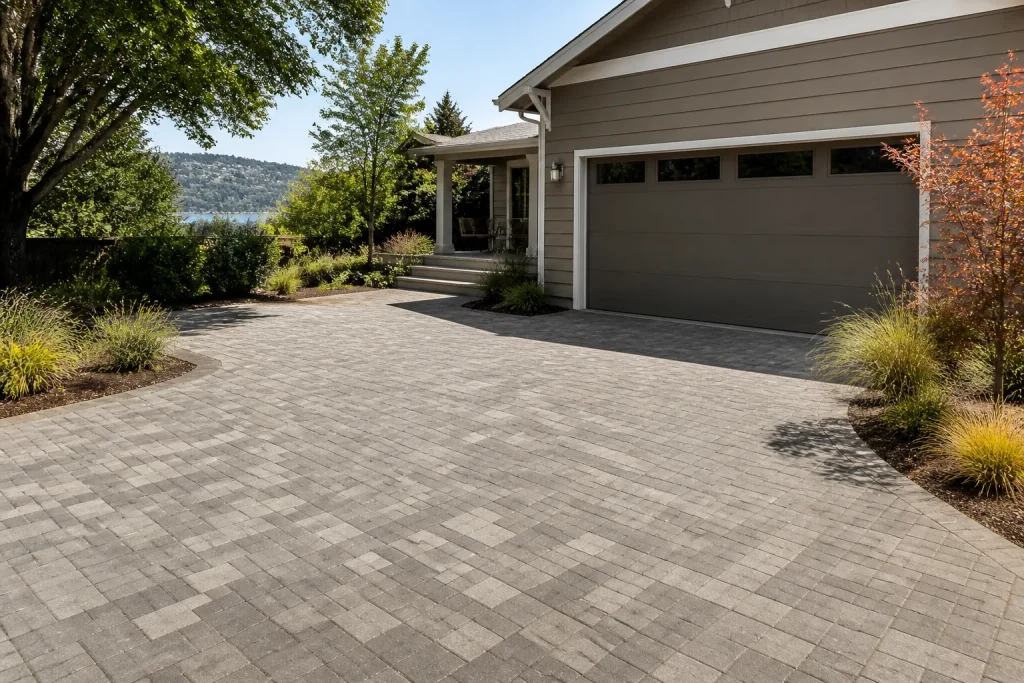
James Hardie doesn’t make driveway pavers. Yet the fiber cement standards they engineered for coastal California tell you almost everything you need to know about what a paver should do in Berkeley’s fog belt. Most homeowners shopping for driveway pavers compare colors and patterns first. That’s the mistake. In Berkeley, moisture and temperature movement decide whether a driveway looks sharp in year ten or crumbles at the edges by year four. If your paver contractor can’t explain how their product handles the same conditions Hardie builds against, that’s your answer.
Below we walk through what Hardie’s climate engineering reveals, how to translate those standards into a paver spec sheet, and what to ask before anyone breaks ground on your Berkeley driveway. If you’d rather skip the research and talk to someone who does this every week, call (855) 471-4163.
What James Hardie’s HZ10 Coastal Standard Reveals About Berkeley Exteriors
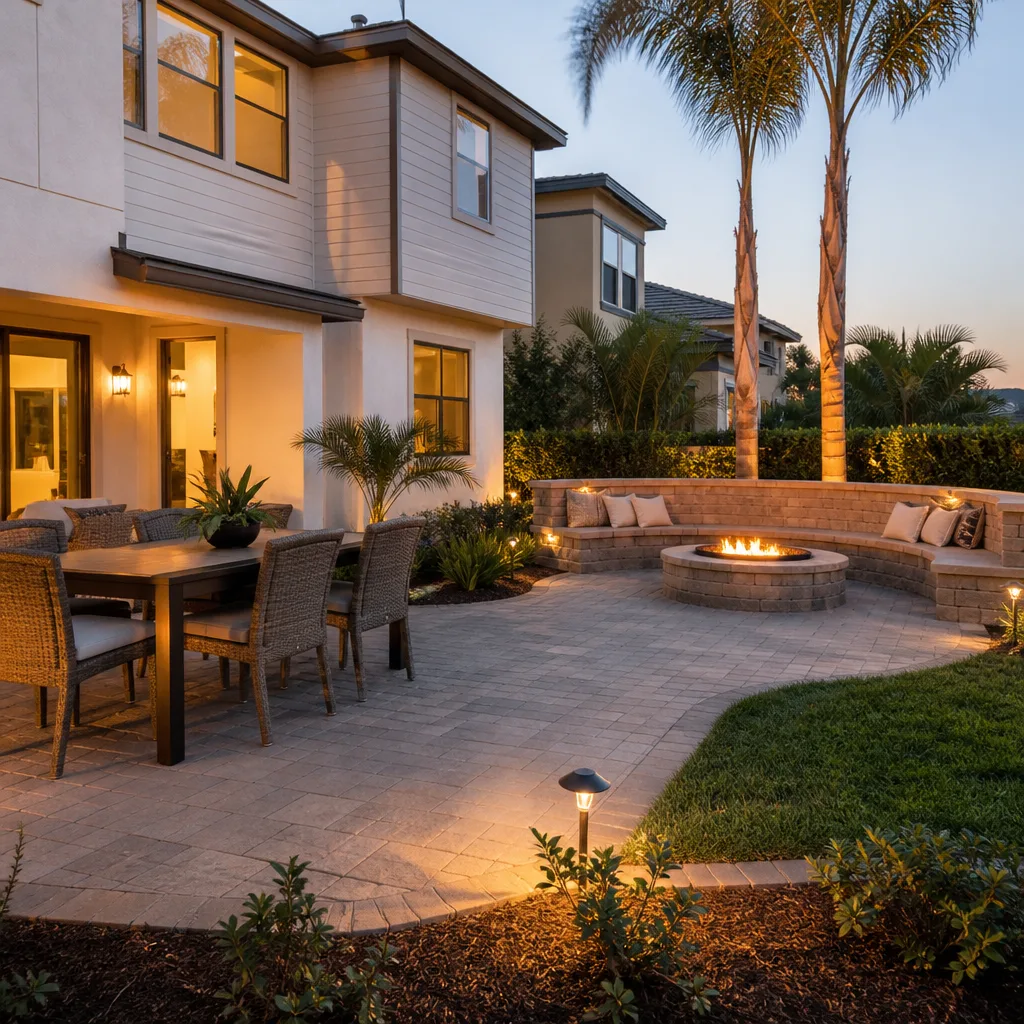
James Hardie rates its siding products by climate zone, and the Bay Area falls into their HZ10 coastal category. That rating isn’t marketing decoration. It defines a set of performance thresholds a material must clear to survive salt air, persistent fog, and constant moisture cycling. Hardie’s HZ10 products are engineered for high humidity, frequent wetting and drying, and airborne salt. Look at what they’re protecting against and you have a checklist for any exterior material in Berkeley, pavers included.
Berkeley sits in one of the most moisture-intensive microclimates in the East Bay. The fog that rolls over the hills from the Golden Gate keeps surface conditions damp well into the morning across neighborhoods like the Berkeley Hills, Thousand Oaks, and the flats near Aquatic Park. That moisture doesn’t just sit on top; it wicks into porous materials, freezes on cold nights, expands, and works at the structure from inside.
- Moisture resistance: Hardie’s HZ10 products resist water absorption so the material doesn’t swell or soften.
- Dimensional stability: They hold their shape across wet-dry cycles without warping or cupping.
- Freeze-thaw durability: They survive the temperature swings that crack less-engineered products.
- Salt tolerance: They hold up to the salt-laden air that degrades cheap exterior finishes.
Those four traits are exactly what separates a driveway that lasts from one that spalls. A paver that absorbs water will fail in Berkeley’s climate no matter how good it looks on day one.
Why Density and Water Absorption Matter More Than Color or Pattern
When you’re evaluating concrete pavers for a Berkeley driveway, two numbers on the spec sheet carry more weight than anything in the color catalog: density and water absorption rate. High-density pavers with low absorption resist moisture penetration and hold their structural integrity through years of wet-dry cycles. Low-density, high-absorption pavers invite the exact failure modes Hardie engineered its coastal products to avoid.
The practical benchmark: ask your contractor for the paver’s water absorption rate, expressed as a percentage by weight. Lower is better. A dense, low-absorption paver resists the wicking that leads to freeze-thaw damage and surface spalling. Cheaper pavers often skip the compaction and curing steps that produce that density, and you pay for it a few winters later.
We’ve watched Berkeley homeowners choose a paver by its color match to their stucco, then call us two years later because the surface is flaking. Color is a design decision. Density is a durability decision. You want both, but if you have to trade one, trade the color.
This is the same logic behind the brand partners we specify across every trade. Whether it’s a Caesarstone countertop in a Berkeley kitchen or a paver system on the driveway, we choose materials by their engineered performance, not just their availability. The spec sheet tells the truth that the showroom doesn’t.
Freeze-Thaw in Berkeley: The Risk Most Contractors Downplay
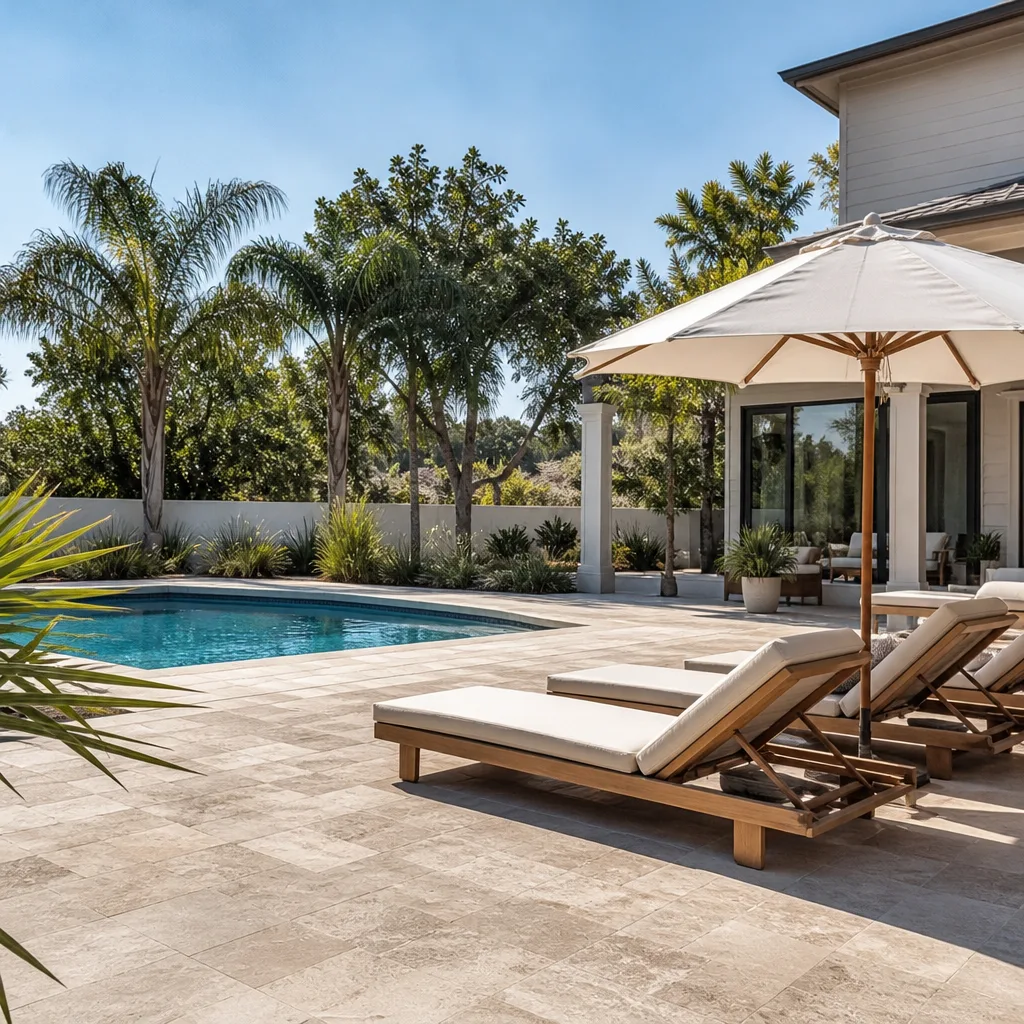
Berkeley doesn’t get hard winters, so plenty of contractors wave off freeze-thaw concerns. That’s a mistake. The damage doesn’t require deep freezes – it requires temperature cycling, and Berkeley has that in abundance. Cold nights drop surface temperatures near or below freezing, then warm days thaw the moisture that worked its way into the paver. Water expands when it freezes. Repeat that cycle dozens of times a season and even a decent paver starts to spall at the surface.
The mechanism is simple. Moisture enters a porous paver, temperature drops, the water freezes and expands, the surface lifts slightly, then thaws. Do that over and over and small flakes break away from the face. Once spalling starts, it accelerates – each exposed layer absorbs more water and fails faster.
How to spec against it:
- Low water absorption: Choose pavers with a low absorption rate so less water enters in the first place.
- Proper base compaction: The sub-base needs to be compacted in lifts, not dumped and smoothed, so the whole assembly drains and settles uniformly.
- Correct drainage slope: Water that sheets off the driveway doesn’t have time to soak in.
- Joint sand that locks: Polymeric or properly installed joint sand keeps water from funneling between pavers.
In the Berkeley Hills, where nights run colder than the flats, this matters most. A driveway that drains well and uses dense pavers is the difference between a ten-year surface and a thirty-year one.
The Sub-Base Moisture Barrier Question
Here’s where budget-conscious contractors cut corners. A moisture barrier or drainage layer under the paver base isn’t always required, but in certain Berkeley conditions skipping it is a costly shortcut. The barrier keeps groundwater and soil moisture from migrating up into the base and paver bed, which is what drives the wicking and freeze-thaw failure we just described.
When it matters in Berkeley:
- Low-lying, flat lots where water pools and the water table sits close to the surface.
- Hillside properties where groundwater moves laterally through the soil toward the driveway.
- Heavy clay soils common around the flats, which hold water instead of draining it.
- Driveways against a retaining wall or slope where moisture has nowhere to go but up.
When it’s less critical – a well-drained, sloped lot over sandy or gravelly soil – a contractor may reasonably skip a full barrier and rely on a properly graded, compacted base. The point is that the decision should be driven by the site, not by the bid. Ask your contractor why they’re including or excluding a barrier on your specific property. A straight answer with a site reason behind it is a good sign. A shrug is not. From foundation to finish line, we treat the unseen layers as seriously as the visible ones, because that’s where driveways fail.
Installation Warranties Should Match Manufacturer Specs
A paver’s manufacturer warranty usually covers the product. The installation warranty covers the work. In Berkeley’s climate, the two need to line up – a ten-year product spec paired with a one-year installation warranty leaves you exposed for nine years. The install is what determines whether the paver performs to its rating, so the workmanship guarantee should reflect the same confidence.
What to ask to confirm the warranty actually matches the spec:
- “Does your installation warranty cover the length of the material spec?” If the paver is rated for twenty years of coastal performance, the install should not be warranted for twelve months.
- “What does the warranty exclude?” Spalling, settlement, and drainage failures are exactly the things that go wrong – make sure they’re covered, not carved out.
- “Who stands behind it in writing?” Get the guarantee in the contract, not in conversation.
- “What happens if the base settles?” The answer tells you how much faith they have in their own prep work.
This is why our work carries the 730-Day Done Right Promise – if it’s not done right, we make it right. A guarantee that lasts two years on installation aligns the workmanship with the material performance, which is the whole point of pairing premium products with accountable installation. Built to last, backed in writing.
When to Call a Pro
Laying a small paver path is a weekend project. Engineering a driveway that survives Berkeley’s fog and freeze-thaw cycles is not. Once you’re dealing with a full driveway, sub-base prep, drainage grading, and a moisture barrier decision, the margin for error gets expensive fast. Getting the base wrong doesn’t show up for a couple of years, and by then the fix means tearing out everything above it.
If you’re weighing materials and want a straight read on what your specific Berkeley lot needs, that’s a conversation worth having before you buy a single paver. We’ll tell you what holds up and what doesn’t. Related services in Berkeley: Driveway & Pavers in Berkeley.
The Bottom Line
James Hardie never set out to make pavers, but the standards they engineered into HZ10 coastal products reveal what any driveway material in Berkeley has to survive: constant moisture, temperature cycling, and the slow attack of freeze-thaw. The takeaway is straightforward. Judge pavers by density and water absorption before color. Spec against spalling. Ask how the sub-base drains. And demand an installation warranty that matches the material’s spec, because in this climate the install is what makes the performance real.
If you’re in Berkeley and need help sorting paver spec from paver marketing, Groundwork Construction Co. of Berkeley offers free estimates – call (855) 471-4163. You’ll get upfront pricing, no surprises, and a live person on the line, 24/7. You can also start at our Groundwork Construction Co. of Berkeley home page to see the full range of work we do. Planning other exterior projects? Our teams handle Fence Installation in Berkeley and Home Additions & ADU in Berkeley with the same material-first approach.
Frequently Asked Questions
No. James Hardie is a fiber cement siding and exterior products manufacturer and does not produce driveway pavers. What their coastal HZ10 standards reveal, though, are the moisture, dimensional stability, and freeze-thaw performance thresholds that any exterior material should meet in Berkeley’s climate. We use those standards as a benchmark when evaluating paver specs.
Lower is better, and you want a paver formulated for freeze-thaw resistance. Ask your contractor for the manufacturer’s published absorption rate and choose a high-density paver that resists wicking. A paver that pulls in water will spall faster in Berkeley’s recurring wet-dry and freeze-thaw cycles, no matter how good it looks initially.
Not always. It depends on your site. Low-lying lots, hillside properties where groundwater moves toward the driveway, and heavy clay soils usually need one. A well-drained, sloped lot over sandy soil may not. Make the contractor explain the reasoning for your specific property rather than applying a default answer.
Costs vary with square footage, paver density and finish, site grading, and whether a moisture barrier or drainage system is needed. Rather than quote a number that won’t fit your property, we recommend a site-specific estimate. Call (855) 471-4163 to schedule your free estimate – quotes are free and the pricing is upfront, no surprises.
Written by the team at Groundwork Construction Co. of Berkeley.
Need Construction Help?
Call Groundwork Construction Co. of Berkeley - licensed & insured, here with fast after-hours help in Berkeley.
(855) 471-4163