
KraftMaid Driveway & Pavers in Berkeley: A Homeowner’s Guide
You wouldn’t accept a kitchen cabinet with uneven gaps, weak joinery, and a finish that chips in two years. So why do most homeowners accept exactly those failure modes in driveway paver installation? The standard you hold indoor work to should apply outdoors too. KraftMaid built its name on tight tolerances and finishes that survive daily abuse, and those same principles are exactly how you should judge a paver job in Berkeley. Here’s how to translate cabinetry-quality thinking into hardscape standards.
If you’d rather not spend your weekend measuring joints and reading spec sheets, call (855) 471-4163 and we’ll talk through what your driveway actually needs.
Why Cabinetry Standards Belong on Your Driveway
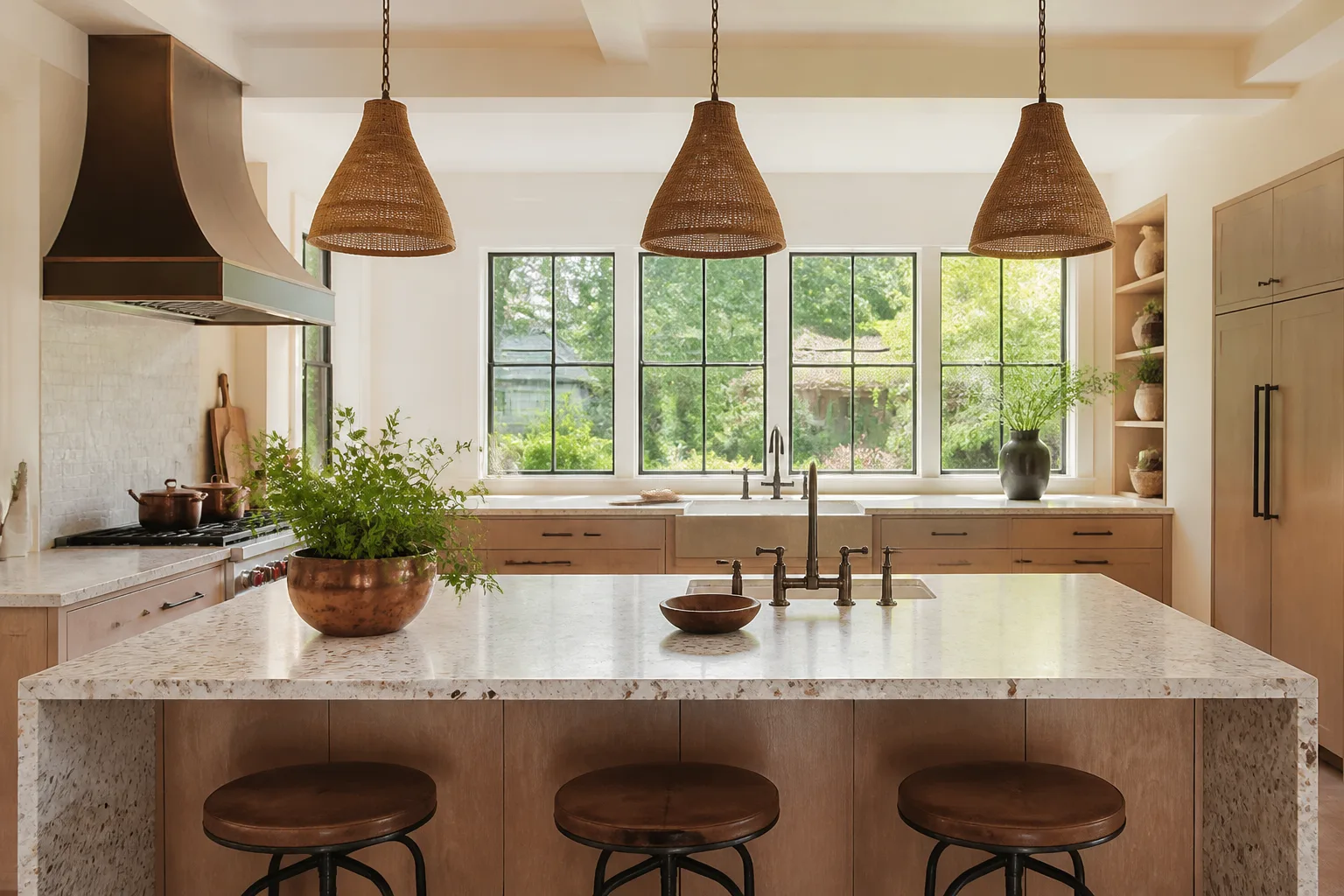
Furniture-grade cabinetry and a paver driveway seem like different worlds until you look at what makes each one last. Both depend on joints that stay tight, materials that hold their dimensions through temperature swings, and a protective finish that resists moisture and sun. In Berkeley, that last point matters more than most cities. The marine layer rolls in overnight for months of the year, then summer sun hits the same surface hard by afternoon. That wet-dry cycle is the enemy of any finish, indoor or outdoor.
What we’ve seen after twelve years of installations is that paver failures almost never come from the stone itself. They come from the installation decisions around the stone: joint sand that never set, edges left unsecured, base compaction skipped. A KraftMaid cabinet fails because someone cut a corner on joinery. A paver driveway fails for the same reason. The product grade matters, but the craft around it decides whether you get twenty years or two.
That’s the lens this guide uses. Hold your paver contractor to the same bar you’d hold a cabinet maker to, and the driveway you get will still look right a decade from now.
Joint Spacing Tolerances: What “Good” Actually Looks Like
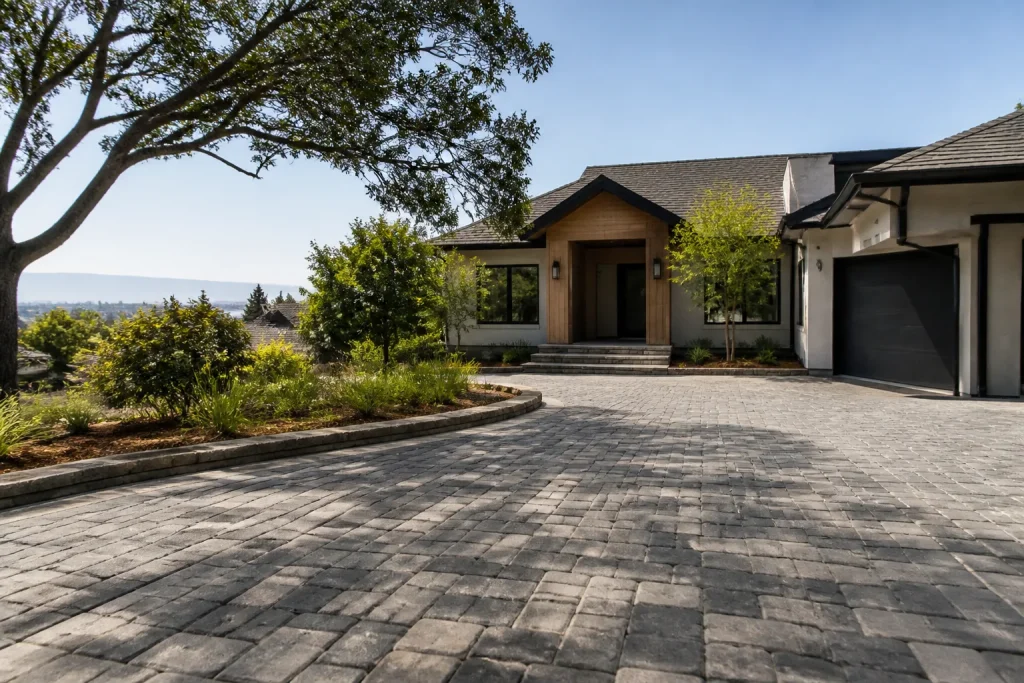
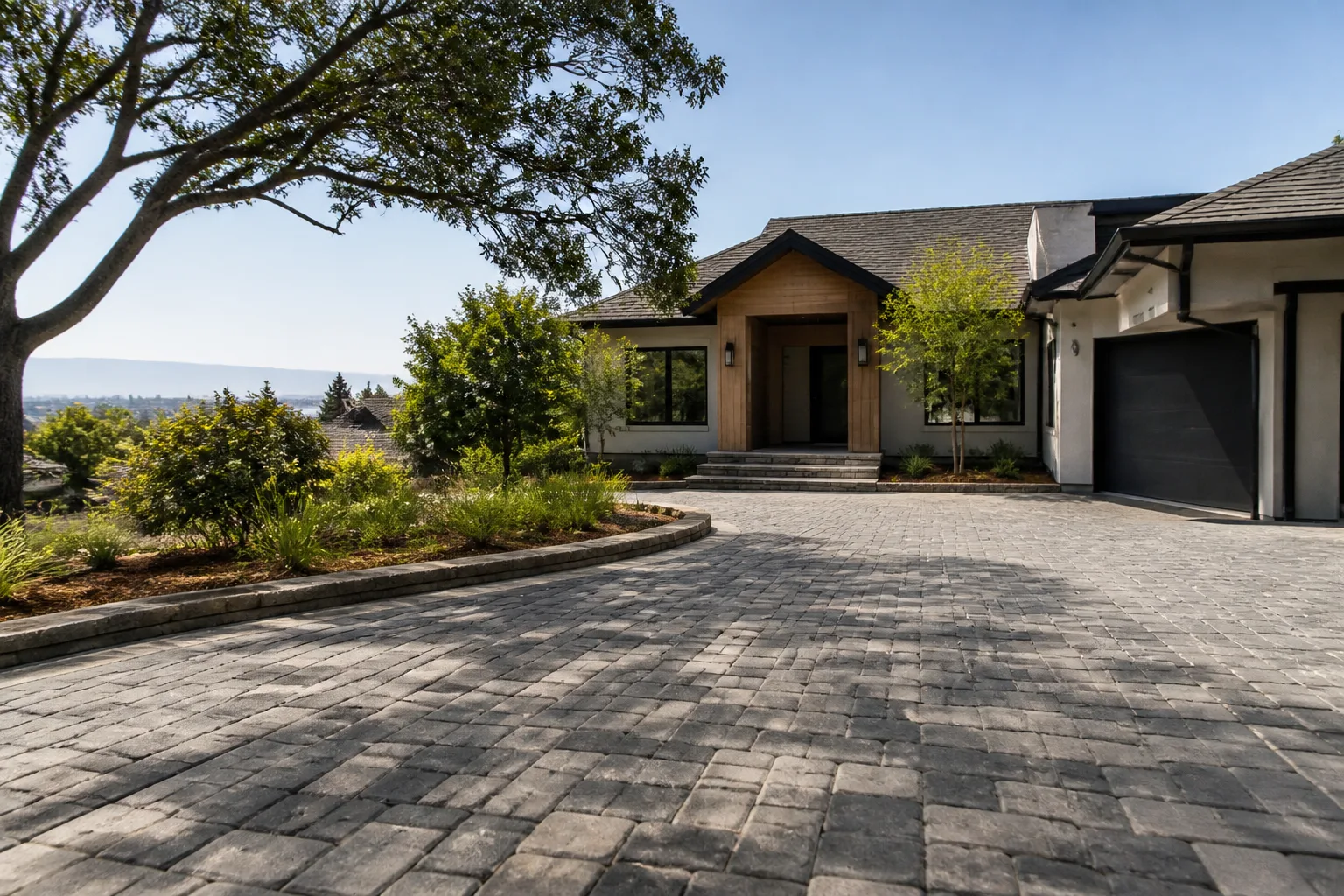
Joint width and consistency tell you more about an installer’s skill than any brochure photo. A professional paver installation holds joints between roughly 1/8 inch and 3/16 inch, consistent across the field, with slight variation only where the pattern demands it. Sloppy work shows up as joints that wander from hairline-thin in one area to a fat quarter-inch in another, usually because the crew eyeballed layout instead of snapping lines.
Here’s what to check before the sand gets swept in and hides the proof:
- Straight runs: On a herringbone or running bond pattern, sight down the joint lines. They should track straight, not ripple.
- Consistent width: Walk the field and watch the gap between pavers. It shouldn’t widen and narrow unpredictably.
- Square corners: Check where the field meets a border course. A true 90-degree corner is measurable, not approximated.
- Flush edges: Bar any intentional chamfer, adjacent pavers should sit level, with no lip to catch a shoe or a snow shovel.
One bad stretch of joints can telegraph across the whole driveway, and once sand and sealer go down, rework costs triple. Ask to inspect a job mid-install, not just at the finished reveal.
Finish Durability: Sealing Logic for Berkeley’s Climate
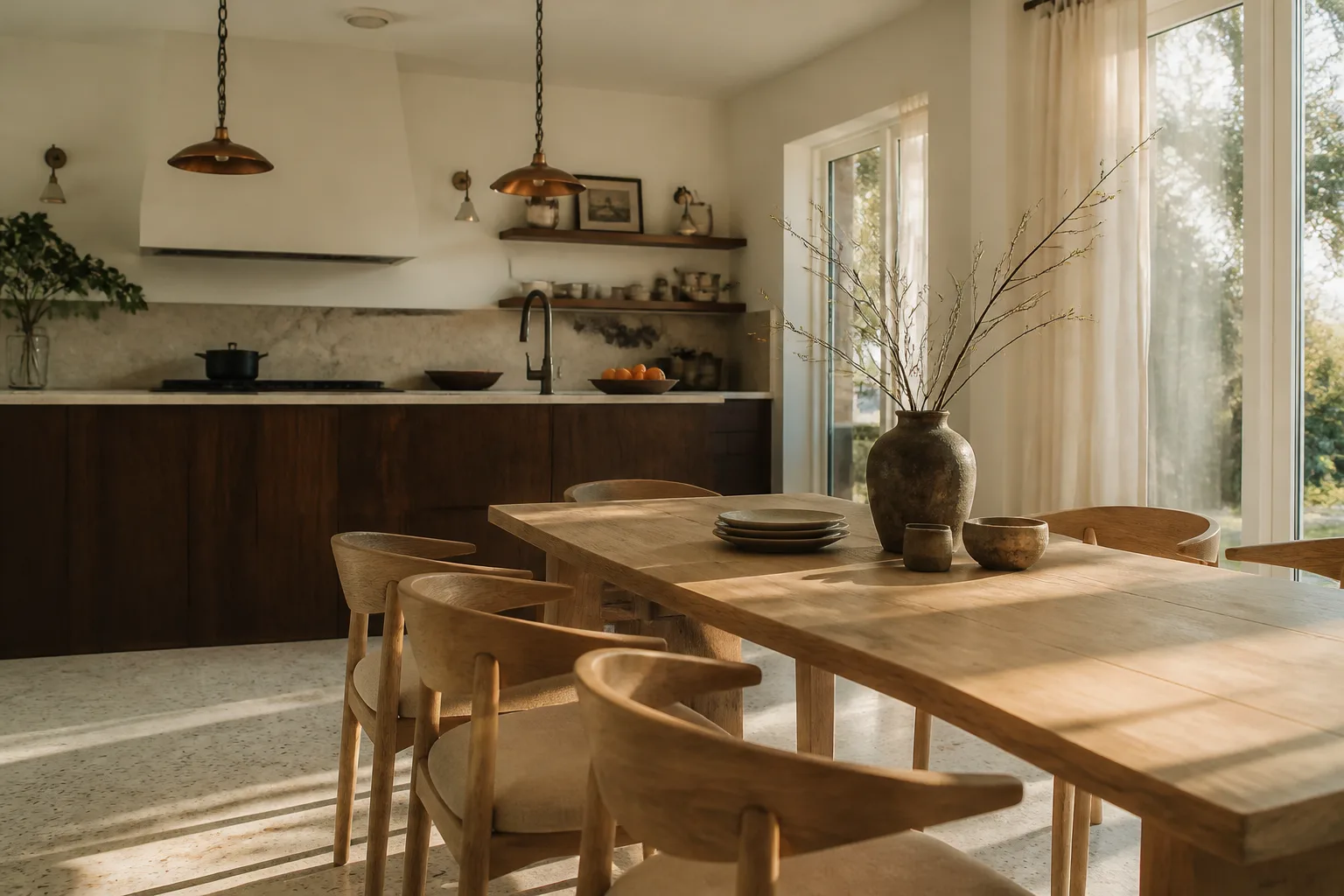
KraftMaid’s finishes hold up because they’re multi-step: prep, seal, topcoat, each layer doing a specific job. Paver sealing works the same way, and Berkeley’s UV load plus foggy mornings make a two-step or three-step protocol worth the extra cost. A single spray-and-walk-away coat looks great for one season and then peels.
What a proper protocol includes in our Berkeley projects:
- Full cure before sealing: New pavers need time to dry and stabilize. Sealing a wet or green installation traps moisture and clouds the finish.
- Surface prep: Clean, degreased, and fully dry. Efflorescence, the white mineral haze that appears on concrete pavers, has to be treated and removed before any sealer touches the surface.
- Penetrating sealer first: This sinks into the paver and protects from within, blocking moisture and salt damage.
- Topcoat where needed: A film-forming topcoat adds UV resistance and a richer color, but it has to breathe in Berkeley’s climate or it traps vapor and blisters.
Reapply according to the product’s spec and your surface wear, usually every two to four years on a residential driveway. If a contractor skips the prep step and slaps on a single coat, you’ll see hazing within one winter.
Edge Restraint: The Kick Plate of Your Hardscape
Nobody sees the kick plate on a KraftMaid cabinet base, but it’s the piece that keeps the whole unit rigid. Edge restraint plays the same role on a paver driveway: it’s the hidden structure that stops the field from creeping, spreading, and pulling apart under load. Where pavers meet a curb, a retaining wall, a planting bed, or a garage apron, a proper job has continuous edge restraint pinned and set, not just sand packed up to the boundary.
What to inspect on the edges:
- Continuous restraint: A solid, anchored edge (often a concrete or poly curb) should wrap the entire perimeter, not stop short of driveways and walkways.
- Secure to the base: Restraint is pinned into the compacted base below, not glued to the surface as an afterthought.
- Clean transitions: Where pavers meet a foundation wall or planting bed, the gap should be tight and filled properly, not left as a sand trap that washes out in the first big rain.
- No creeping courses: Look at the outer row of pavers after a season. They shouldn’t have shifted or spread by even a fraction of an inch.
Edge failure is the most common driveway complaint we hear across Berkeley, and it’s the cheapest failure to prevent during installation.
Evaluating a Paver Contractor Like a Sample Cabinet
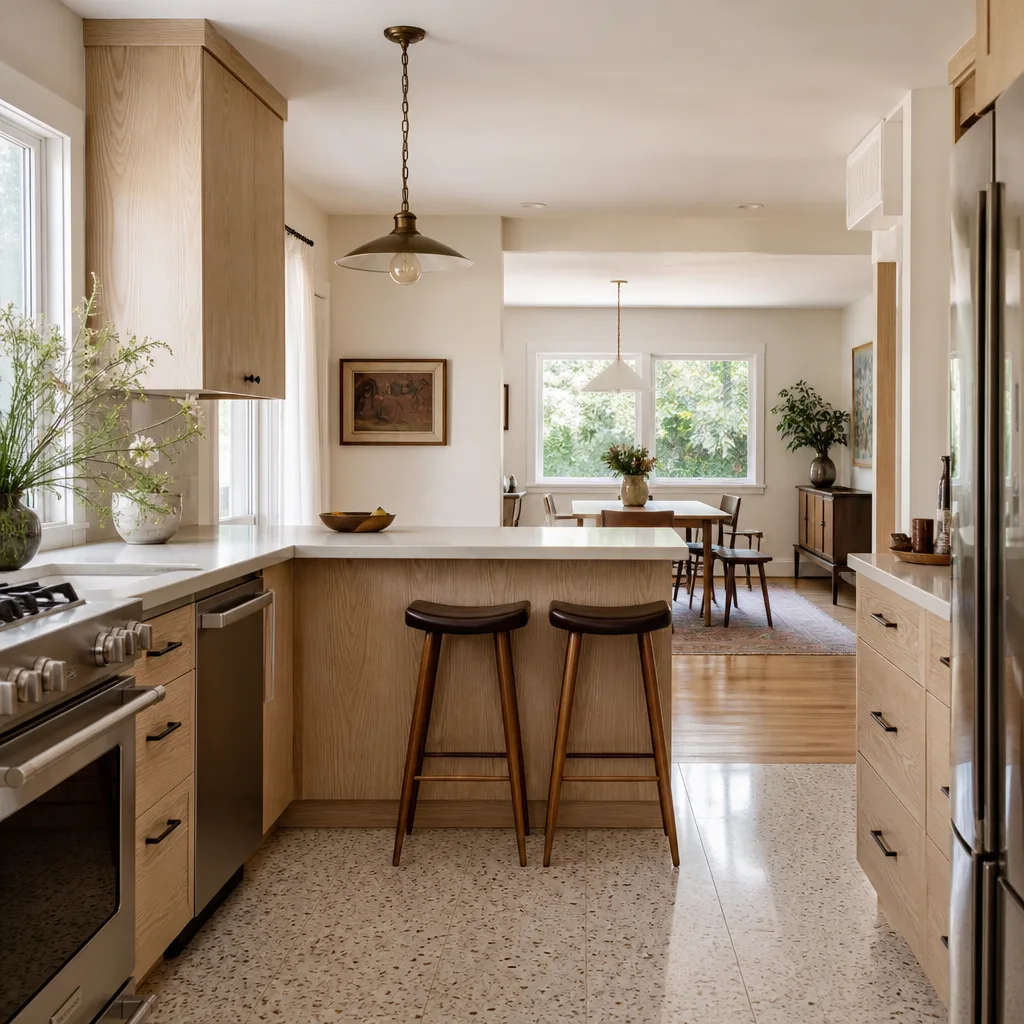
When you walk into a showroom and pull a KraftMaid drawer, you’re judging the product by how it feels and holds up. A paver contractor’s portfolio deserves the same scrutiny. Fresh photos of a just-finished driveway prove almost nothing. You’re looking for aged, installed work.
Ask for references to projects at least three years old, then visit them. On the driveway, look for:
- Joint sand still in place and not washed to the street.
- Edges still tight against curbs and beds, no visible spreading.
- Surface color that hasn’t faded unevenly, which points to a failed sealer or cheap pigment.
- No settling, no low spots that pool water after a rainy week in Berkeley.
- A surface texture that still feels consistent, not pitted or chalky.
Pair that with the questions you’d ask a cabinet fabricator: What spec grade are you using? What’s your compaction method? Who pulls the permit and who walks the final inspection? A contractor who can answer those without blinking has done the work before.
Material Grade: What Density, PSI, and Texture Really Mean
Paver spec sheets throw around numbers that most homeowners skim past. They matter, but only if you know what they translate to on a Berkeley driveway. Density and PSI (compressive strength) tell you how the paver holds up under a car’s weight and the annual freeze-thaw and wet-dry cycles. A driveway-grade concrete paver typically runs well above the minimum required for a driveway, but low-cost “seconds” (seconds are units with minor defects, sold cheaply) often fall short.
What to confirm before delivery:
- Spec-grade, not seconds: Ask the contractor to show the delivery ticket and the supplier’s grading, so you’re getting first-quality product, not clearance stock with color and dimensional defects.
- PSI rating: Confirm the product is rated for vehicular driveway use, not just pedestrian paths. That rating should be on the manufacturer’s spec sheet.
- Surface texture: Compare a sample in hand against a photo of a three-year-old installation in the same product. Texture that looks uniform in the sample should still be uniform after a few Berkeley wet seasons.
- Dimensional tolerance: First-grade pavers come within a tight tolerance on length, width, and thickness. Seconds vary enough that joint spacing suffers, and the whole installation looks off.
We see contractors in Berkeley swap in seconds to hit a price. The material cost difference is small; the finished quality difference is not.
When to call a pro: If you’re signing a paver bid and the contractor can’t show spec-grade proof, compaction specs, and aged references, it’s worth getting a second look. A driveway is a one-shot install, and rework is expensive. If you have a related project on the same property, our Driveway & Pavers in Berkeley page walks through the full scope, so you can scope this alongside any fence or Home Additions & ADU in Berkeley work on your list. If a fence line or garden wall borders the drive, our Fence Installation in Berkeley team coordinates the shared edge so nothing gets left half-done.
Related services in Berkeley
A paver driveway rarely happens in isolation. If you’re planning a broader project around the same time, look at our full lineup on the Groundwork Construction Co. of Berkeley home page to see how a single contractor can handle everything from foundation to finish line.
What happens when you call
- 1
A real person answersNo phone trees – you reach a local pro.
- 2
You get an upfront price rangeHonest numbers before anyone is dispatched.
- 3
A background-checked tech heads outLicensed & insured, dispatched right away.
- 4
You approve before work beginsNothing starts until you say go.
The Bottom Line
Judge your paver driveway the way you’d judge a KraftMaid cabinet: tight joints, honest materials, and a finish built to survive daily use. The three things to check before the sand goes down are consistent joint spacing, continuous edge restraint pinned into the base, and a multi-step sealer matched to Berkeley’s UV and moisture. Confirm spec grade in writing. Then visit a three-year-old installation, not a photo of last week’s work. That’s the whole test.
If you’re in Berkeley and need help, Groundwork Construction Co. of Berkeley offers free estimates. We back every job with the 730-Day Done Right Promise, upfront pricing so the number you see is the number you pay, and a live person answering the phone around the clock. Call (855) 471-4163 to schedule yours.
Frequently Asked Questions
Most residential paver driveways in Berkeley land in a wide range depending on size, material grade, and site prep, and a drive with significant base repair runs higher than a straight replacement. Ask for an itemized bid: base excavation, compaction, paver spec, edge restraint, and sealing should each be its own line. Call (855) 471-4163 for an exact quote – estimates are free.
Often yes, especially if the project changes drainage or the grading, or touches the curb and public right-of-way near the street. Permit rules vary by property and by what the driveway connects to. Ask your contractor who pulls the permit and who walks the inspection. A contractor who handles it for you is the easy answer. Call (855) 471-4163 and we can walk through what your property likely needs.
A properly installed, spec-grade paver driveway with continuous edge restraint and routine resealing commonly lasts decades, and the pavers themselves often outlast the sealer by a wide margin. The weak points are always the same: joint sand, edge restraint, and sealer. Get those three right and the driveway holds. Call (855) 471-4163 if you want a free look at an existing driveway that’s already showing these failures.
Sometimes, but only when the existing slab is sound, correctly graded for drainage, and structurally able to carry the added load. A slab with cracks and settling isn’t a candidate. The right answer is a real base inspection, not a guess. Call (855) 471-4163 to schedule a free estimate and we’ll tell you honestly whether an overlay is safe or a full replacement is the better call.
Written by the team at Groundwork Construction Co. of Berkeley.
Need Construction Help?
Call Groundwork Construction Co. of Berkeley - licensed & insured, here with fast after-hours help in Berkeley.
(855) 471-4163