
5 Mistakes to Avoid With Fence Installation
The five most expensive fence installation mistakes in Berkeley have nothing to do with picking the wrong wood stain. They’re about skipping the legal, structural, and site steps that turn a simple job into a boundary dispute, a failed inspection, or a fence that’s leaning by the first rainy spring. One in three fence installations in California triggers a neighbor dispute, a permit violation, or a structural failure within five years, and all three are almost entirely preventable if you know what to check before the first post goes into the ground. Here are the five we see most often in Berkeley, and exactly how to sidestep each one.
If you’d rather not gamble on getting these right yourself, call (855) 471-4163 for a free estimate.
Mistake 1: Assuming Your Existing Fence Line Is the Property Line
This is the single most expensive assumption a Berkeley homeowner can make. An old fence is a fence, not a survey. In Berkeley’s older neighborhoods, especially around the Elmwood and the streets off Shattuck, fences were often placed decades ago, sometimes by a previous owner, sometimes by a neighbor who “just put it a couple feet over.” If you build on that same line without confirming it, you can end up constructing a fence on someone else’s property, and California law lets that neighbor demand you remove it at your cost.
Before you order a single board, pull the property corners. Options include a licensed surveyor (the reliable route) or, for an informal check, your parcel map through Alameda County’s records. Confirm the line, then talk to the neighbor whose property abuts the new run before any work starts. A five-minute conversation up front saves years of dispute.
We’ve watched homeowners win a boundary fight and still lose money, because the legal fees dwarfed the fence. Get the line right first.
Mistake 2: Skipping Berkeley’s Permit Threshold
Not every fence needs a permit in Berkeley, and not every fence avoids one. The threshold generally turns on height and location. In most residential zones, a fence up to 6 feet tall in a rear or side yard is exempt from a building permit, but anything taller, and many front-yard fences, need review. Corner lots and front-yard fences also run into sightline and setback rules that can catch a homeowner off guard.
What happens if you skip the permit? Usually nothing until you try to sell. Then an unpermitted fence surfaces during the buyer’s disclosure review, and you’re suddenly paying to retroactively legalize a structure or tear it down. Same story if a neighbor files a complaint with the city.
Before installation, check the current Berkeley Municipal Code fence provisions for your specific zoning, and when in doubt, call the city’s permit counter and ask directly. A permit is far cheaper than a resale delay.
Mistake 3: Cutting Post Depth Short
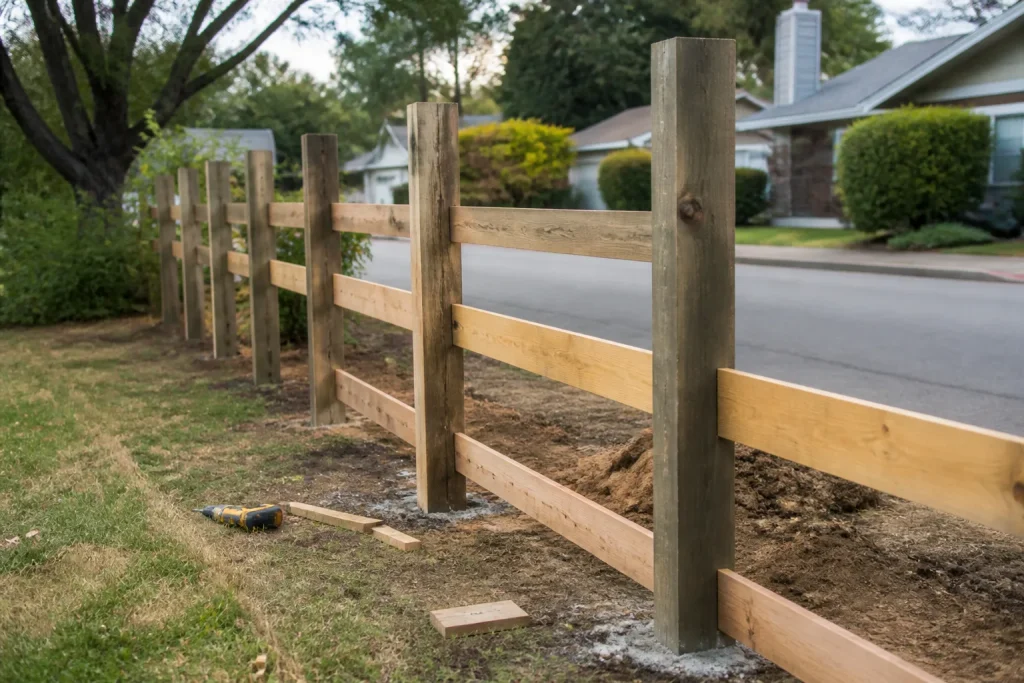
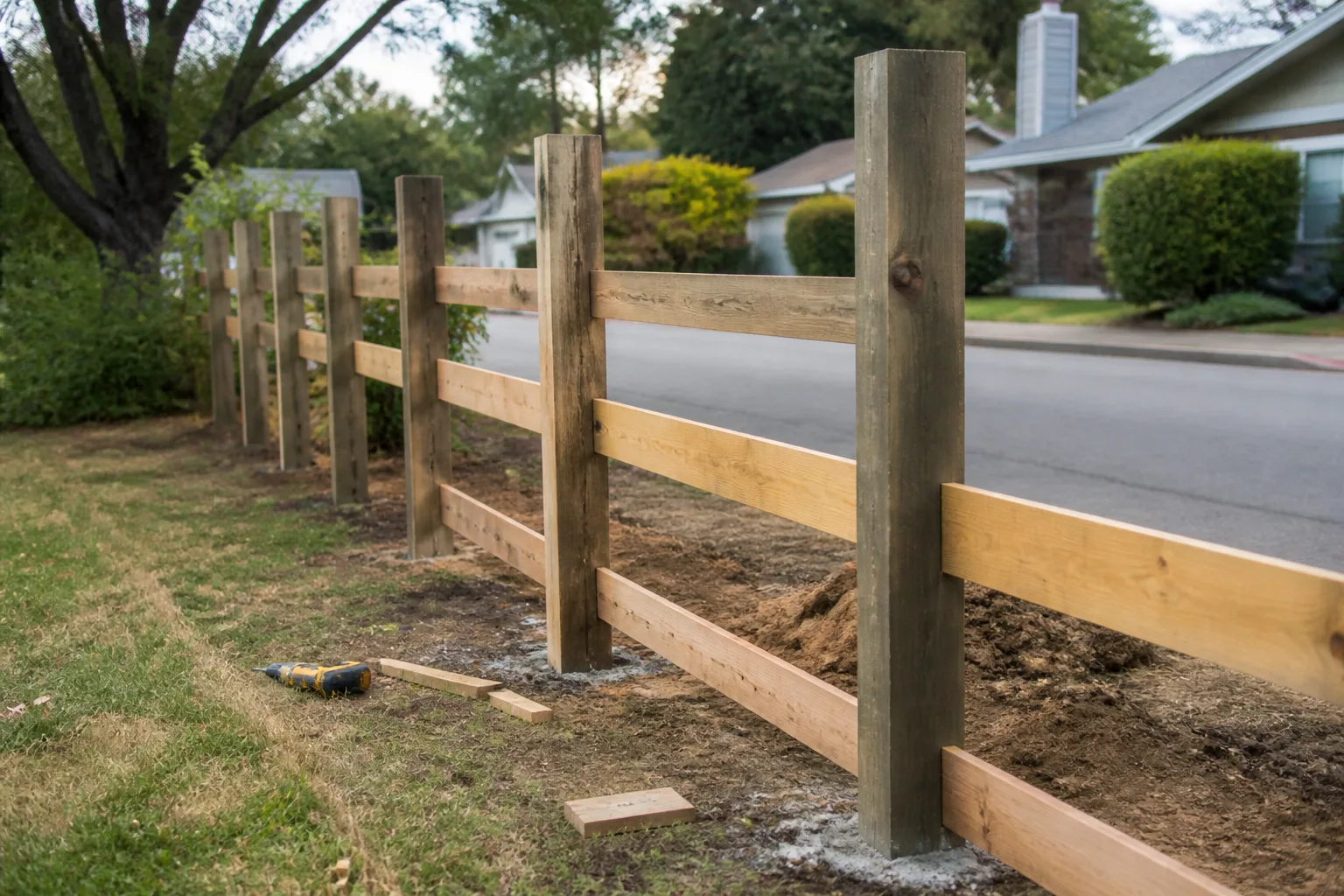
The old rule of thumb is “bury one-third of the post length.” For a lot of California soil, that’s underselling the requirement, and in Berkeley’s mix of clay-heavy soils and wind exposure coming off the bay, a shallow post is how fences end up leaning within a season or two. A 6-foot privacy fence typically calls for a post set 24 to 36 inches deep in concrete, and on exposed or sloped lots, closer to 36 inches.
- Post depth: plan on 24 to 36 inches in concrete for a standard 6-foot fence.
- Hole width: about three times the post diameter, wider at the bottom for a proper concrete bulb.
- Concrete: use a proper post mix, not dry-set dirt, and let it cure before hanging panels.
- Slope and wind: add depth on exposed ridgelines and any lot with bay wind exposure.
Cutting posts short to save a bag of concrete is the classic shortcut that looks fine on day one and fails by year three.
Mistake 4: Choosing Material on Purchase Price, Not Lifecycle Cost
The cheapest board up front is rarely the cheapest fence over ten years. In Berkeley’s microclimate (cool, damp winters, dry summers, plenty of sun on the south-facing slopes) material choice has real consequences. Here’s how the usual candidates stack up over a 10-year horizon:
| Material | Typical install cost range | 10-year reality in Berkeley |
|---|---|---|
| Pressure-treated pine | $25 – $40 per linear ft | Cheapest up front, but shrinks, warps, and often needs staining or partial replacement within 7 – 10 years. |
| Cedar | $35 – $55 per linear ft | Holds up well to Berkeley’s damp, ages gracefully, resists rot. The workhorse choice for most properties here. |
| Composite | $50 – $80 per linear ft | Highest up-front cost, virtually no maintenance, outlasts wood by a wide margin. |
| Metal (ornamental steel or aluminum) | $40 – $75 per linear ft | Low maintenance, long life, but the wrong choice for privacy or a traditional Berkeley streetscape. |
Wood species matter too. Cedar from a manufacturer with a reputation for consistent stock (the kind of thing we look for when sourcing brand-name materials) tends to wear more predictably than a no-name pine that warps at the first wet winter. Pick the material based on how long you’ll own the house and what the property needs, not the line-item price at the register.
Mistake 5: Digging Before You Confirm What’s Underground
Berkeley’s underground infrastructure is dense. Old water and sewer laterals, gas lines, electrical runs, and communications lines thread through residential lots in ways that rarely show up on a tidy drawing. A posthole digger meeting a gas line or a buried electrical feed is a genuine safety issue, not just a scheduling problem.
Before any post is dug, call 811 (the national call-before-you-dig line) at least two business days ahead. That’s free and required by law. In Berkeley, additionally, ask about private utility lines on your own property, which 811 doesn’t always mark. Most older lots have unrecorded underground surprises. A proper locating step up front protects you, the crew, and the neighbors.
If digging anywhere on your lot and you’re unsure what’s down there, stop and get it located. This is not a step worth shortcutting.
When to Call a Pro
Some of this you can handle yourself: the neighbor conversation, the call to the permit counter. Where it gets genuinely risky is the structural side. Post depth, concrete, and buried utilities are where a do-it-yourself fence goes wrong in ways that are costly and sometimes dangerous. Digging near gas or electrical lines is a real hazard, and getting the engineering right on a sloped Berkeley lot is a skill, not a guess.
Our technicians have up to 12 years of experience on fence and site work, and we handle the survey coordination, permit review, and utility locating so the job gets done right the first time. Every project is covered by our 730-Day Done Right Promise, and pricing is upfront with no surprises.
Related services in Berkeley: Fence Installation in Berkeley and Driveway & Pavers in Berkeley for the full exterior package. If your project extends beyond the yard, see Home Additions & ADU in Berkeley, and to learn more about how we work, visit the Groundwork Construction Co. of Berkeley home page.
The Bottom Line
Five mistakes, one theme: the fence itself is the easy part. The expensive mistakes happen before the first post goes in, in the survey, the permit review, the post depth, the material choice, and the utility check. Get those right and your Berkeley fence will still be standing straight when it matters.
- Confirm the property line before you build.
- Check Berkeley’s permit threshold for your fence height and location.
- Set posts 24 to 36 inches in concrete.
- Choose material on 10-year cost, not purchase price.
- Call 811 before any post is dug.
If you’re in Berkeley and need help, Groundwork Construction Co. of Berkeley offers free estimates. Call (855) 471-4163. Live person, 24/7, no voicemail. We also apply $1,000 off projects over $10,000 and 0% financing for 18 months.
Frequently Asked Questions
Expect roughly $25 – $40 per linear foot for pressure-treated pine, $35 – $55 for cedar, $40 – $75 for metal, and $50 – $80 for composite, installed. A typical 100-foot privacy run lands in the $3,500 – $6,000 range depending on material, site slope, and permit needs. Call (855) 471-4163 for an exact quote.
Often not, if it’s 6 feet or shorter in a rear or side yard, but taller fences, front-yard fences, and corner lots usually require review. Check the current Berkeley Municipal Code provisions for your zoning, and call the permit counter when unsure. Call us at (855) 471-4163 if you want us to help sort out what your project needs.
Plan on 24 to 36 inches in concrete for a standard 6-foot fence, with wider holes and proper post mix. Berkeley’s clay-heavy soil and bay wind exposure push you toward the deeper end, not the shallower. This is the structural step worth getting right the first time.
The neighbor can legally require you to remove it at your cost. That’s why pulling the property corners before installation matters more than any other prep step. If you’re unsure where your line is, get it confirmed before anyone digs.
Written by the team at Groundwork Construction Co. of Berkeley.
Need Construction Help?
Call Groundwork Construction Co. of Berkeley - licensed & insured, here with fast after-hours help in Berkeley.
(855) 471-4163