
Bathroom Remodeling: Repair or Replace? How Berkeley Homeowners Decide
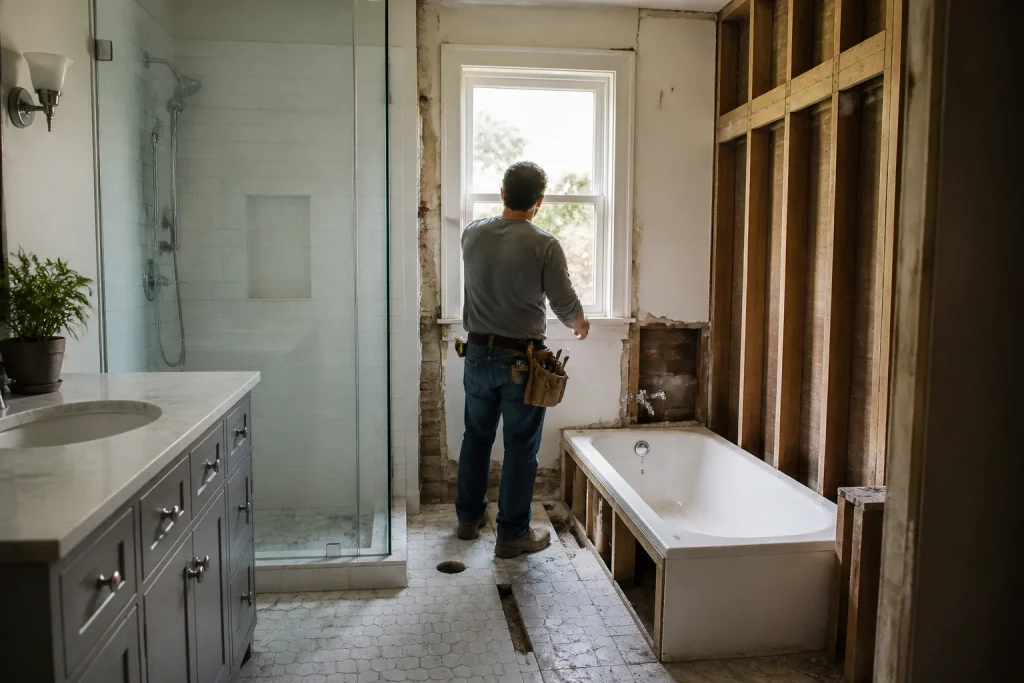
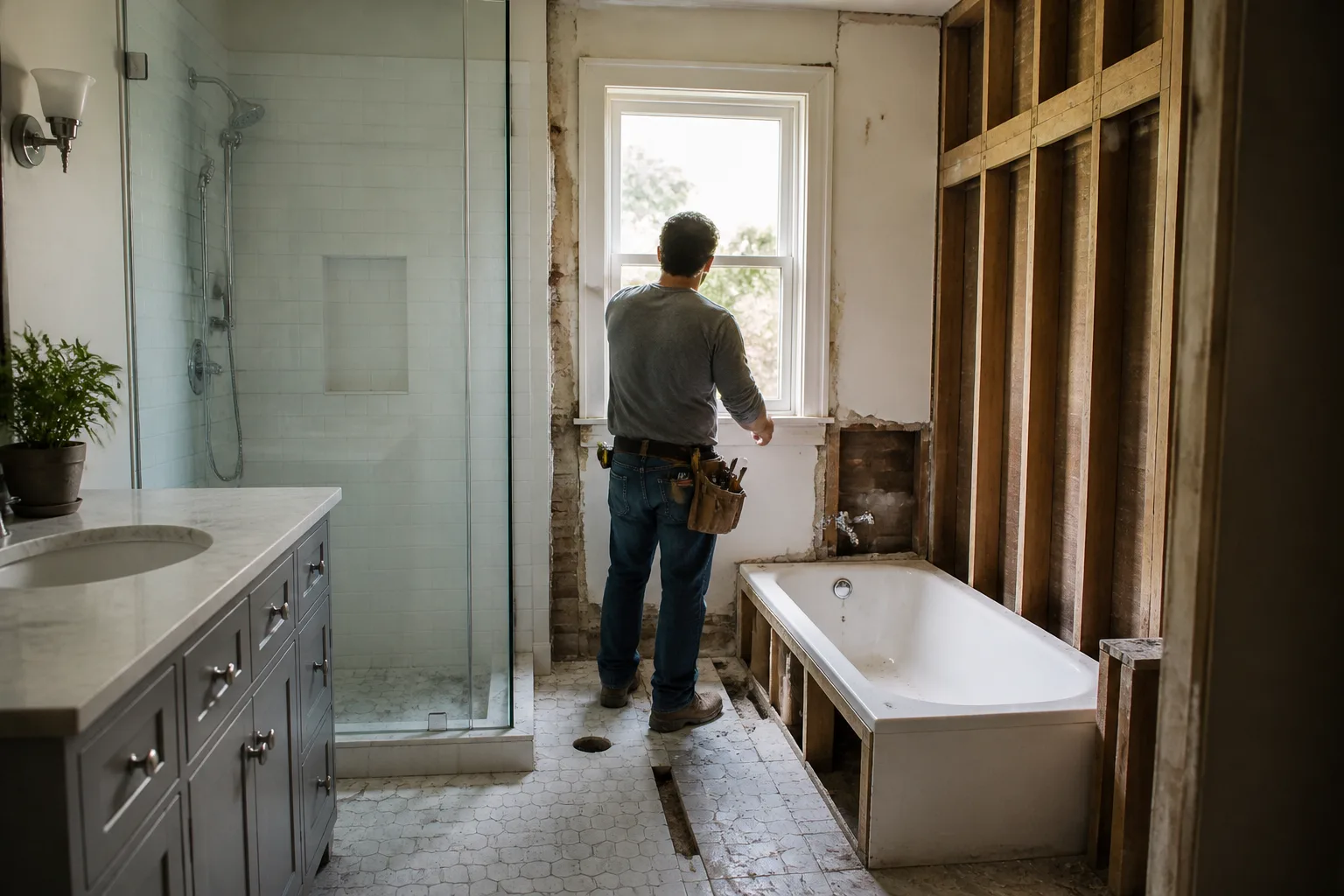
Most Berkeley homeowners decide whether to repair or replace a bathroom by looking at what they can see: cracked grout, a dated vanity, tile that’s gone out of style. That’s the wrong place to start. The decision should be driven by what’s behind the wall, because waterproofing failure, soft subfloor and plumbing that’s never been touched since the house was built will outlast any cosmetic fix you put on top of them. Repair makes sense when the structure is sound and the problems are surface-level. Replace makes sense when moisture has been quietly working on the framing and the fix you’re about to pay for won’t address it.
Key Takeaways
- Surface repairs fail when the waterproofing and subfloor underneath are already compromised. Test before you tile.
- Berkeley’s pre-1980 bathrooms often lack a code-compliant waterproofing membrane, which matters the moment you pull a permit.
- Plumbing material tells you whether you’ll open the wall once or twice. Cast iron and galvanized pipe change the math.
- Get a moisture reading and an honest scope comparison before you commit a dollar to finish materials.
Why Bathroom Repairs That Stop at Tile and Caulk Come Back
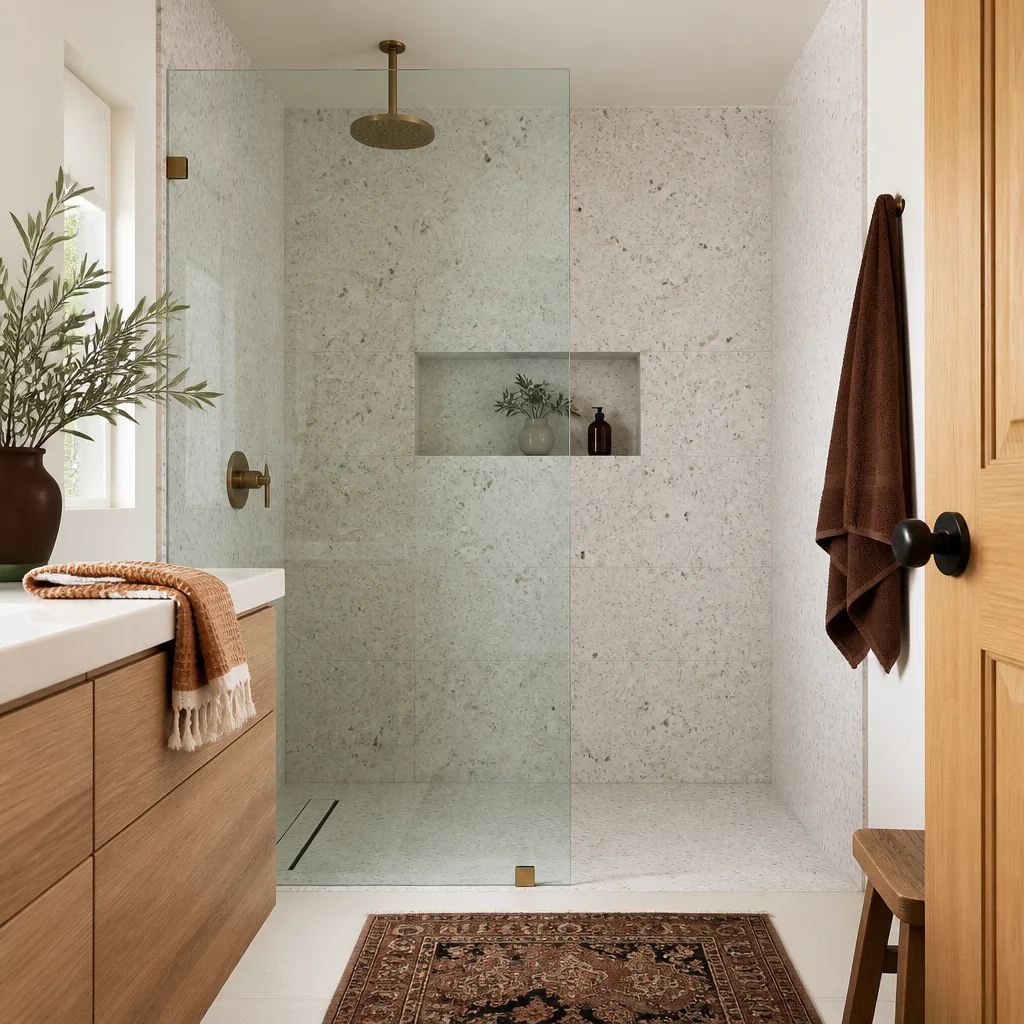
Bathroom repairs that stop at tile and caulk are the most common source of repeat remodeling calls we get. The surface looks fresh for a season or two, but the moisture that caused the original problem is still moving behind the wall. It doesn’t stop until someone opens it up and deals with it properly.
Here’s the pattern. A shower pan leaks slowly for years. Water wicks into the substrate, the framing behind the tile softens, and the grout starts to crack and discolor. Someone re-grouts it. A year later the tile is loose and the drywall on the opposite side of the wall feels spongy. The repair looked complete but never touched the cause. In Berkeley’s older homes, where a bathroom may have gone four or five decades without a proper membrane, this is routine rather than rare.
We pulled a vanity out of a bathroom near the Berkeley Marina not long ago and found the subfloor around the toilet flange was soft enough to push a screwdriver through. The homeowner had been planning a quick fixture swap. That’s the moment a small job becomes a real decision, and it’s better to find it during planning than after the new tile is set. If you’d rather not open that wall yourself, call (855) 471-4163 and we’ll take a look before anything gets ordered.
The Moisture Probe Test: What to Check Before You Commit
A moisture meter tells you whether the structure under your bathroom is dry enough to repair. Your contractor runs the probe across the subfloor, the wall cavity around the shower and tub, and the base of the toilet. Readings come back as a percentage of moisture content, and what they show tells you whether a surface repair will hold or whether water is still active behind the wall.
What the numbers mean in practice:
- Dry, stable readings across the board: the structure is sound. A surface repair or a targeted fixture replacement is reasonable.
- Elevated readings near the shower or tub surround: the waterproofing has likely failed. You can repair the surface, but plan to address the membrane.
- High readings around the toilet flange or at the base of walls: the subfloor and often the framing are compromised. This is replace territory, not repair.
- Readings that climb after a shower and fall days later: active, ongoing moisture intrusion. Something is leaking now.
Berkeley’s damp winters and the way older homes here trap moisture against the exterior walls make these readings worth taking seriously. A bathroom that reads dry in August can read wet in January. We check more than once when the timing allows, because a repair built on a wet substrate is money spent twice.
Berkeley’s Older Housing Stock and the Waterproofing You Can’t See
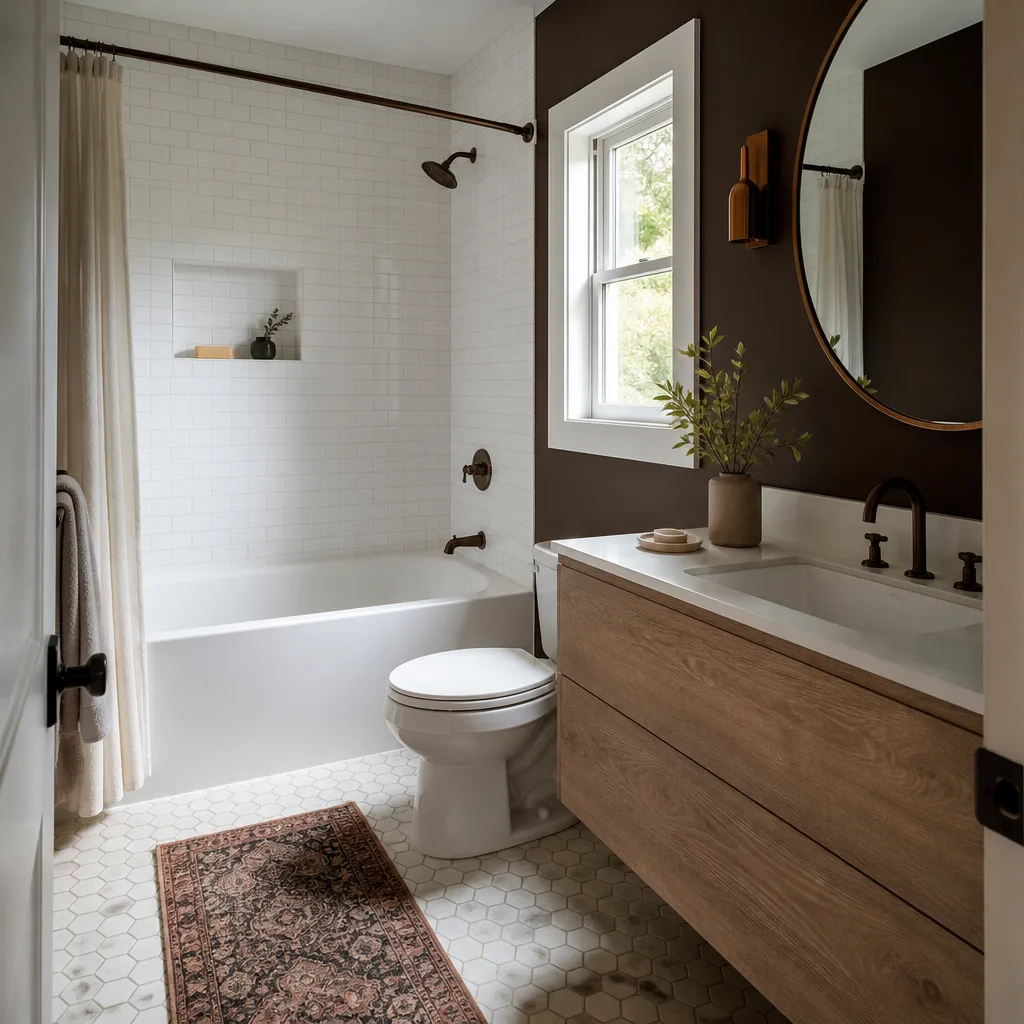
Berkeley bathrooms built before 1980 typically have no code-compliant waterproofing membrane behind the tile. The standard then was greenboard or mortar over framing, sometimes with a rudimentary vapor barrier. It held up for a while. It doesn’t meet current standards, and here’s the part that changes the decision: if your repair reaches the point where you’re pulling a permit, the work often has to be brought up to current code. A cosmetic repair that avoids the permit is one thing. A repair that triggers one and leaves the wall open has to meet today’s requirements, membrane and all.
That’s why the honest question in Berkeley isn’t just “repair or replace” but “what does the code require once I open this up.” In neighborhoods like the Elmwood and North Berkeley, where a lot of homes date to the 1920s and 1930s, a bathroom that’s had three cosmetic passes over the decades is a good candidate for a proper replacement rather than a fourth layer.
Some of the same logic applies to the rest of the house. If you’re already opening walls, it’s worth seeing how a bathroom project fits into a larger plan. Our Groundwork Construction Co. of Berkeley home page lays out the full scope of what we handle, from foundation to finish line.
Repair vs. Replace: Cost Comparison by Scope
Repair costs less up front than a full replacement, but only when the structure is sound. The real comparison is scope against scope. Here’s how the three common paths tend to break down in the Berkeley market, using local labor rates rather than national averages.
| Scope | What’s included | Typical Berkeley cost range | Best for |
|---|---|---|---|
| Surface repair | Re-grout, re-caulk, replace a fixture or vanity, paint | Roughly $400 – $2,500 | Dry structure, cosmetic wear only |
| Wet zone replacement | Shower/tub surround, waterproofing membrane, tile, valve trim | Roughly $6,000 – $14,000 | Failed membrane but sound subfloor and plumbing |
| Full gut replacement | Down to framing, new subfloor, plumbing, waterproofing, tile, fixtures | Roughly $18,000 – $40,000+ | Compromised framing, aging plumbing, code upgrades due |
Those ranges move with finish selection, fixture brands and how much surprises the wall holds. We put the number in writing before work starts so there’s no change-order game later. The cost comparison only works if the estimate is honest on day one. Call (855) 471-4163 for a free estimate, and we’ll walk the scope with you rather than guess from a photo.
When a Repair Becomes a Remodel in Berkeley’s Eyes
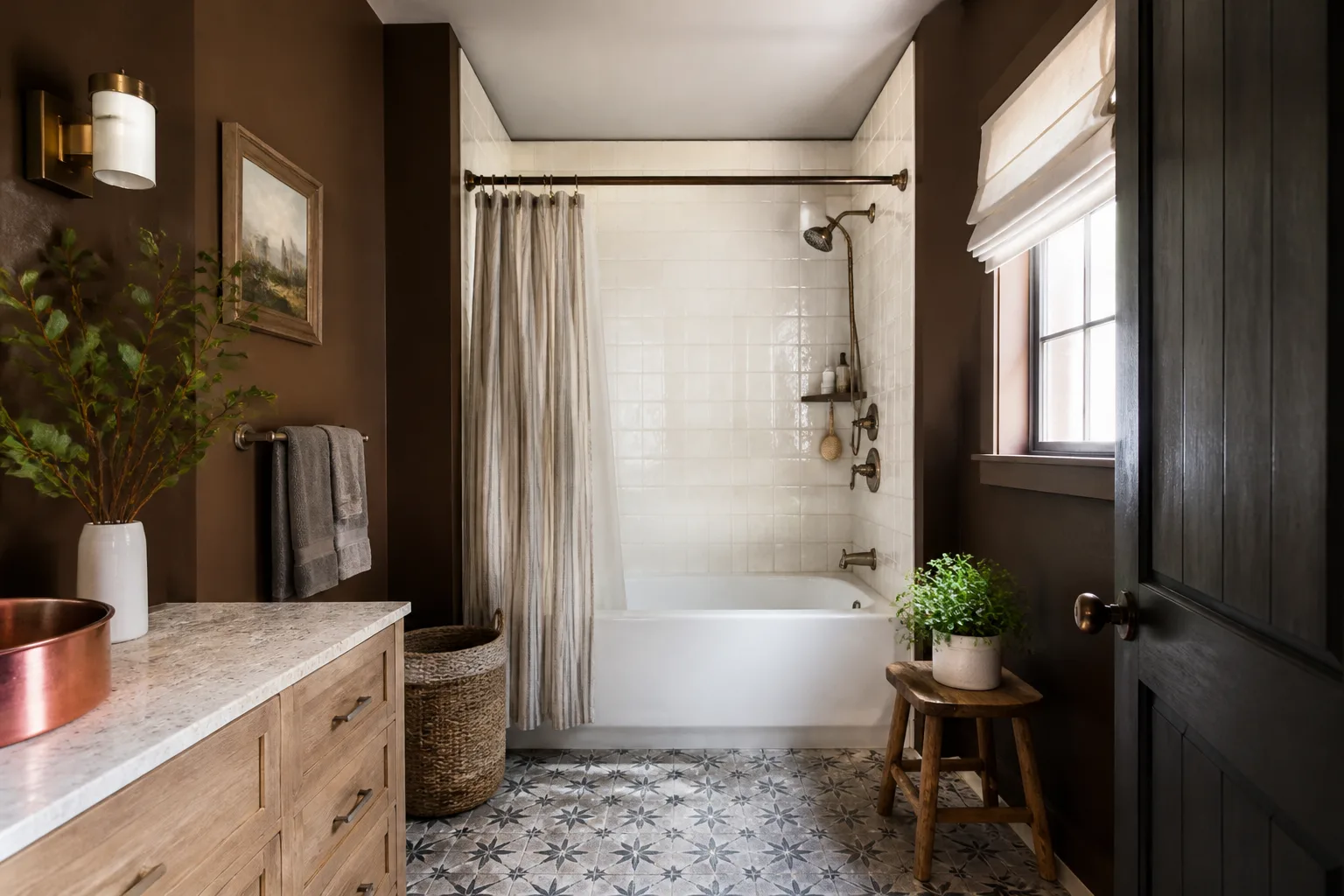
In Berkeley, a repair crosses into remodel territory when the work alters the material or layout of the wet zone rather than simply restoring the same fixture in the same spot. Swapping a faucet or re-caulking a tub is maintenance. Replacing the shower surround, moving a drain, or changing the size of the footprint usually means a permit, and a permit means inspection, and an inspection means the waterproofing and framing have to meet current code.
What that means for your timeline is concrete. Permit review in Berkeley takes time, and a permitted bathroom project runs through inspection stages before the walls close back up. A surface repair can sometimes happen in a weekend. A permitted replacement is measured in weeks, not days. Knowing which path you’re on before you buy tile keeps the schedule realistic and the budget from drifting.
A good contractor tells you which side of that line your job sits on before quoting. If a repair will trigger a permit anyway, you’re often better off scoping a proper replacement and getting the warranty and code compliance that come with it.
Plumbing Age: Open the Wall Once, Not Twice
The material of your pipes decides whether you open the wall once or twice. Cast iron, galvanized steel and copper each behave differently over time, and each one changes whether it’s worth replacing the plumbing while the wall is already open or waiting and paying to open it again later.
- Galvanized steel: common in Berkeley homes from the 1940s through the 1960s. It corrodes from the inside, narrows over time and drops pressure. If it’s still in the walls, replace it during the project rather than after.
- Cast iron drainage: shows up in older homes and can scale and crack internally. Worth a camera inspection if you’re already in there.
- Copper: generally reliable, but pinhole leaks are common in some vintages and water chemistry. A pressure test and a visual check tell you whether it stays or goes.
If the pipes are past their service life, replacing them during a bathroom project costs far less than doing it later as an emergency. That’s the single biggest reason we push homeowners to plan the plumbing assessment into the front end of the job. Our technicians have up to 12 years of experience reading exactly these conditions in Berkeley’s older homes.
When to Call a Pro
Some of this you can check yourself: soft spots underfoot, discolored grout, a wobbling toilet. But once a moisture probe reads high or a wall has to come open, it’s a job for a trained professional. Behind the tile sits the membrane, the framing and the plumbing that carry real risk if handled wrong. Every project with Groundwork is covered by the 730-Day Done Right Promise, backed in writing, so a repair that turns into a replacement is done right the first time. Calls are answered by a live person, 24/7, and you get upfront pricing with no surprises.
Related services in Berkeley: If your bathroom project is part of a bigger plan, we also handle Home Additions & ADU in Berkeley, and for the exterior of the home, Driveway & Pavers in Berkeley and Fence Installation in Berkeley.
The Bottom Line
Decide repair or replace based on what’s behind the wall, not on what you can see. Take a moisture reading, check the plumbing material and confirm whether the work will pull a permit. If the structure is dry and the pipes are sound, a repair is smart money. If the membrane has failed or the pipes are past their service life, a replacement saves you from paying for the same wall twice. In our experience across Berkeley, the surface is rarely the whole story. If you’re in Berkeley and need help, Groundwork Construction Co. of Berkeley offers free estimates. Call (855) 471-4163 to schedule one.
Frequently Asked Questions
Check the structure, not the surface. A moisture meter reading across the subfloor and wall cavity tells you whether water is active behind the tile. Dry, stable readings point to a repair. High readings near the shower or toilet mean the waterproofing or subfloor is compromised, which points to replacement. Call (855) 471-4163 for a free estimate with a moisture check.
It depends on whether the work alters the wet zone rather than restoring it. Swapping a faucet or re-caulking doesn’t usually need a permit. Replacing a shower surround, moving a drain or changing the layout typically does, and a permit means the waterproofing and framing must meet current code. Call (855) 471-4163 and we’ll tell you which path your job is on.
A wet zone replacement typically runs roughly $6,000 – $14,000, while a full gut replacement runs roughly $18,000 – $40,000 or more depending on finishes and surprises behind the wall. A surface repair, when the structure is sound, can stay under a few thousand. Call (855) 471-4163 for an exact quote, with upfront pricing and no surprises.
If they’re galvanized steel or aging cast iron, yes. Replacing plumbing while the wall is already open costs a fraction of doing it later as an emergency, and it saves you from opening the same wall twice. Our technicians have up to 12 years of experience assessing pipe condition in Berkeley’s older homes. Call (855) 471-4163 for a free estimate.
Written by the team at Groundwork Construction Co. of Berkeley.
Need Construction Help?
Call Groundwork Construction Co. of Berkeley - licensed & insured, here with fast after-hours help in Berkeley.
(855) 471-4163