
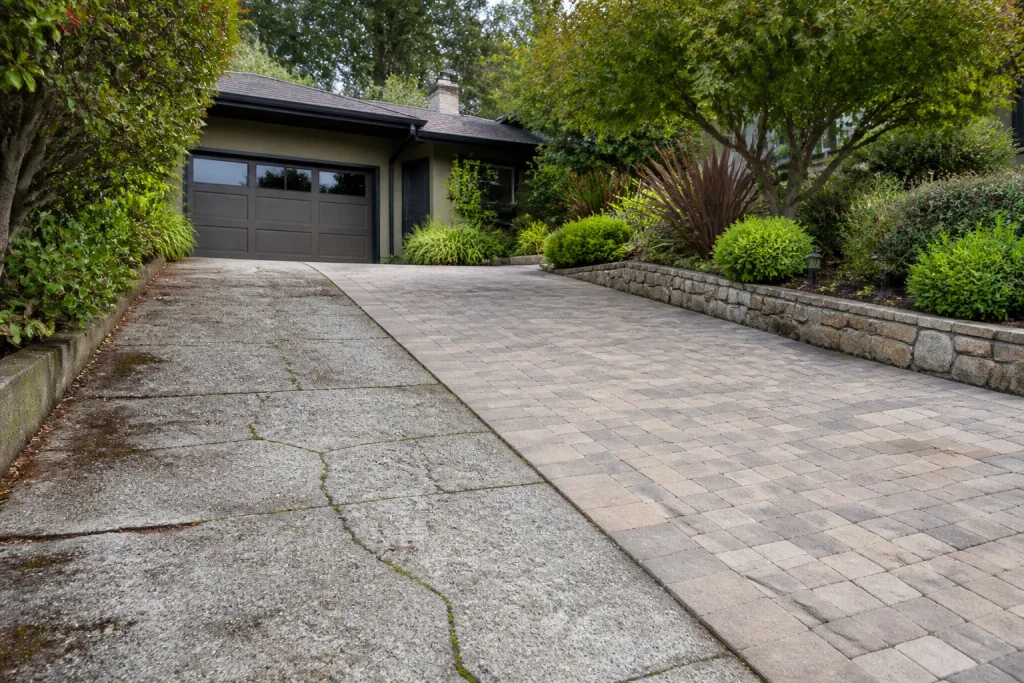
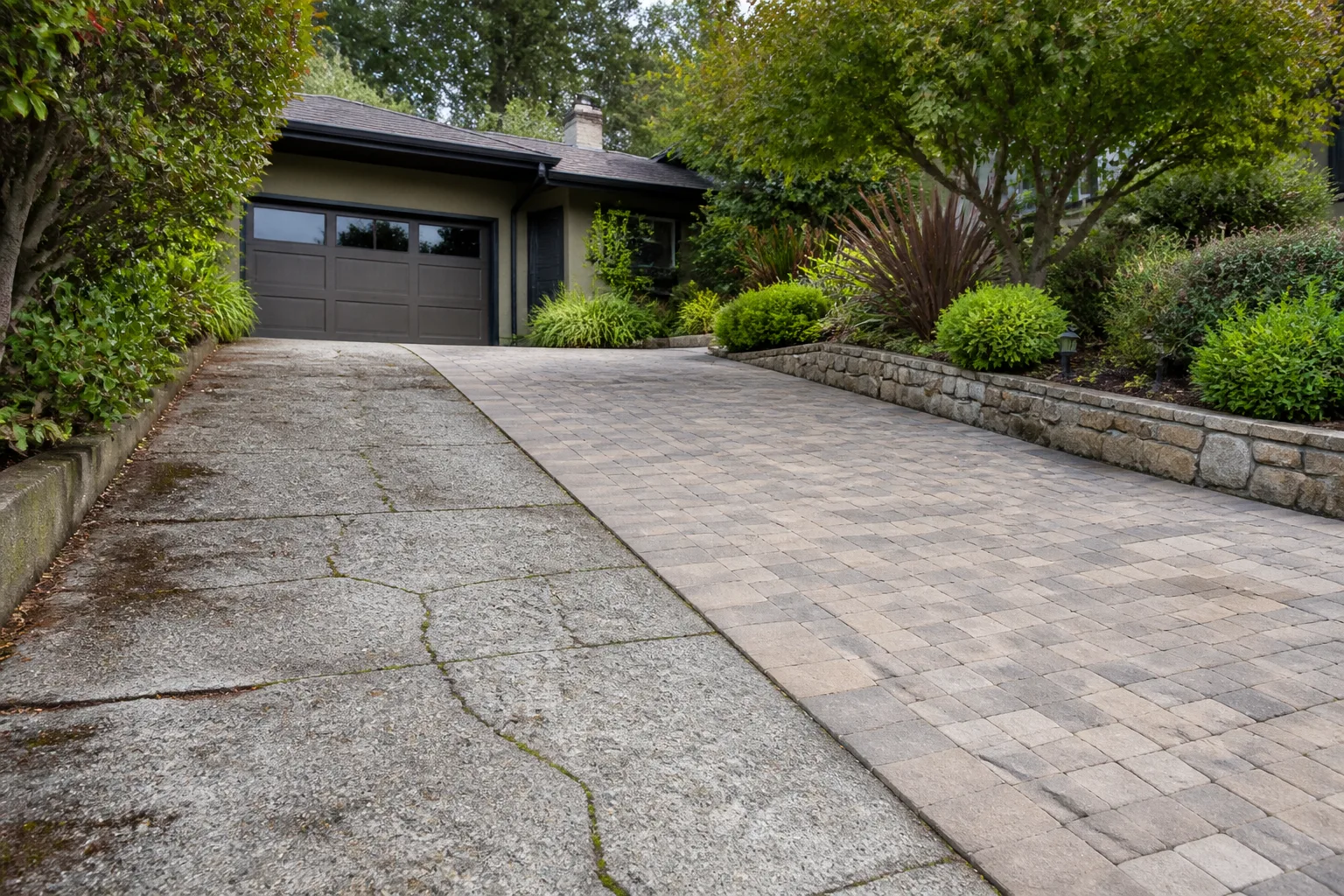
Driveway & Pavers: Repair or Replace? How Berkeley Homeowners Decide
Most Berkeley driveway decisions get made in four minutes by someone who never looked under the pavers. Your driveway doesn’t work that way. The real answer comes from checking the base, reading the settlement pattern, and running the cost-to-lifespan math on your specific slab or paver field. Here’s the framework we use, so you can make the call yourself.
Key Takeaways
- Base condition decides more than surface condition – a cracked paver on solid base is a reset, not a project.
- Localized sinking can often be lifted and re-bedded; widespread movement usually means the base failed.
- The 30% rule is a starting point, not a law. Berkeley labor costs shift that number.
- Twelve-year-old pavers with good color retention are worth salvaging. Chalky, spalling, or crumbling units are not.
- A 10-year cost-of-ownership projection beats a gut call every time.
Why a Four-Minute Walk-Through Is Not an Inspection
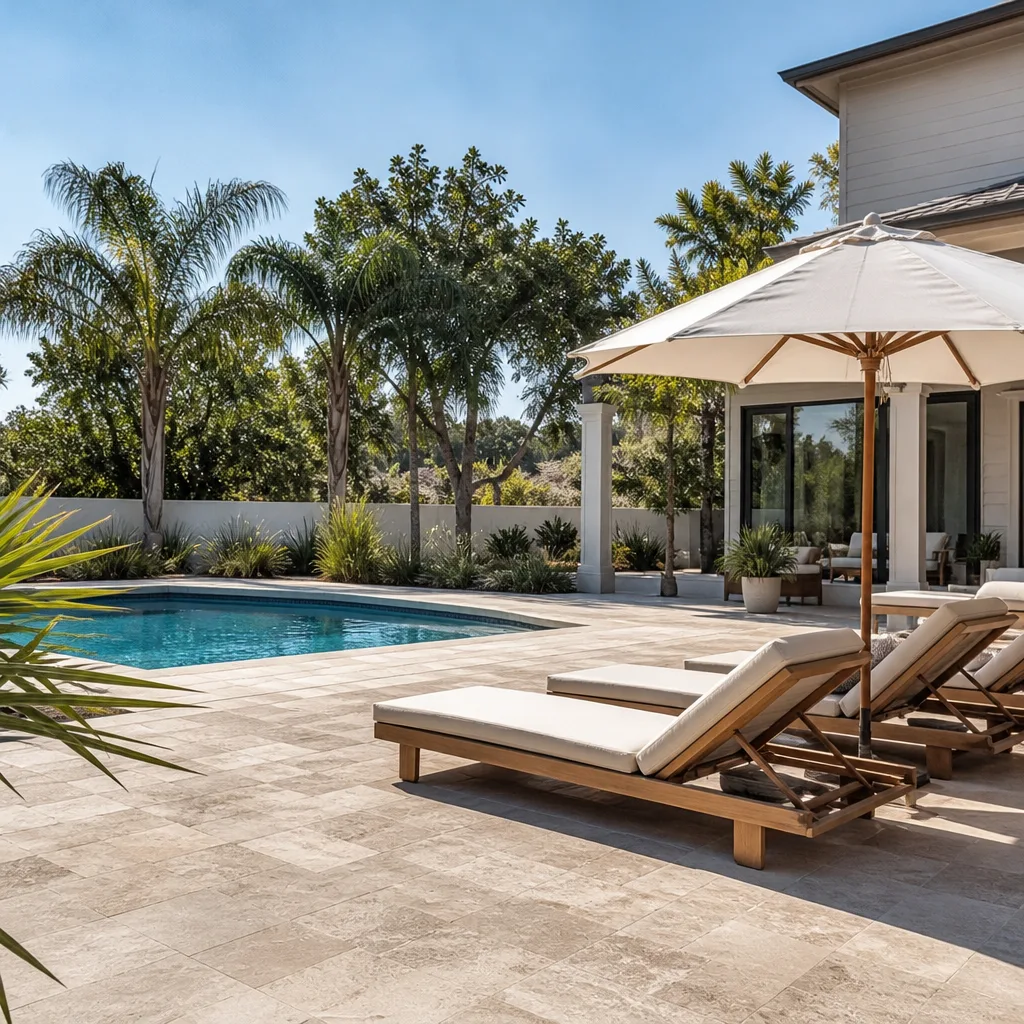
A driveway problem in Berkeley almost never lives where you see it. The crack runs along the surface, but the cause is usually under the base. When a contractor glances at your driveway and jumps straight to full replacement, one of two things is happening. Either they haven’t learned to read base condition, or replacing pays them more than repairing. Neither is your problem to solve.
What a real inspection looks like: someone walks the field, checks the edge for base migration, lifts a suspicious paver or two, tests for void space with a probe, and looks at how the surrounding grade sheds water. That takes twenty minutes minimum. It’s the difference between a diagnosis and a sales call.
We’ve seen Berkeley hillside driveways with pavers that looked terrible from a standing height and turned out to be sitting on a perfectly sound aggregate base. Some of those needed a reset and re-sanding, not a tear-out. On flat lots near the bay, the reverse happens – the surface is intact and the base is slowly pumping clay.
How Do You Check Whether Your Base Is Still Sound?
You can get a solid read on base condition without digging up the whole driveway. Here’s the method professionals use:
- The tap test. Tap a few pavers across the field with a solid tool. A dull thud means the paver is sitting on base. A hollow ring means there’s a void underneath – water got in and washed the bedding out.
- The probe test. Slide a thin probe or stiff wire into the joint at the edge and at any low spot. If it sinks easily into soft material, the base has failed locally. If it hits hard resistance, the base is still compacted.
- The edge inspection. Look at the driveway’s perimeter and any transition to grass or curb. Base migration is common on Berkeley driveways that back up to sloped yards – soil pushes against the edge and the base works loose over time.
- The watering test. Run a hose over a few square feet. Where water pools or drains too fast into a joint, the base or bedding under that section is compromised.
- The joint check. Wide, washed-out joints tell you sand migration is happening. Narrow, tight joints with intact sand indicate the bed layer is holding.
If the probe hits solid base under the majority of the field, you’re looking at a repair candidate. If half the driveway returns soft or hollow sounds, base failure is widespread and repair costs climb fast. That’s when the replace conversation gets honest.
What Settlement Patterns Tell You About Whether Repair Will Hold
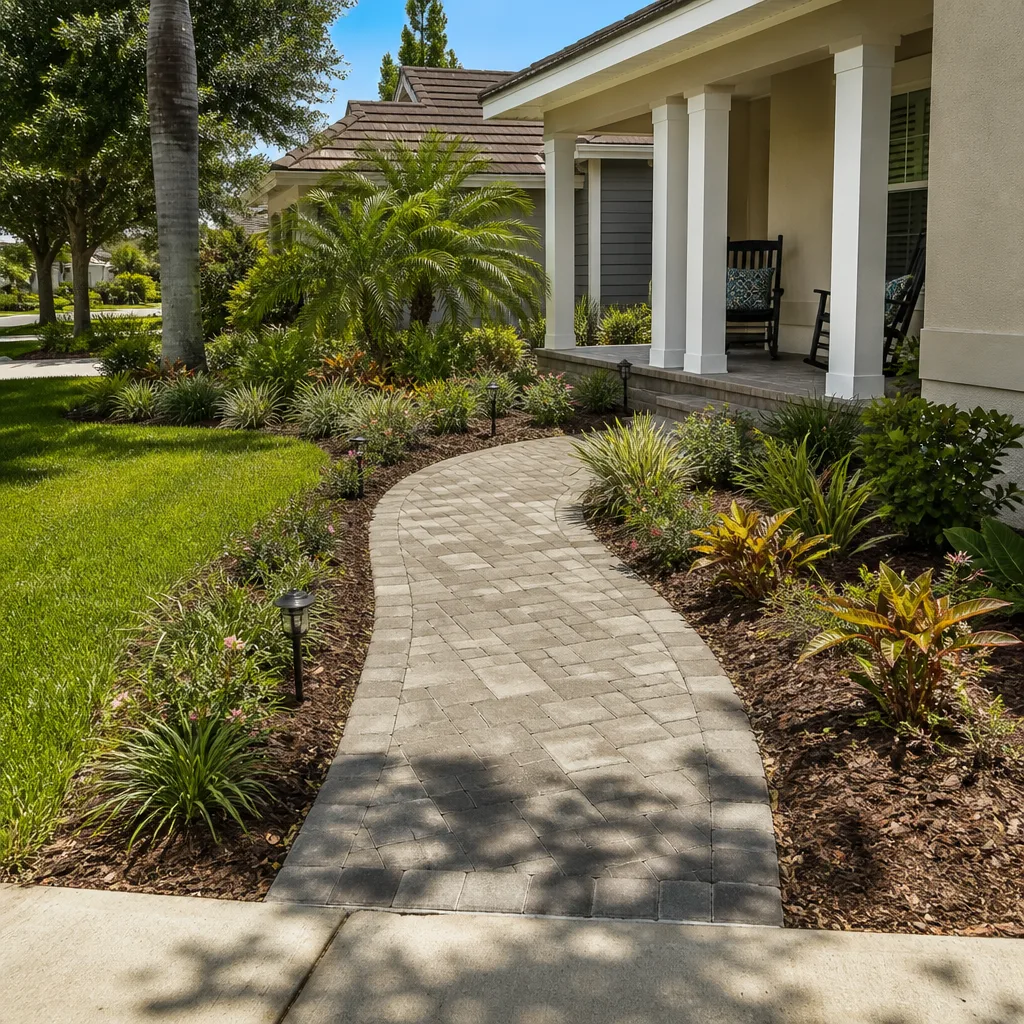
Settlement pattern is the single most under-used diagnostic in driveway work. Not all sinking is equal. Where and how your driveway has moved tells you almost everything about whether a repair will last five years or fail by next spring.
Localized sinking
One corner or a single dip in the middle. This usually means a point failure – a washed-out joint, a small void under a few pavers, or a drainage issue that concentrated water in one spot. Repair candidates. Lift, re-bed, re-sand, address the drainage, and you’re done. Ten-year lifespan on the repair is realistic.
Widespread movement
Multiple low spots, walls of the driveway settling at different rates, or a broad dip that runs the length of the field. This says the base layer failed across the whole installation. Maybe the original compaction was inadequate, maybe the soil under it is clay that swells and shrinks with Berkeley’s wet-dry cycle, maybe the drainage under the driveway was never properly tied to the storm system. In these cases, repairs look good for one season, then fail again.
Seasonal sinking
Pavers that sit flat in July and heave or drop by February are reacting to soil moisture. Berkeley’s clay soils do this. If you see seasonal movement, the base is fighting the soil, and localized repairs won’t fix a sitewide problem.
We pulled one out of a driveway in the Thousand Oaks neighborhood last year where the pavers dropped nearly two inches each wet season and came back most of the way by May. Owner had already paid for two rounds of “re-leveling.” The third attempt would have been a waste – that driveway needed the base fixed.
The 30% Rule – And Why Berkeley Labor Costs Shift It
The 30% rule is a useful starting point: if a repair estimate exceeds 30% of the cost of full replacement, replacement usually wins on total value. The number isn’t arbitrary. It reflects that a repair has a shorter lifespan than new construction, so you’re paying real money for a short horizon. Past that threshold, the money is better spent on new.
Berkeley changes the math. Two reasons.
- Higher labor costs. Bay Area masonry and hardscape labor runs well above the national average. That skews repairs toward the expensive side of any estimate, which means the 30% threshold arrives sooner than it would in a lower-cost market. A repair that would be 22% of replacement cost in a mid-America city might run 35% in Berkeley.
- Permit and code realities. Some driveway changes in Berkeley trigger permits, especially where the driveway meets a public right-of-way or affects drainage onto a neighboring property. Repairs that don’t move curb cuts or drainage usually don’t – but replace-scope projects often do. That cost sits on the replacement side of the ledger, which shifts the ratio in favor of repair more than the raw dollar math suggests.
The right way to use the rule: get line-item quotes on both sides. Compare full replacement cost to a realistic repair scope, including drainage corrections and salvaged material. Then apply the ratio to your driveway, not a typical one. If you’re in Berkeley, the ratio that matters is the one your market produces.
Can Your Existing Pavers Be Salvaged?
Salvageability matters because reset pavers cost far less than new units, and they keep the color and character of your original install. But not all pavers are salvage candidates.
Salvageable
- Good color retention. If the paver face still holds its original tone, no extensive fading, it’s holding up.
- Tight edges. Chips on individual corners are fine. Crumbling edges that leave the paver ragged are a material failure signal.
- No spalling. Spalling is the flaking of surface layers when water gets inside and freezes. It’s not repairable – once gone, that paver will keep flaking.
- No material degradation. A paver that crumbles when you scrape a corner with a tool is done, even if it looks intact.
Not salvageable
- Paver face is chalky or you can scratch it with a fingernail. That’s material breakdown.
- Widespread spalling across more than 10% of the field. The batch is failing.
- Structural cracks running through individual pavers rather than at joint lines. The unit is compromised.
In Berkeley, we’ll usually find 70-90% of pavers salvageable on driveways under 15 years old, assuming quality Belgian-style concrete pavers. Older installations with lower-grade units come in closer to 50%. Stone pavers – granite, bluestone – age differently and often reach 30 years with a reset-only repair. If you’re not sure what you have, a contractor who knows the local paver options can identify it quickly. Belgard is a brand we install regularly, and their units hold color well enough that 20-year-old installations still come out of a reset looking sharp.
Cost-of-Ownership Math: Repair Now or Replace Now?
Here’s where most contractors stop short. A repair estimate and a replacement estimate are not equal comparisons. Repairs have a shorter horizon, and a driveway is a 20-30 year decision when done right. Project both to 10 years and the picture becomes clear.
A rough framework (your numbers will vary):
- Repair path (10 years): Repair today, plus a second repair at year 5-7 when the patchwork fails, plus eventual replacement at year 10. Rarely comes in cheaper than one new install done properly.
- Replace path (10 years): One installation today, still under workmanship warranty if the installer backs it. Zero follow-up cost beyond routine re-sanding.
When the repair path is cheaper long-term: solid base, localized issue, salvageable pavers. When replacement wins: base failure, spalling material, seasonal movement. If your driveway hits two or more of the replacement signals, sequencing a repair now and replacement later is just paying twice.
This is where the “no-hassle upfront pricing” approach matters. A line-item quote that breaks out base prep, drainage, pavers, and install is a quote you can compare. A single lump-sum bid is not. Ask for the breakdown.
When to Call a Pro
Some of this you can absolutely check yourself – the tap test and the joint inspection take ten minutes. But when a paving contractor starts talking about lifting pavers, re-compacting base, or cutting into drainage, call a professional. Improperly supported pavers on a Berkeley slope can become a genuine trip hazard, and drainage corrections done wrong send water into your foundation rather than away from it.
If you’re researching the broader driveway question, our Driveway & Pavers in Berkeley page covers materials, install approach, and what a proper base build looks like. Fair warning: driveway work often opens the adjacent fence and yard conversation, and we handle that too if you’re considering Fence Installation in Berkeley alongside. Homeowners planning an ADU with a driveway, garage pad, or hardscape change usually start at Home Additions & ADU in Berkeley, where driveway and access decisions come up in the first walk-through.
The Bottom Line
The repair-or-replace call comes down to four checks: base soundness (probe and tap the field), settlement pattern (localized versus widespread), paver salvageability (no spalling, no crumbling edges, good color), and a 10-year cost projection that treats repairs as a recurring cost and replacement as a one-time one. If two of those checks fail, replacement is the honest answer. If only one fails, repair usually holds – especially with a workmanship warranty behind it.
We’ve walked driveways in Berkeley where the answer really was reset and re-sand, and we’ve walked others where the base was gone and any repair would have been money down a hole. The point is that the answer comes from the inspection, not from a commission.
Every Groundwork project – driveway, paver repair, base rebuild – is covered by the 730-Day Done Right Promise. That means if the install settles or a paver heaves in the two years after we finish, we make it right. No warranty fine print, no chasing a contractor who won’t return a call. Live person on the phone at (855) 471-4163, any hour, any day.
If you’re in Berkeley and need help, Groundwork Construction Co. of Berkeley offers free estimates – call (855) 471-4163. Bring the driveway questions. We’ll bring the probe.
Frequently Asked Questions
Most paver repairs in Berkeley run $400-$1,800 depending on scope. Resetting a few localized pavers, re-compacting the underlying base, and re-sanding the joints typically lands in the $400-$900 range. Drainage corrections or a partial base rebuild push into the $1,200-$1,800 range. Full driveway replacement runs significantly higher and varies with paver type, base condition, and access. Call (855) 471-4163 for a line-item estimate on your specific driveway – estimates are free.
If the paver face holds its original color, edges are intact (chips fine, crumbling not), and there’s no spalling, they can almost certainly be reset. If more than 10% of the field is spalling, the edges crumble when you scrape them, or the surface is chalky under a fingernail, the material has failed and replacement is the right call. Between the two, a proper inspection tells you the ratio.
No. A repair on a failed base looks good for one season and fails again. The base inspection is the whole point – if the probe sinks into soft material or the tap test rings hollow across most of the field, repair is wasted money. Where the base is still compacted and the settlement is localized, a repair can hold 10 years or more.
Most paver repairs and in-kind replacements on private driveways don’t require a permit in Berkeley. Replacement that changes drainage, affects curb cuts, encroaches on the public right-of-way, or alters the grade near a neighboring property can trigger one. The safe answer is to ask before work starts. Contractors who routinely skip the permit question are telling you something.
If you’re considering the bigger picture around your home – Groundwork Construction Co. of Berkeley home covers every service we handle, from driveways and pavers to kitchen, bath, roof, windows, fence, and additions.
One more thing worth knowing: the uniformed, background-checked technicians we send to look at a driveway are the same crew approach we use on every job. If a stranger shows up to bid a five-figure hardscape project in an unmarked truck, the driveway isn’t the only thing you should be inspecting.
And because we know this question comes up around mid-project planning for a lot of Berkeley homeowners: our current offers include a free project estimate and design consult, 0% financing for 18 months, and $1,000 off projects over $10,000. Straightforward, in writing, no fine print games. Call (855) 471-4163 to schedule.
Written by the team at Groundwork Construction Co. of Berkeley.
Need Construction Help?
Call Groundwork Construction Co. of Berkeley - licensed & insured, here with fast after-hours help in Berkeley.
(855) 471-4163