Last updated November 18, 2026



Free written scope consultation - allowances, timeline, and change-order rules on paper before a single trade is scheduled
Home Additions & ADU Maintenance Schedule: What to Do and When
New construction attached to old construction creates a category of maintenance problems that neither a “new home” checklist nor an “existing home” checklist covers. The new build is fine. The junction is where trouble starts, and most Berkeley homeowners don’t find out until a hairline crack in an interior corner turns into a call to a structural engineer. We’ve walked through enough additions in the Elmwood, Thousand Oaks, and Westbrae neighborhoods to know the pattern. This guide gives you a maintenance calendar built around the connection points, shared systems, and new materials where additions and ADUs actually fail. You’ll get a quarterly, annual, and five-year schedule you can put on the fridge.
Quick Answer
An addition or ADU needs quarterly visual checks at the junction where new meets old, annual maintenance of shared systems like grading, drainage, and exterior caulking, and a five-year deeper inspection of roofing, siding, and structural connections. The first year deserves the most attention, focused on monitoring settlement at the connection point and catching transition-zone failures before they spread. If you’re in Berkeley and want a baseline inspection of a recent addition, call Groundwork Construction Co. of Berkeley at (855) 471-4163 for a free estimate.
Styles & brands we work with
- Kitchen remodeling
- Bathroom remodeling
- Home additions & ADU
- Roofing
- Windows & doors
- Driveway & pavers
- Fence
Table of Contents
- Why the Junction Between Old and New Is the Real Maintenance Zone
- The First-Year Schedule: What to Watch and When
- Quarterly Maintenance: A 45-Minute Walkthrough
- Annual Maintenance: The Systems Checklist
- The Five-Year Deep Inspection
- Electrical & Subpanel Maintenance for Separately Metered ADUs
- Exterior Finish Maintenance at Material Transition Zones
- Tenant-Occupied ADUs: Landlord vs. Tenant Responsibilities
Why the Junction Between Old and New Is the Real Maintenance Zone
Every addition has two buildings in one. The original house moves on its own schedule. The addition moves on its own. Between them sits a connection designed to flex just enough to hide the difference, usually a doubled stud wall, a slip joint, or a specific flashing and caulking detail. That detail is doing quiet, constant work, and when it fails you find out in a rainstorm.
In Berkeley, the soil under the flats and the hills changes from block to block. We’ve seen properties in the Berkeley Hills where the original house sits on a deep foundation from the 1920s and the addition is on a modern perimeter footing, and the two settle at genuinely different rates for the first 18 months. In the flats, near San Pablo Avenue and in the Lorin District, we more often see older homes on raised foundations where the addition is the first part of the structure that’s been on a slab. Different foundation, different movement.
This is why a general home maintenance guide falls short. It assumes one building. Your structure has a joint, and the joint is the tell.
The key maintenance principle: treat the junction as a distinct system that needs its own checkpoints. That means a documented baseline, regular visual inspection, and an annual review of the exterior details that seal it. If you’re planning an addition and want the connection designed with maintenance in mind from the start, our Home Additions & ADU in Berkeley page walks through what we build and how we handle the transition.
The First-Year Schedule: What to Watch and When
The first 12 months after an addition is completed are the highest-risk period. Materials cure, framing acclimates, and foundation settling happens. Here’s the schedule we recommend.
- Walk the exterior during the first rainstorm (not after). Watch for water sheeting down transitions, water pooling at the base of the addition, and any stain or drip line on the existing siding. Take photos and date them.
- Inspect the junction indoors at month one, three, six, and twelve. Look at the drywall corner where new meets old. A hairline crack under 1/16 inch that appears once and stops is normal as framing dries. A crack that grows between visits, or one wider than 1/8 inch, needs a call.
- Check the ceiling drywall in the new space at month three. Any ridging along a drywall seam, or a crack at a corner where the ceiling meets a wall, can be a sign of framing movement. One small crack in one corner of drywall is common. A crack that runs the width of a room isn’t.
- Test all doors and windows at month six. A door that stuck in week one and now closes smoothly is fine. A door that closed easily at move-in and now binds means the structure around it has shifted, and that’s a call for a professional.
- At month twelve, do a full exterior caulk and sealant inspection. Any gaps at trim, window frames, or the junction detail get re-caulked. Berkeley’s wet winters and dry summers stress sealant quickly.
In our experience, roughly 80% of the “settlement” concerns we get called about in the first year resolve with an explanation and a photo log. The other 20% are real, and every one of them is caught and made right under the 730-Day Done Right Promise when it happens inside the window.
Quarterly Maintenance: A 45-Minute Walkthrough
Four times a year, spend 45 minutes on these checks. Pick a dry day. Bring a phone for photos, a flashlight for the crawlspace or underneath the addition, and a short ladder for gutters if the addition added roof area.
- Junction interior: Drywall corner where new meets old. Any new crack, discoloration, or soft spot? Photograph and compare to the last quarter.
- Junction exterior: Caulk lines at the vertical junction, the roofline transition, and any window or door frames on the adjacent walls. Any shrinkage, peeling, or gap past 1/16 inch?
- Roof transition: Where the addition roof ties to the existing roof, look for lifted shingles, exposed nails, or flashing that looks pulled back. Berkeley’s rainy season starts anywhere from October to November, so this check matters most in September.
- Grading and drainage: Confirm soil slopes away from the addition on all sides for at least a 6-inch drop over the first 10 feet. Additions change where water wants to go.
- Foundation and crawlspace: Look for new cracks in the exposed foundation, moisture staining, or evidence of rodent or water entry.
- Utilities: Subpanel breaker check for the ADU or addition. Look for tripped breakers, scorching, or a smell of burning plastic, which means call an electrician today, not next week.
For a broader seasonal system that folds in your full property, our Groundwork Construction Co. of Berkeley home page shows the seven service lines we cover and where each fits into an annual rhythm.
Annual Maintenance: The Systems Checklist
Once a year, the checks get deeper. Late September or early October is the ideal window in Berkeley so everything’s tightened up before the rains.
- Gutter and downspout cleaning on any roof area the addition added or affected. If the addition added a roof valley above an existing gutter, expect more debris collection than before, not less.
- Re-seal or re-caulk every exterior transition at the junction and all trim. High-quality exterior sealant should last multiple years, but the geometry around an addition gets more sun and water than the surrounding walls.
- Inspect all siding at the transition zones for cupping, lifting, or moisture staining. If you have James Hardie fiber cement, check paint film on the sun-facing walls and any corners without caulk.
- Service the HVAC system, including any new ducts or mini-split that serves the addition. If the addition got its own mini-split, clean the outdoor unit coil and check for refrigerant line vibration at the wall penetration.
- Water heater check if the ADU has its own. Look for rust, moisture at the base, and the temperature-pressure relief valve condition. Berkeley’s hard water contributes to scale faster than you’d expect.
- Smoke and CO detectors in the addition and ADU. Test every device, and replace the battery on a fixed annual date so you actually remember.
- Attic and crawlspace observation: a quick visual for new water stains, pest evidence, or insulation shifting.
Our team is available to answer questions about a system issue at any hour. Live person, 24/7. Most of the time we’ll tell you whether it’s a real problem or not before you schedule anything.
The Five-Year Deep Inspection
Every five years, bring in a professional eye for something more than a visual walk-through. This isn’t a scare tactic; it’s calibration.
A structural and envelope inspection at year five catches:
- Cracks at the junction that grew too slowly to notice quarter to quarter but are meaningful across five years
- Mild settlement at the base of a new foundation
- Flashing details on the roof transition that have worn thin or lifted from years of thermal cycling
- Rot or soft wood anywhere water has been sneaking in at a transition
- Subpanel terminations, torque, and any signs of heat cycling
- Condensation or insulation issues in the crawlspace of the addition
In the Berkeley Hills and in parts of North Berkeley, we routinely see more movement at year five because the underlying slope keeps working on the foundation. On flatter sites in Southwest Berkeley, the inspection usually finds the addition still sitting precisely where it started, and the “inspection” turns into an envelope and systems review. Either answer is useful because it tells you what your structure actually is.
If you get a five-year inspection and something’s flagged, have it documented in writing along with the photos and date. Future buyers and appraisers look for this history, and it protects your resale.
Electrical & Subpanel Maintenance for Separately Metered ADUs
An ADU with its own meter and subpanel creates a category of maintenance most guides skip, and it’s genuinely the one people forget. You’re not just maintaining a house; you’re maintaining a small utility island.
Monthly
- Glance at the subpanel. Any breaker tripped? Any scorching, discoloration, or smell of hot plastic?
- Test GFCI receptacles in the kitchen and bath by pressing the test button, then reset.
Quarterly
- Confirm no extension cords are being used as permanent wiring. Tenant-occupied ADUs are where this crops up.
- Check that outdoor outlets and the ADU disconnect are dry and closed up.
Annually
- Hire a licensed electrician to inspect the subpanel terminations, torque the lugs, verify grounding and bonding, and inspect the service entrance if the ADU has a separate one. This is not a homeowner task. Subpanel terminals can loosen over years of thermal cycling, and a loose neutral or hot lug is a fire waiting to happen. An electrician with the right tools and the right training does this in an hour; a homeowner with a screwdriver does not do it at all.
- Test AFCI and GFCI breakers using the test buttons on the breaker itself (not just the receptacles).
- Check the meter base and conduit for damage, especially at grade level where the meter meets the ADU wall.
Every five years
- Have the electrician open the subpanel and inspect the bus bars, breaker condition, and any corrosion from moisture. Berkeley’s salt air from the bay shows up faster than most homeowners expect on exterior equipment.
If your ADU was built with a subpanel that hasn’t been opened in five years, that’s the maintenance item to move to the top of the list. Electrical fires don’t announce themselves.
Exterior Finish Maintenance at Material Transition Zones
These are the highest failure-rate locations on any addition: the line where new siding or stucco meets existing siding or stucco, where new roofing meets old roofing, and where a new material abuts a different new material. Water is patient. It finds the smallest gap.
What to check, and when
- Caulk condition at the junction every six months. Use a high-quality exterior sealant matched to the substrates. Re-caulk when you see shrinkage, cracking, or peeling, not after water damage shows up inside.
- Flashing at the roof-to-roof transition every fall. Look at the counter-flashing and any step flashing along the joint. For an asphalt shingle roof (GAF or CertainTeed), the flashing is what protects the joint, not the shingles.
- Paint film at the material line annually. Paint transitions poorly between fiber cement and wood, between stucco and trim, and between old painted siding and new. Re-coat while the film is intact, not after it fails.
- Stucco at the junction every spring. Look for hairline cracks at the corner and any staining that suggests water behind the stucco. Berkeley’s older stucco homes often have a different stucco mix than what’s used today, and the joint between them is the part that weathers first.
- Fence line where it abuts the addition or ADU once a year. If you have a wood or vinyl fence meeting the new wall, that junction catches moisture and soil movement. We install fences through Fence Installation in Berkeley and see a lot of these junctions fail at year three or four when the fence settles away from the wall.
Don’t ignore the pavers, patio, or walkway the addition created, either. If a Belgard or Unilock hardscape abuts the new structure, check the joint at the base of the wall every year and re-sand when the polymeric joint sand thins. Our Driveway & Pavers in Berkeley service page covers what proper joint maintenance looks like over time.
Tenant-Occupied ADUs: Landlord vs. Tenant Responsibilities
If your ADU is rented, the maintenance schedule doubles as a responsibility document. Get this right in the lease and both sides know who handles what.
Landlord (you) responsibilities
- Structure and envelope: foundation, framing, roofing, siding, all junction details. Your inspections. Your contractor.
- Shared utilities and infrastructure: subpanel inspection, service entrance, plumbing rough-in, water heater if it serves the unit and is a landlord-supplied appliance.
- Exterior maintenance: gutters, grading, exterior caulk, and enclosure. Every one of these is a structure-protecting item and stays with you.
- Smoke and CO detectors: test and battery replacement at the start of every tenancy and at least once a year.
- Major systems: HVAC if landlord-supplied, pest control for structural pests, and any repair whose origin is the building rather than the tenant’s use.
Tenant responsibilities (put in the lease)
- Routine interior upkeep: filter changes for landlord-supplied HVAC at the interval specified in the lease, light bulbs, and reporting.
- Water intrusion reporting: any drip, stain, or moisture observation called in within 24 hours. This one is worth spelling out.
- GFCI testing: monthly test and reset on kitchen and bath receptacles.
- Landscaping the tenant added: if the tenant planted pots or beds against the addition, they keep water and soil away from the walls.
- Access for scheduled inspections: lease language that allows annual and quarterly visits with proper notice.
Every state’s landlord-tenant law has its own requirements. California’s are specific about habitability, notice, and the landlord’s duty to repair, so have your lease reviewed by a landlord-tenant attorney in Berkeley before the first tenancy. Maintenance goes smoothly when both sides knew the rules before move-in.
Common Mistakes to Avoid
- Treating the new addition as a new house. It isn’t. It’s a structure attached to an older one, and the junction – not the new build – needs the visual check. Every quarter, every year.
- Ignoring a hairline crack that keeps growing. A single hairline crack appearing once and stabilizing is normal settling. A crack that widens across two or three checks is a real signal. Photograph with date stamps so you can compare.
- Skipping the subpanel inspection because “it works fine.” Loose terminations don’t announce themselves until there’s arcing. Annual electrician inspection is the maintenance item most ADU owners skip and later regret.
- Re-caulking without cleaning first. New sealant over old sealant or dirt fails within a season. Strip, clean, prime if the substrate calls for it, then seal.
- Letting drainage shift toward the addition. Soil movement, tree roots, and landscaping can change where water goes. Re-check the slope every spring in Berkeley where clay soil and heavy winter rains combine to shift things.
- Not documenting anything. A photo log with dates is the single most useful thing you can hand a contractor, an appraiser, or a future buyer. It’s a 10-minute habit that pays for itself the first time you need it.
- Assuming tenant care covers building care. Tenants report; you maintain structure. If that division isn’t written down, expect the disagreements to cost you.
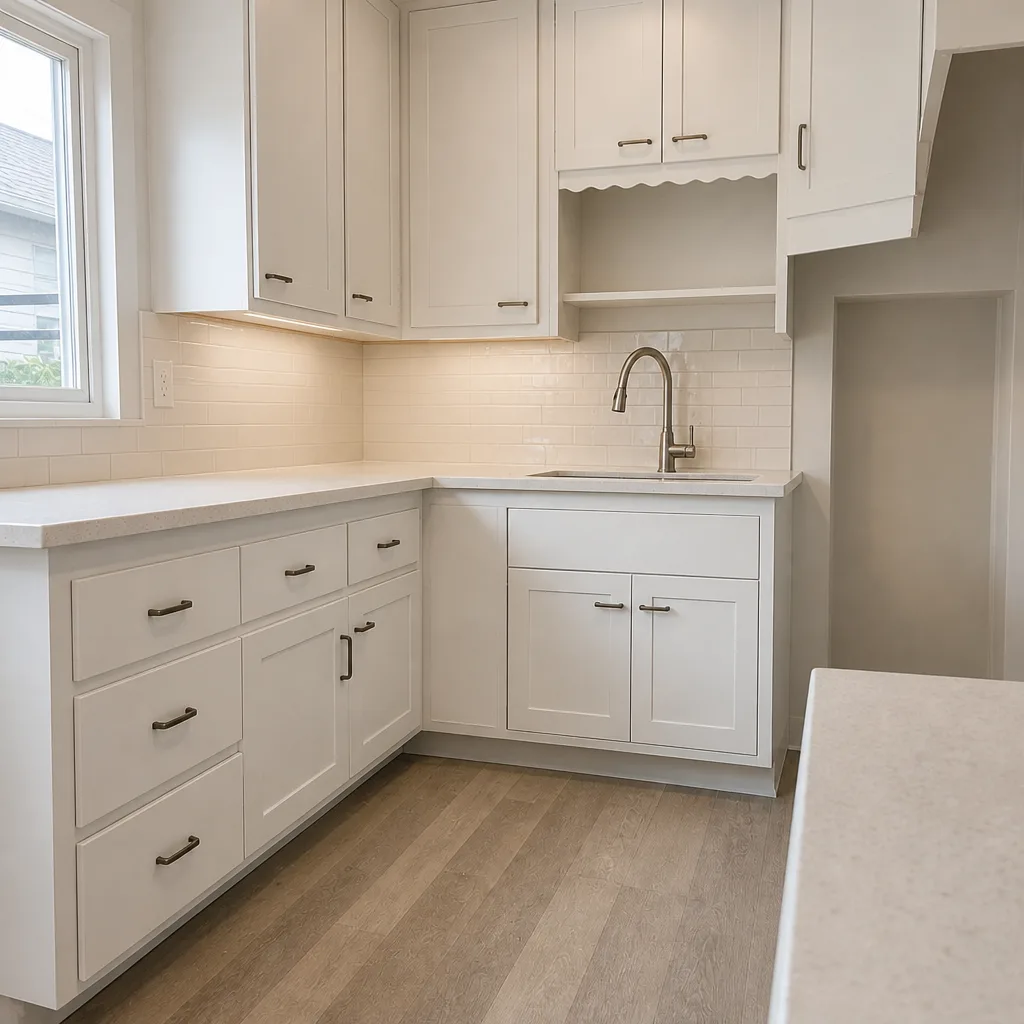
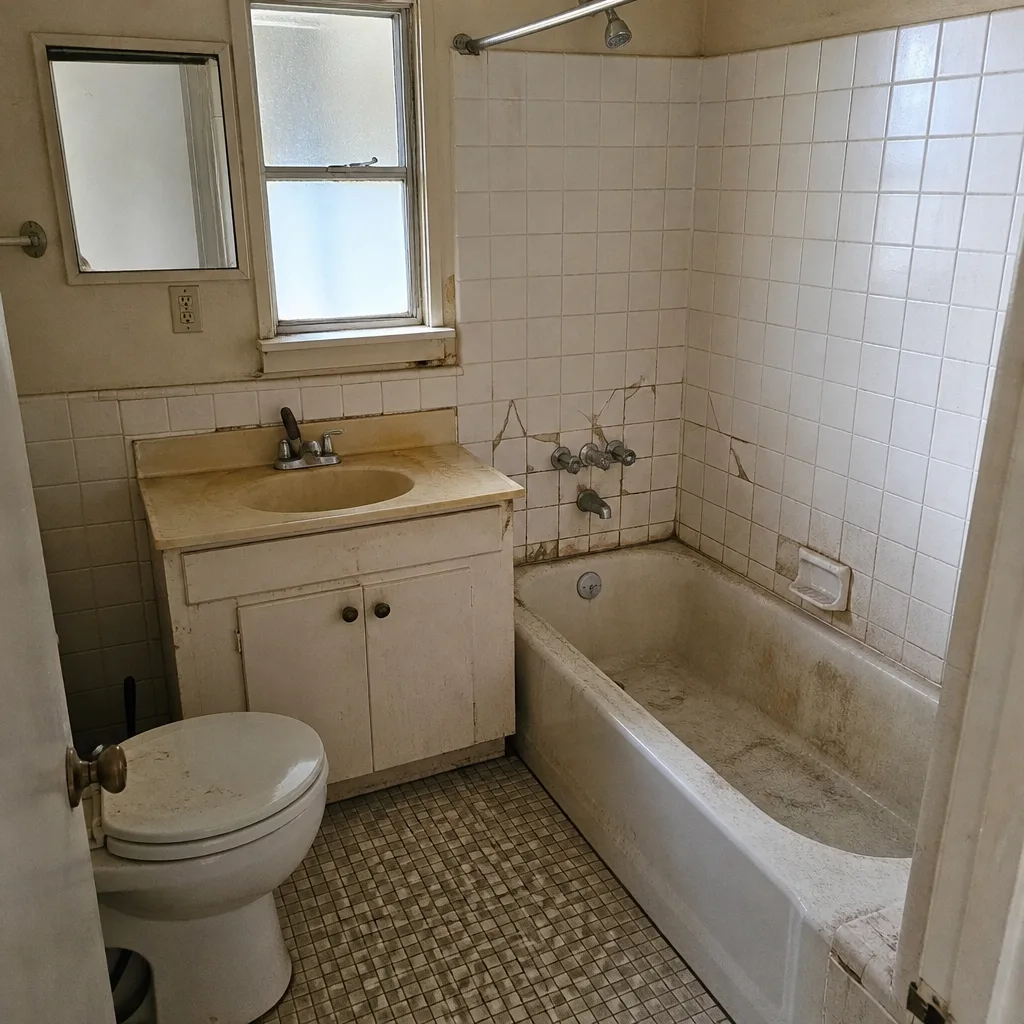
See the difference
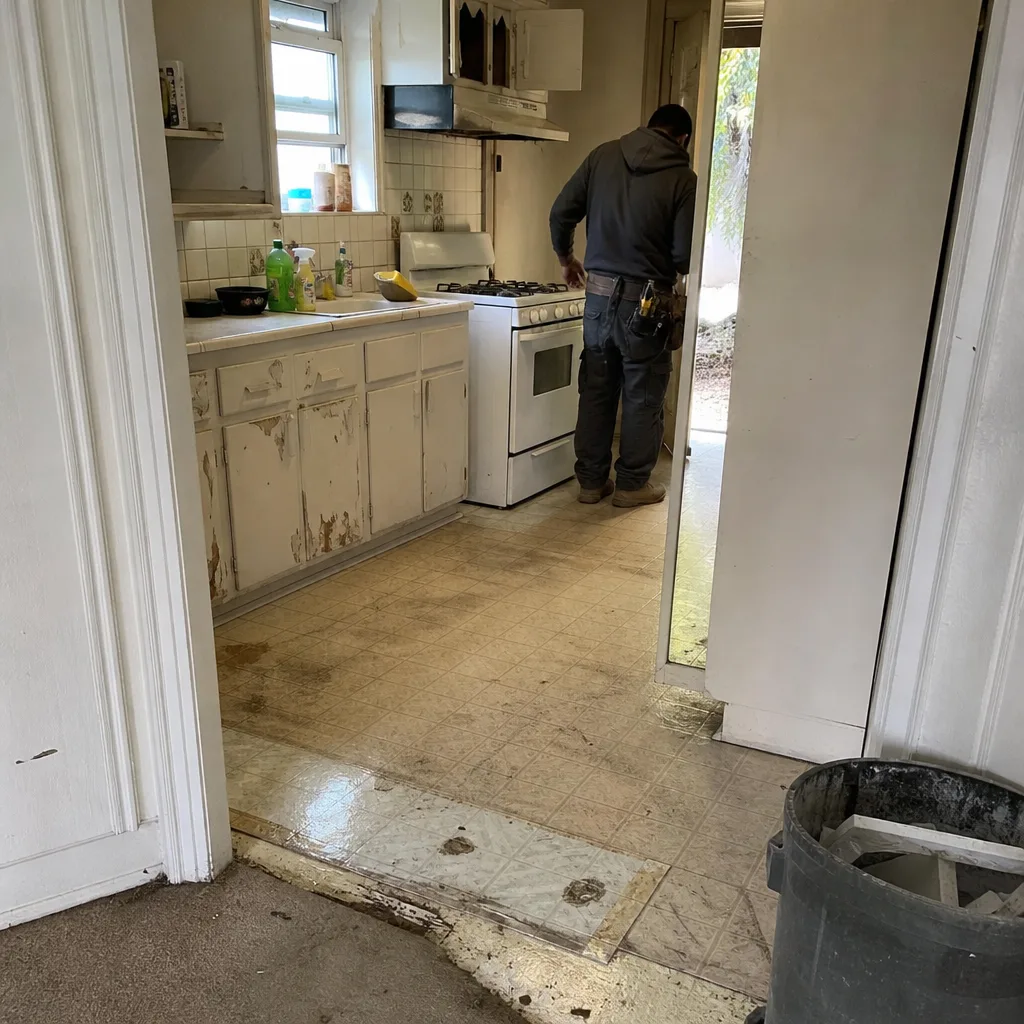 Before
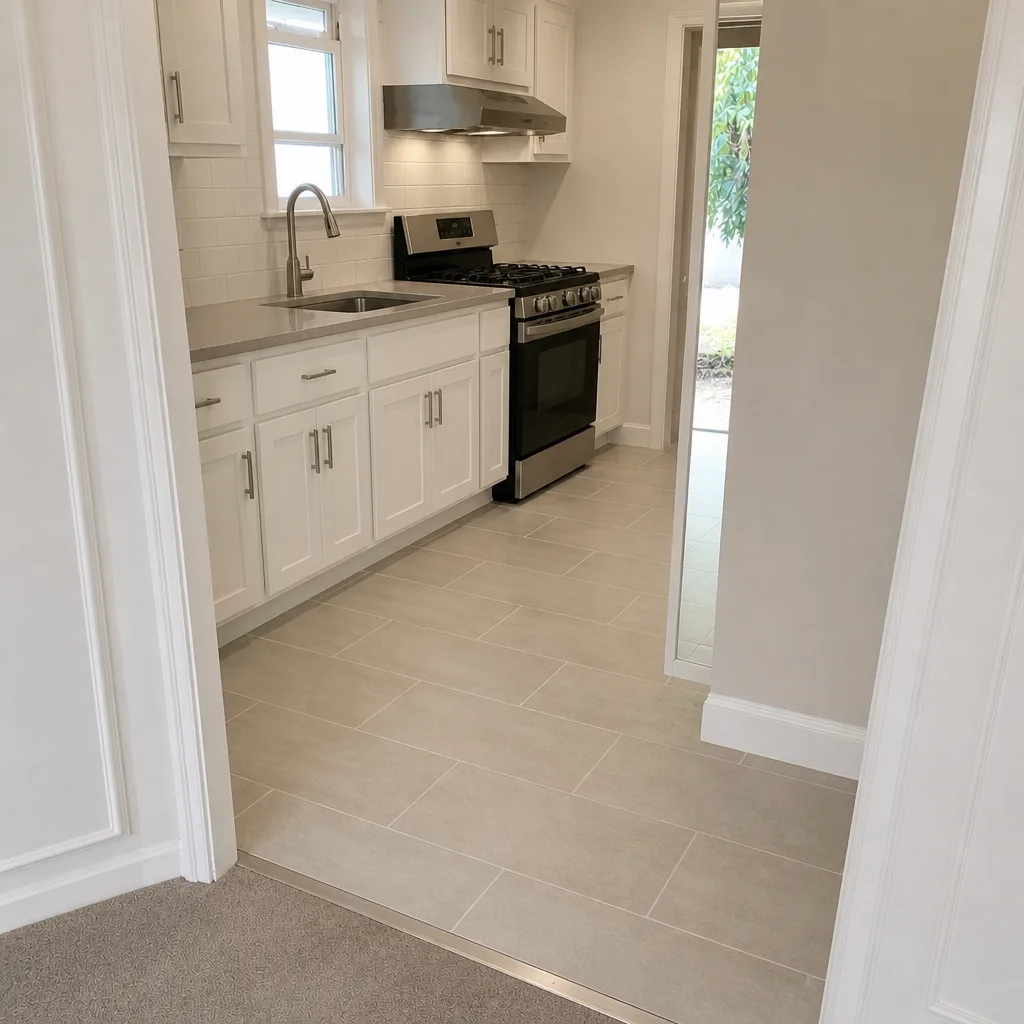 After
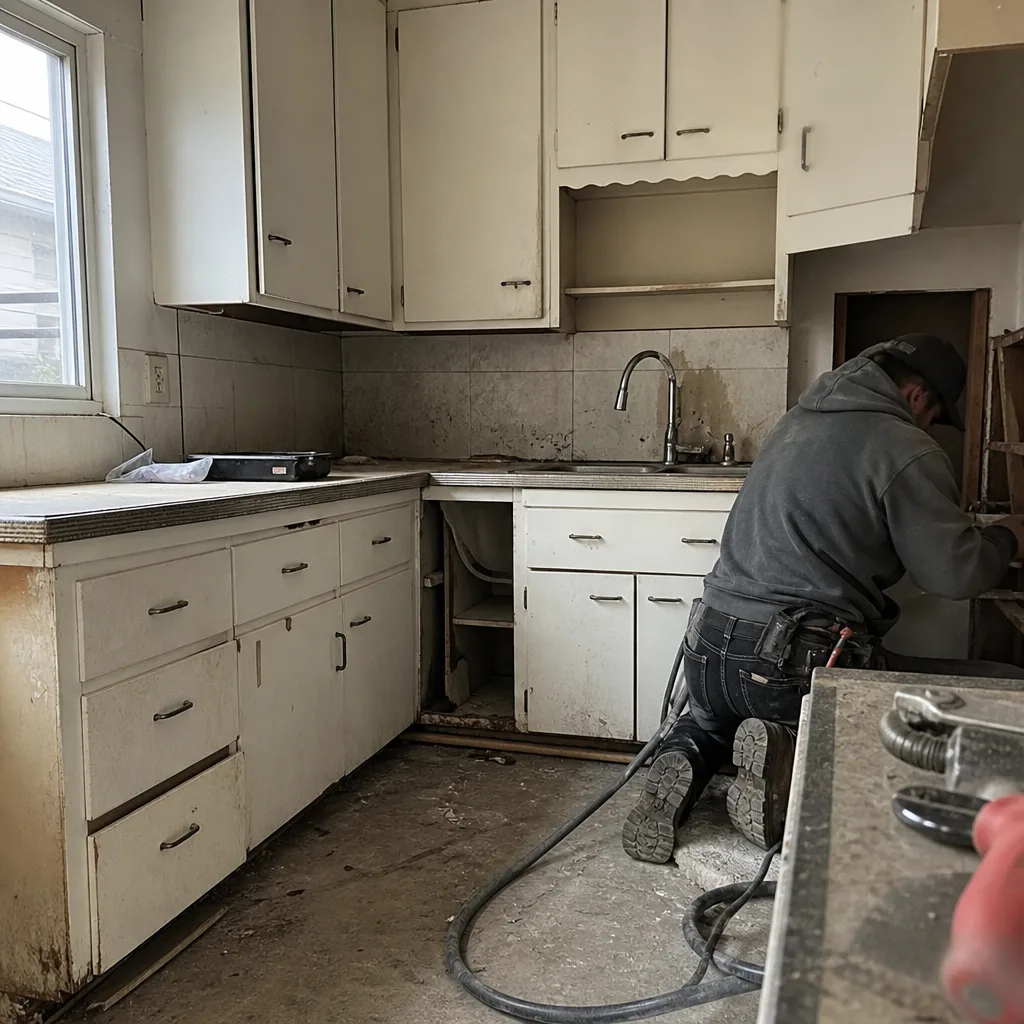 Before
 After
 Before
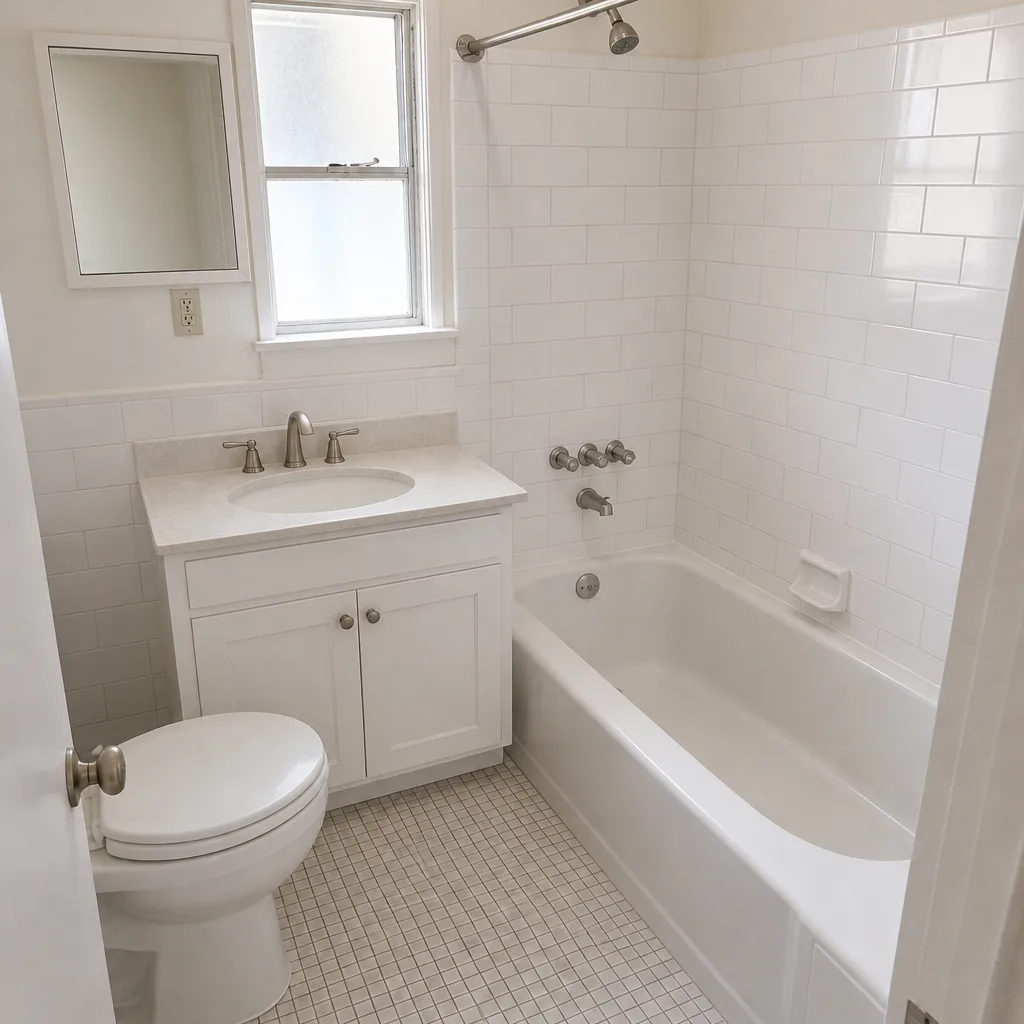 After
When to Call a Professional
Some maintenance is a homeowner task. Some isn’t. Call a professional for any of these:
- A junction crack wider than 1/8 inch, or one that grew between checks
- A door or window that suddenly binds or won’t close within its frame
- Any water intrusion you can’t trace to caulk or a known detail
- Any scorching, smell, or tripping at the subpanel (call an electrician, not us)
- Rot or soft wood at any exterior transition
- Roof flashing at the transition that’s lifted, rusted, or separated
- Crawlspace moisture, standing water near the addition, or pest evidence
If you’ve had an addition or ADU built and want a documented baseline inspection of the junction and systems, we offer a full-project approach from foundation to finish line. Groundwork Construction Co. of Berkeley offers free estimates in Berkeley – call (855) 471-4163, and you’ll get a live person any hour of the day. Most jobs are completed in a single visit, and the 730-Day Done Right Promise covers the work in writing.
Frequently Asked Questions
Quarterly visual checks on the junction, annual checks on exterior systems and utilities, and a professional deep inspection every five years. In Berkeley’s climate, the fall check before the rainy season matters most because that’s when transitions are tested for real. Call (855) 471-4163 for a free estimate if you want a pro to establish a baseline.
One hairline crack under 1/16 inch in the first year is normal settling. A crack that keeps growing between your quarterly checks, or one wider than 1/8 inch, means something’s moving and needs a professional look. Most of what we’re called about in the first year resolves with an explanation, but the ones that don’t are best caught early.
Yes. Subpanel terminations loosen over years of thermal cycling, and a loose neutral or hot lug can arc before there’s any symptom. An annual electrician inspection catches it in an hour. A fire doesn’t give you warnings, but a licensed electrician will.
Treating it as one structure and doing generic home maintenance. The junction between new and old is doing constant work, and if you’re not checking it quarterly, you find out in a rainstorm. The exterior transition zones, where new siding, stucco, or roofing meets existing materials, are the highest failure-rate locations on the whole addition.
You handle everything structural: foundation, envelope, roofing, siding, subpanel, shared utilities, and exterior transitions. The tenant handles routine interior upkeep, filter changes, and reporting water intrusion within 24 hours. Get the split in the lease in writing, and have a California landlord-tenant attorney review it before the first tenancy.
Cost varies by the size of the addition, whether there’s an ADU, and what the inspector finds. Estimate-free inspections are the standard we hold ourselves to, so you know the number before you commit. Upfront pricing, no surprises. Call (855) 471-4163 for a free estimate.
The Bottom Line
An addition or ADU is a structure with a joint, and the joint is where maintenance lives. Quarterly visual checks of the junction, annual maintenance of exterior transitions and systems, and a five-year professional inspection will keep your investment honest. Berkeley’s wet winters and mixed soils make the fall check and the transition-zone work especially important here. Document everything with dated photos. Split landlord and tenant duties clearly in the lease. And when you’re not sure whether something’s a real problem or not, call someone who does this every day. We’re at (855) 471-4163, live person, 24/7.
When the work needs a contractor instead of a checklist, you’re covered. Groundwork Construction Co. of Berkeley is a full-scope partner with a curated portfolio of brand partners, no-hassle upfront pricing, 0% financing for 18 months, $1,000 off projects over $10,000, and background-checked, uniformed technicians on every job. Free project estimate and design consult, and the 730-Day Done Right Promise behind every project – built to last, backed in writing. Call (855) 471-4163 to schedule your free estimate.
Written by the team at Groundwork Construction Co. of Berkeley.